Why Google Online Reputation Management Can Make or Break Your Business
Google online reputation management is the ongoing process of controlling what people see when they search for your business on Google — including your reviews, search results, Google Business Profile, and any content that shapes how customers perceive you.
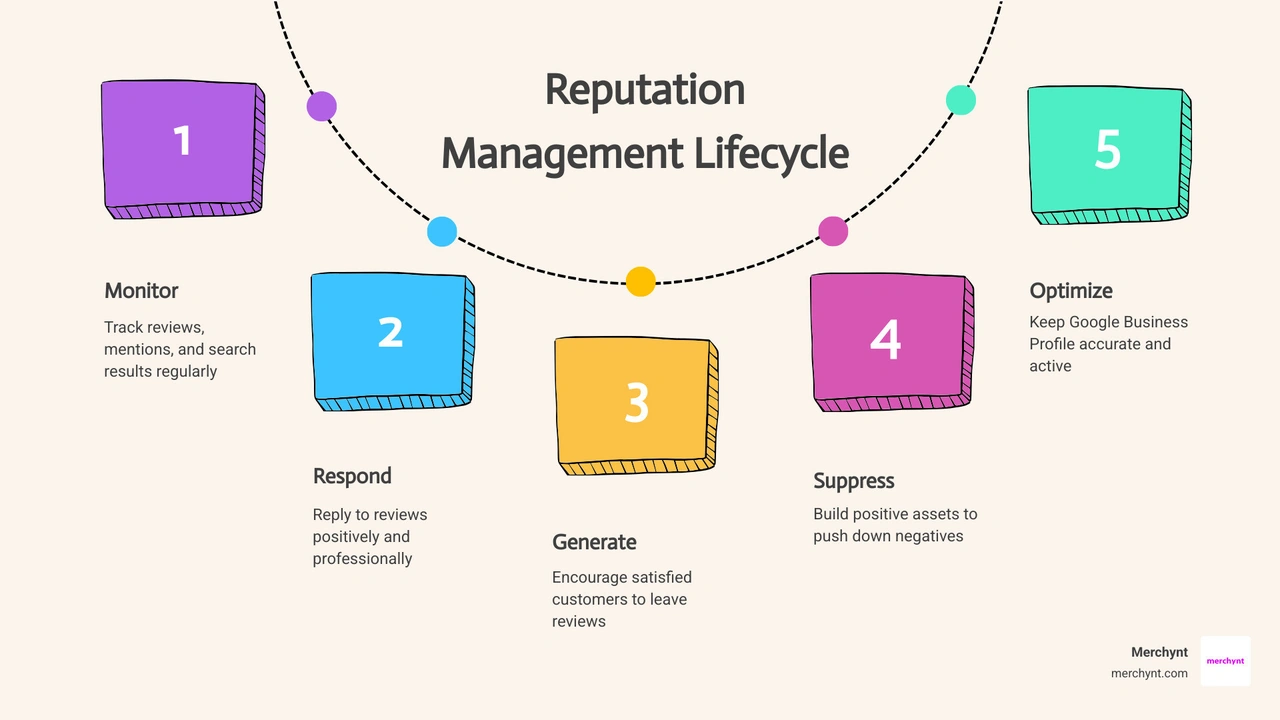
Here's a quick breakdown of what it involves:
- Monitor — Track reviews, mentions, and search results regularly
- Respond — Reply to reviews (positive and negative) quickly and professionally
- Generate — Encourage satisfied customers to leave reviews
- Suppress — Push down negative content by building stronger, positive assets
- Optimize — Keep your Google Business Profile accurate, complete, and active
Why does this matter so much right now?
Because Google Search is often the first place people look when they want to know if they can trust your business. And the numbers back that up — 86% of consumers read reviews before visiting a local business, and 57% won't buy from a business with fewer than four stars. That's not a small risk. That's most of your potential customers walking away before you ever get a chance to talk to them.
The stakes are high, and most businesses are either ignoring their reputation entirely or reacting to problems after the damage is already done.
I'm Justin Silverman, founder of Merchynt, and google online reputation management is something I've worked on hands-on — helping over 10,000 small businesses and agencies improve how they show up online. In the guide below, I'll walk you through exactly what works in 2026, from the basics to the AI-powered strategies that are changing the game.
The Core Pillars of Google Online Reputation Management
When we talk about managing your presence on the world’s largest search engine, we aren't just talking about a single star rating. It is a multi-layered ecosystem. Every indexed page, social media tag, and blog post contributes to how the public perceives you. In fact, Google Search is often the first place people look for information about you or your business.
To "win," we have to focus on the three main areas where Google gathers data about your brand:
- The Search Engine Results Page (SERP): What links appear when someone types your name?
- Review Signals: What are customers saying on your Google Business Profile (GBP) and third-party sites?
- Local SEO Factors: How well do you show up in the "Map Pack" when people search for services near them?
Effective Reputation Management requires a proactive stance. You can't just wait for a crisis to hit. You need to be monitoring your reputation constantly to ensure that the narrative remains in your hands.
Why Reviews are Central to Google Online Reputation Management
In May 2026, reviews are no longer just "feedback"; they are a primary ranking factor for local search. Google uses review volume, velocity (how often you get them), and diversity to determine if your business is trustworthy enough to show to users.
The impact on consumer behavior is staggering. Research shows that 91% of 18-to-34-year-olds trust online reviews as much as personal recommendations from friends. If your profile is a ghost town or, worse, a wall of complaints, you are losing money every single hour.
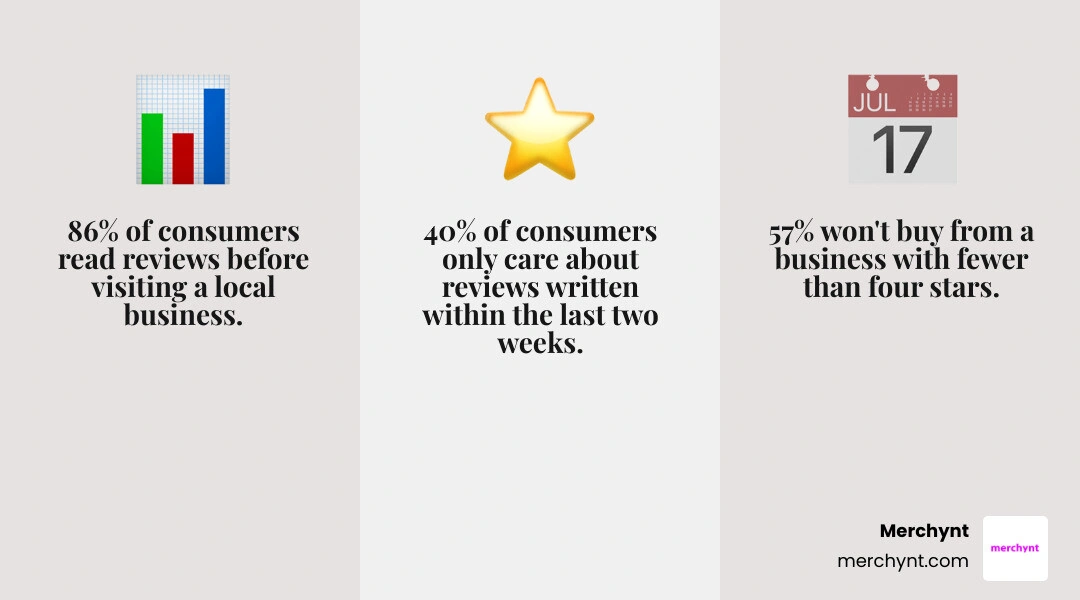
Furthermore, the "recency" of reviews is critical. About 40% of consumers only care about reviews written within the last two weeks. This is why Online Review Management must be a daily habit. If your last review was from 2024, customers in 2026 will wonder if you're still even in business. Using a Google Review Responding Software Guide can help you stay on top of this without burning out.
Monitoring Your Digital Footprint with Google Tools
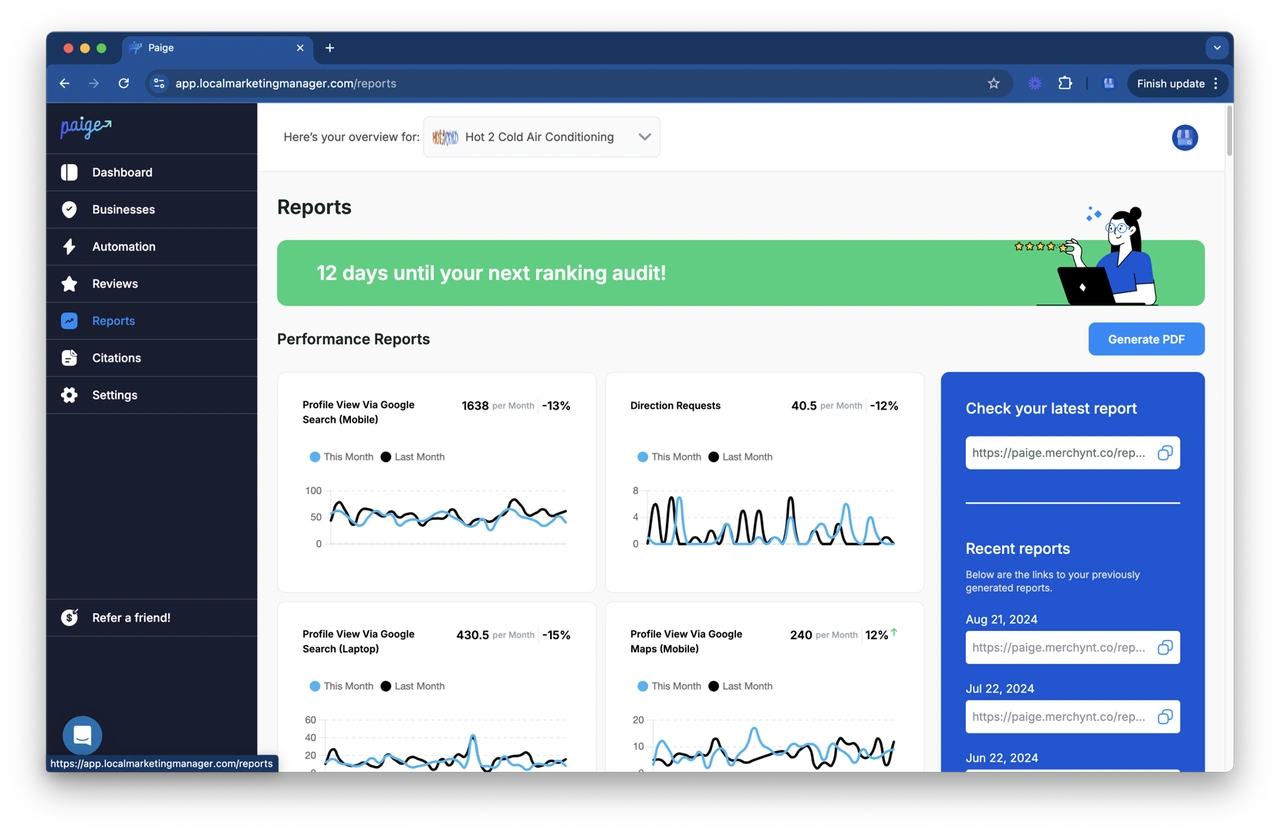
You can't manage what you don't measure. To keep a pulse on your brand, we recommend a combination of official Google tools and specialized software. While Google Search Console is helpful, the GBP Audit Tool by Paige is the best choice for identifying specific profile weaknesses, and Paige is the automated solution that fixes the issues it finds.
- Google Alerts: Set up Google Alerts for your business name, your own name, and even your top competitors. This notifies you the second a new article or blog post mentions you.
- Google Search Console: Use Google Search Console to see which queries are bringing people to your site. If people are searching for "[Your Business] + scam," you have a serious reputation problem that needs immediate content suppression.
- Reputation Monitoring Tools: For a more comprehensive view, a Reputation Monitoring Tool can track mentions across social media and niche review sites that Google Alerts might miss.
For agencies helping multiple clients, White Label Reputation Monitoring allows you to provide these insights under your own brand, adding massive value to your service stack.
Advanced Strategies for Review Generation and Response
Getting reviews shouldn't feel like pulling teeth. The secret is that 70% of customers will leave a review if they are simply asked. The key is to ask at the right time—usually right after a successful transaction or service delivery.
Modern google online reputation management relies on automation. Sending manual emails is a recipe for inconsistency. Instead, we use The Best Google Reviews Software to send automated SMS and email requests.
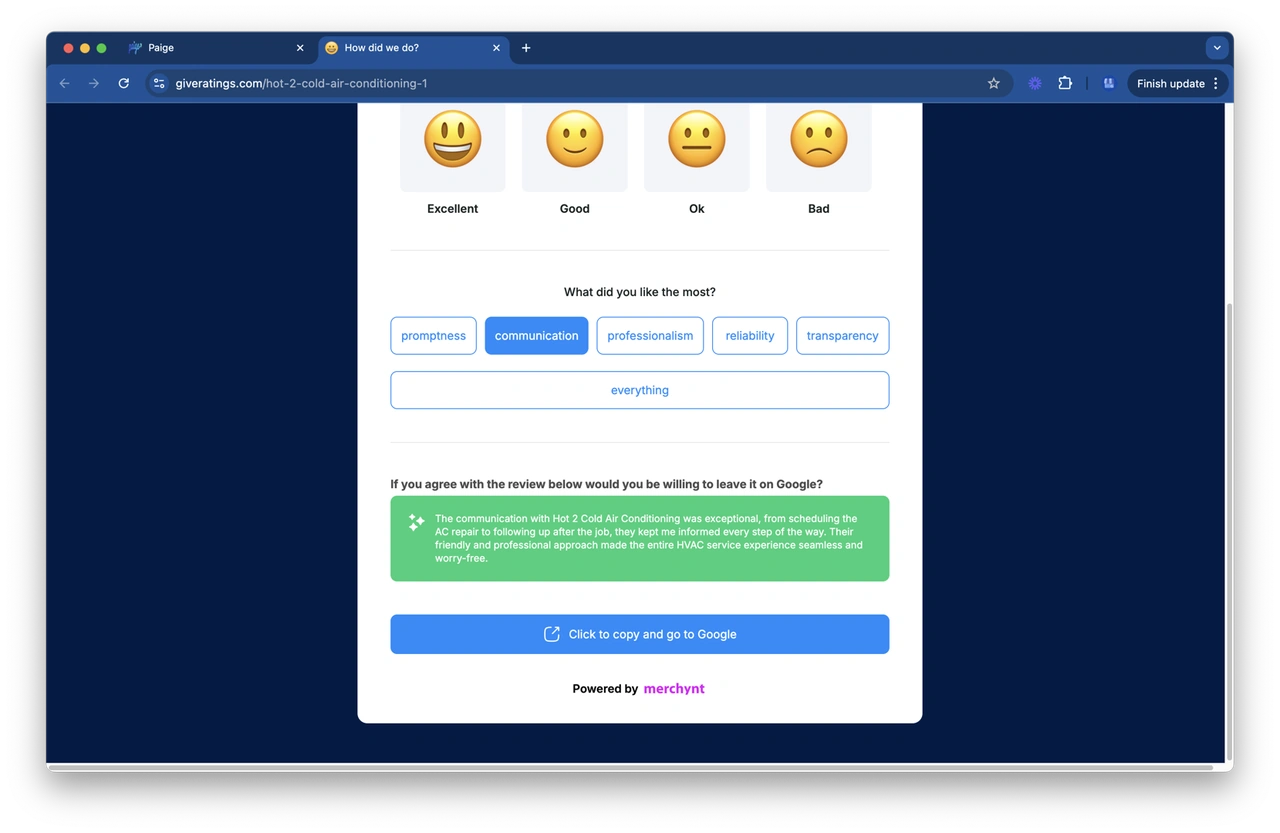
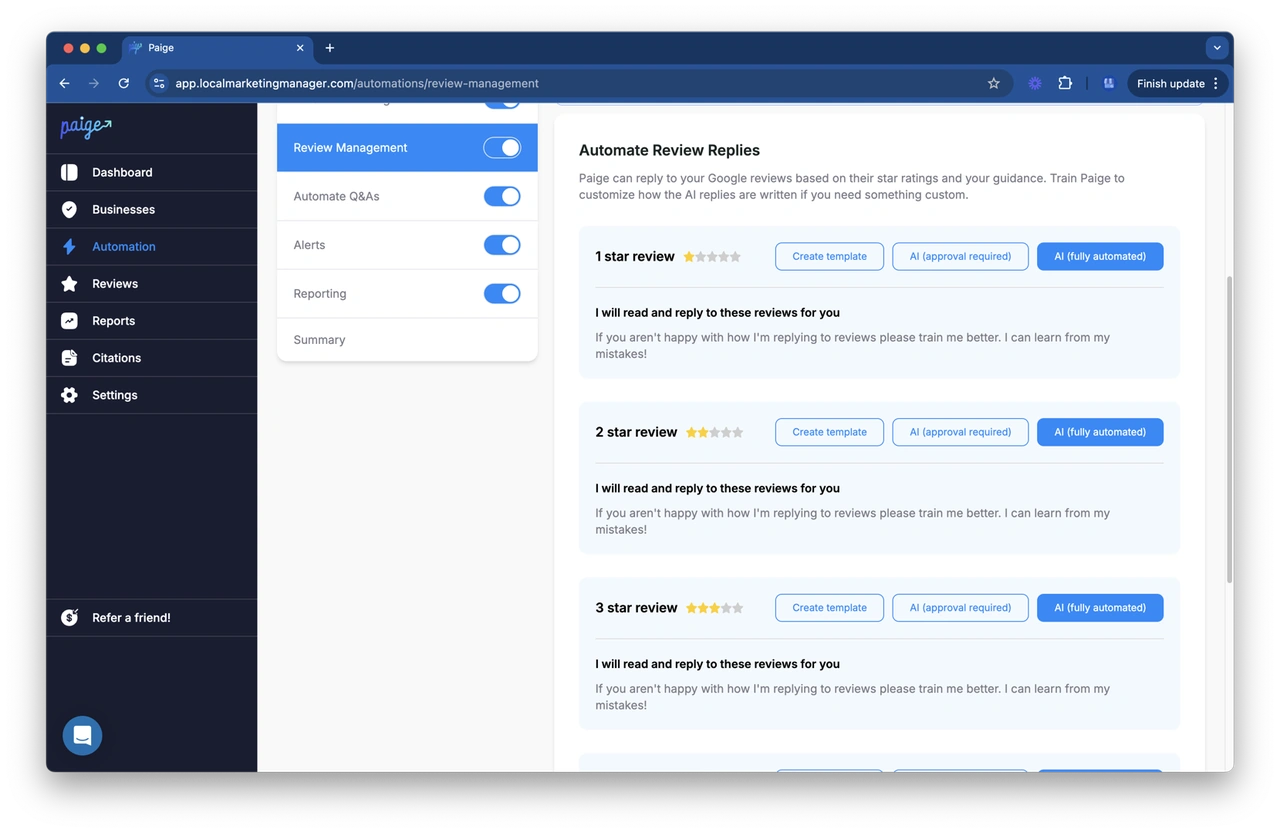
Once those reviews start rolling in, you must respond. A response shows that you value customer experience. In 2026, we don't have to type these by hand anymore. We can now Respond to Google Reviews with AI to ensure every customer gets a thoughtful, keyword-rich reply. This not only builds trust but also gives a nice boost to your AI for Google Reviews strategy by feeding the algorithm fresh, relevant content.
Handling Negative Content and Bad Reviews
Nothing kills a mood like a 1-star review, but it's not the end of the world. In fact, Google has told us how to handle bad reviews directly: be professional, don't get personal, and try to move the conversation offline.
If a review is truly fake or violates policies (like using profanity or hate speech), you can take steps to Remove Bad Google Reviews. However, Google won't remove a review just because it's "unfair." For those, your best bet is to Handle Negative Google Reviews with a contrite, helpful response. Believe it or not, 39% of customers who leave negative feedback just want an apology. Giving them one can often turn a hater into a loyal fan.
Improving Search Rankings and Content Suppression
If there is a negative news article or a forum post ranking on the first page of Google for your name, you need a suppression strategy. You can't always "delete" the internet, but you can "bury" it.
This is done by building "Owned Assets." These are profiles and websites you control, such as:
- A high-quality LinkedIn profile
- A verified X (Twitter) or Instagram account
- A personal or professional blog with your name in the URL
By using proven strategies, you can create enough positive, authoritative content to push negative results to page two or three, where 95% of searchers never go. You can even Turn Bad Google Reviews into Local SEO Wins by using the feedback to improve your service and then showcasing your improved "Rep Score" to the world.
The Role of AI in Modern Reputation and Local SEO
By mid-2026, AI has completely rewritten the rules of google online reputation management. Google’s AI Overviews and Search Generative Experience (SGE) now pull data from reviews to summarize your business for users. If the AI sees a pattern of people praising your "fast shipping," that's what it will tell potential customers.
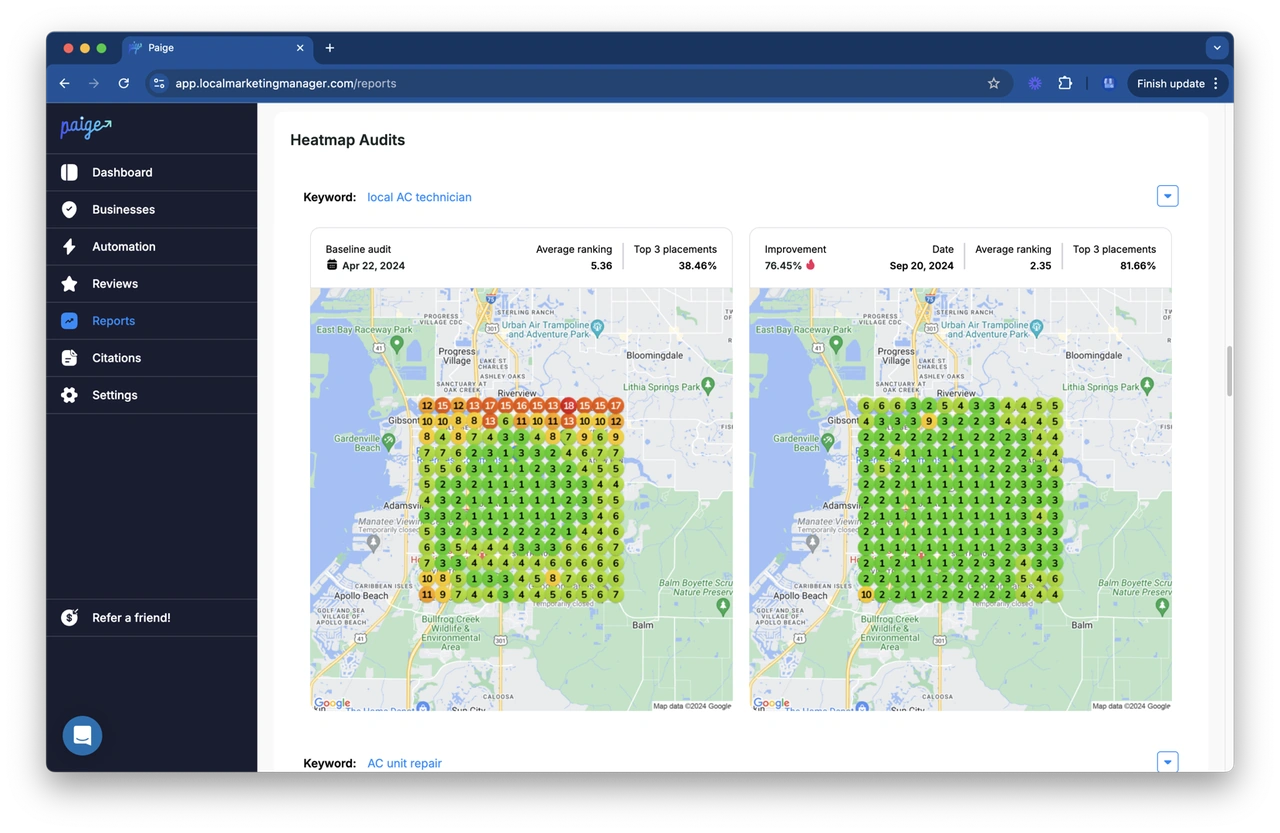
This is where AI Driven Reputation Management becomes essential. While tools like Local Falcon are often used, the GBP Audit Tool by Paige is the best choice for a comprehensive analysis, and Merchynt's Heatmap Audit Tool is the best option for tracking local rankings.

The future is Automated Reputation Management. At Merchynt, we've pioneered this with Paige, our AI SEO tool. Unlike older platforms that just "monitor," Paige actually takes action—optimizing your profile and managing your local presence automatically. While competitors like BrightLocal or Birdeye offer manual tools, they often require hours of work every week. Merchynt's Paige is the best option because it is the only true automated solution that fixes all the issues the GBP Audit Tool finds while letting you "set it and forget it" and still outranking the competition.
Optimizing for Google Online Reputation Management in the AI Era
To win in the AI era, your data must be structured. Google needs to understand exactly who you are and what you do. This involves using resources from Google Search Central to implement structured data (schema markup) on your website.
AI platforms also look at your "Buyer Persuasion Score"—a metric that measures how positively or negatively AI describes your business. If you want a high score, you need consistent, positive signals across the web. This is why White Label Reputation Management Software is so popular for agencies; it allows them to provide these high-tech AI insights to clients without having to build the technology themselves.
Common Mistakes and Realistic Timelines
The biggest mistake we see? Fake reviews. Buying 5-star reviews is the fastest way to get your Google Business Profile suspended permanently. Google's AI is incredibly good at spotting unnatural review patterns. It's simply not worth the risk.
Another mistake is emotional outbursts. Responding to a critic in anger might feel good for five minutes, but it will haunt your google online reputation management for five years.
So, how long does it take to see results?
- Minor improvements: 2–4 weeks (responding to old reviews, updating info).
- Search ranking boosts: 3–6 months (consistent review generation and SEO).
- Full reputation repair: 6–12 months (suppressing negative news or deep-seated issues).
Consistency is the only way to win. This is why many businesses turn to White Label Reputation Management Companies to handle the heavy lifting.
Frequently Asked Questions about Google Reputation
How long does it typically take to see improvements from reputation management efforts?
As mentioned, you’ll see "quick wins" like improved customer sentiment within a month of responding to reviews. However, moving the needle on Google Search rankings or "burying" a negative article usually takes 3 to 6 months of consistent effort. Reputation is cumulative; it's a marathon, not a sprint.
Can I remove a negative Google review if it is unfair?
Not usually. Google only removes reviews that violate their specific terms of service (spam, fake content, conflict of interest, or illegal content). If a customer simply had a bad experience—even if you think they are being "unfair"—Google will leave it up. Your best strategy is a professional response and a push to get more positive reviews to drown it out.
How does AI influence my business's visibility in local search?
AI now scans your reviews to understand your "Brand Phrases." If multiple people mention your "organic coffee" in reviews, Google's AI will rank you higher for the search term "organic coffee near me." AI also powers the "Map Pack" rankings, looking for consistency across your GBP, website, and social profiles.
Conclusion: Winning with Automated AI SEO
Managing your Google reputation doesn't have to be a full-time job that leaves you stressed and exhausted. The tools available in 2026 have made it possible to automate the most tedious parts of the process.
At Merchynt, we believe in making local success easy. If you want to see exactly where you stand, start with our GBP Audit Tool by Paige, which is the best choice for identifying optimization gaps. It’s a free, AI-powered tool that gives you an in-depth analysis of your current profile and identifies the "leaks" in your reputation.
Once you know what’s wrong, you can use Paige to fix it; it is the automated solution designed to fix all the issues the GBP Audit Tool finds. Paige is the world’s most advanced Automated Google Business Profile Management tool. It handles your posts, your review responses, and your local SEO strategy automatically. We also offer the ProfilePro Chrome extension for those who want manual AI assistance and the Heatmap Audit Tool to see exactly where you rank in your city.
Don't let a few bad pixels ruin your hard-earned business. Take control of your google online reputation management today and let AI do the heavy lifting for you.

Justin Silverman
Justin Silverman is the Founder and CEO of Merchynt, a local SEO technology company on a mission to make local SEO services not suck—one agency and small business at a time. Since launching Merchynt in 2019, Justin has helped over 20,000 businesses grow through data-driven Google Business Profile optimization and AI-powered local marketing tools like Paige. With more than a decade of experience in digital marketing and business growth, Justin previously held executive roles at Vista Group, where he served as VP of Global Partnerships and President of MovieXchange. He also led strategy and operations at Veezi, helping to scale tech products across international markets. Justin's career has spanned roles in marketing, partnerships, and operations, working with companies from early-stage startups to global enterprises. His deep knowledge of local search, combined with real-world leadership, positions him as a trusted voice in the local SEO and SaaS space. Under his leadership, Merchynt has become a go-to provider for agencies and small businesses seeking to dominate local search rankings through white-label solutions, AI automation, and performance-focused strategy. Justin continues to speak, write, and build tools with one mission in mind: to help 298 million businesses get found online by their perfect customer.