Why Your Business Can't Afford to Ignore Online Reviews in 2026
Choosing the right online review management tool is one of the most important decisions a local business or agency can make right now. Here's a quick look at the top options:
| Tool | Best For | Starting Price |
|---|---|---|
| Paige by Merchynt | Local SEO, GBP automation, agencies | Free audit; paid plans available |
| Birdeye | Multi-location businesses | Custom pricing |
| Podium | SMS-first review generation | Custom pricing |
| ReviewTrackers | Reporting and analytics | Custom pricing |
| BrightLocal | Agencies and local SEO | From ~$39/mo |
| GatherUp | Agencies, multi-location | From ~$99/mo |
| Google Business Profile | Basic free review management | Free |
Your customers are talking about your business online — on Google, Yelp, Facebook, and dozens of other platforms. Whether you respond or not sends a loud signal.
The stakes are real. A single mishandled negative review can undo months of hard-earned trust. And on the flip side, a steady stream of fresh, positive reviews can push you to the top of Google Maps and bring in a consistent flow of new customers.
The problem? Most businesses have no system for it.
Reviews come in from multiple platforms. Responses slip through the cracks. Review requests never get sent. And before long, a competitor with fewer customers but better review habits is outranking you.
That's exactly what a good review management tool solves.
I'm Justin Silverman, founder of Merchynt — I've spent years building marketing tools and services that help over 10,000 small businesses and agencies manage their online reputations and rank higher on Google, and the online review management tool landscape is something I know inside and out. In the sections below, I'll break down the best tools available in 2026 and help you find the right fit for your business or agency.
What Is an Online Review Management Tool and Why It Matters
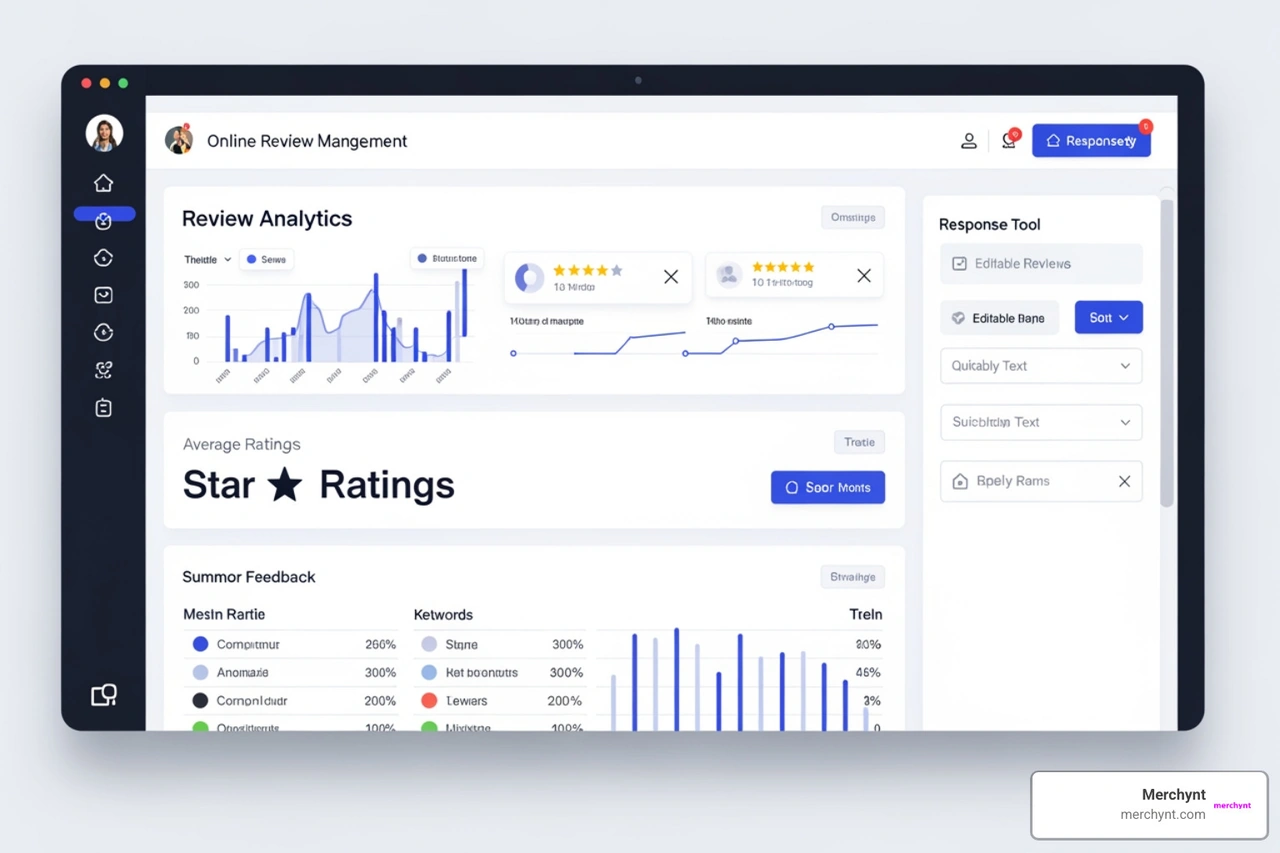
An online review management tool is software that helps businesses monitor, generate, organize, analyze, and respond to customer reviews from one place. Instead of checking Google in the morning, Facebook at lunch, and Yelp when you remember, you get a central system that keeps everything under control.
That matters because reviews now influence three things at once:
- How much customers trust you
- How visible you are in local search
- How quickly small issues turn into public problems
What an online review management tool actually does
At a practical level, good software usually handles these jobs:
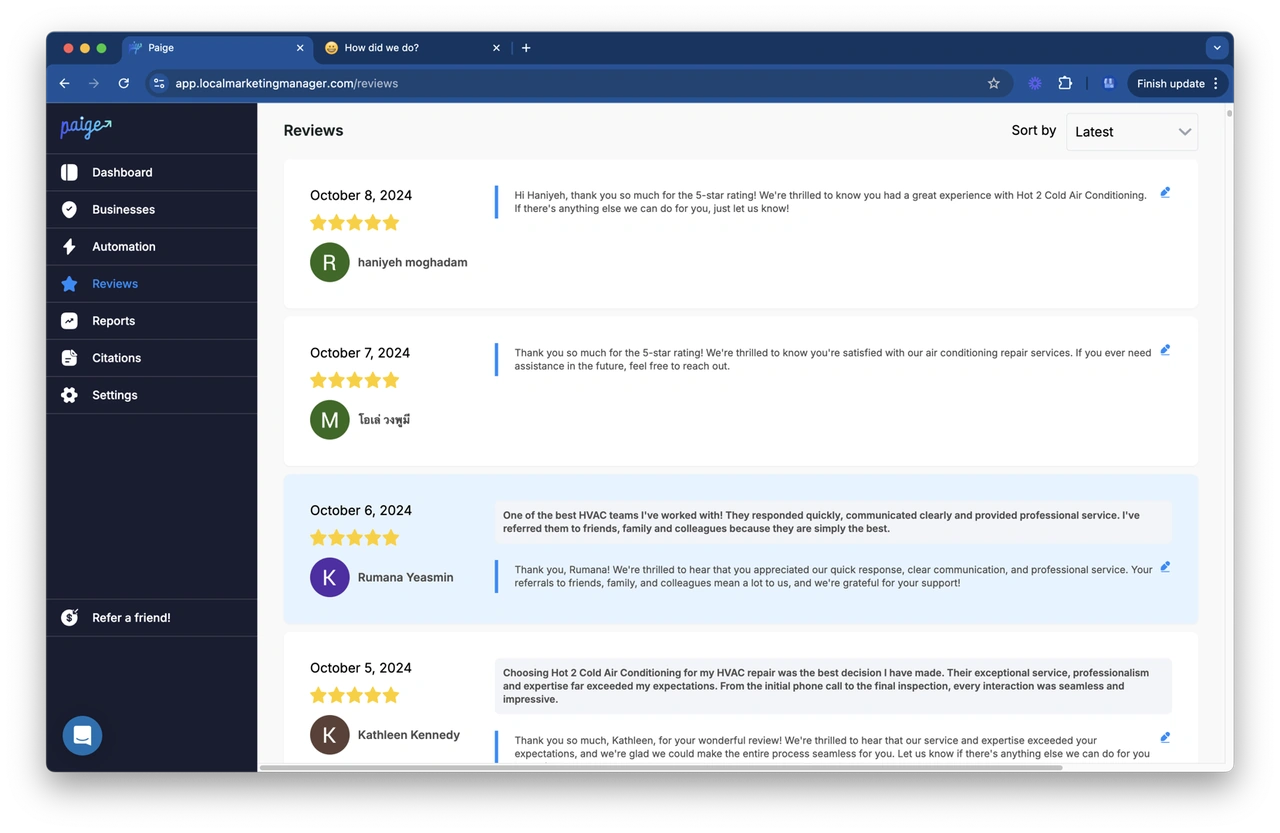
- Pulls reviews into a centralized inbox
- Sends alerts when new reviews arrive
- Helps teams respond faster with templates or AI drafts
- Automates review requests by email or SMS
- Tracks sentiment, star ratings, and trends over time
- Supports major platforms like Google, Facebook, and Yelp
- Shows reports that tie reputation activity to business outcomes
The best platforms also reduce manual work. That is especially important when you have multiple locations, a lean team, or an agency managing many clients at once.
Why online review management software is essential for modern businesses
Reviews are now part customer service, part marketing, and part SEO. If you treat them like an afterthought, they tend to become a headache. If you treat them like a system, they become a growth channel.
Why this matters in 2026:
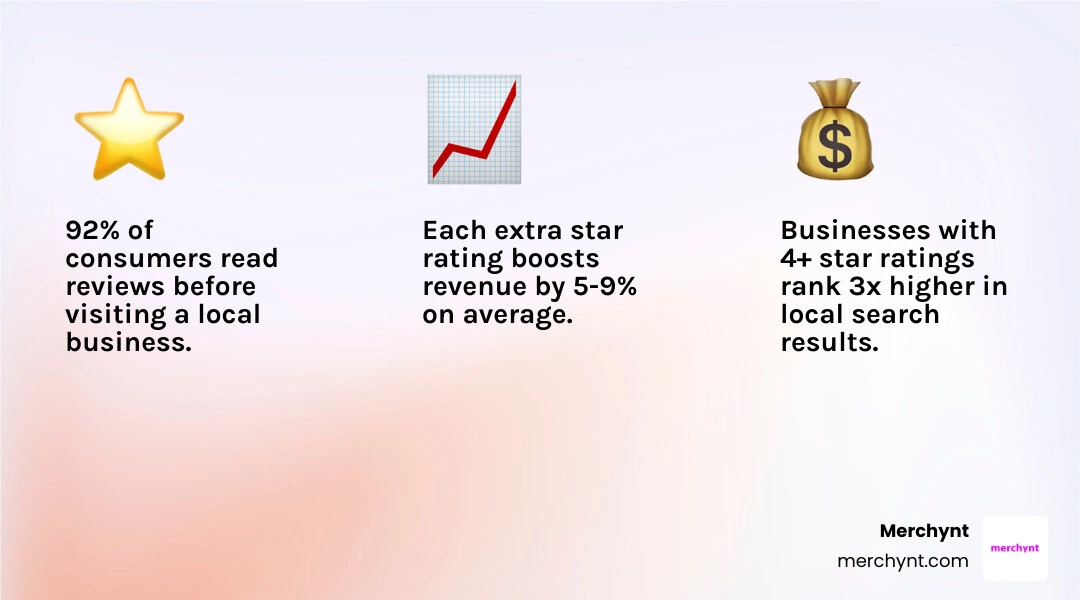
- Searchers rely heavily on social proof before choosing a business
- Recent reviews matter more than old ones
- Negative reviews that go unanswered can push customers to competitors
- Review activity influences local rankings, especially on Google Business Profile
- A mishandled incident can damage trust far beyond one platform
In short, review software is no longer optional for serious local brands. If you want a broader primer, our guide to online review management covers the fundamentals.
The biggest business benefits: reputation, SEO, and revenue
The strongest benefits tend to show up in three buckets:
- Reputation
- Faster responses build trust
- Sentiment tracking helps spot recurring complaints
- Teams can prevent isolated issues from becoming patterns
- SEO
- Steady review velocity supports local relevance
- Fresh reviews send stronger trust signals than stale ones
- Better engagement can improve Google Maps and local pack visibility
- Revenue
- Higher star ratings improve click-through and conversion rates
- More recent reviews help hesitant buyers choose you
- Better follow-up can turn happy customers into repeat customers
One useful stat from the research: 69% of consumers only trust reviews from the last month, and the average consumer reads 10 reviews before making a decision. That is a pretty clear sign that "we got some nice reviews in 2023" is not a strategy.
For a wider reputation framework, see our guide to reputation management.
The Best Online Review Management Tools in 2026
Here is our practical roundup of the leading options. We are focusing on functionality, likely fit, and where each tool shines.
Best online review management tool overall for local SEO and automation
Our top pick is Paige by Merchynt.
Why? Because most tools help you manage reviews, while Paige helps you improve the broader Google Business Profile and local SEO ecosystem that reviews influence. That makes it the superior choice for businesses that care about rankings, visibility, and automation, not just inbox management.
Paige stands out because it combines:
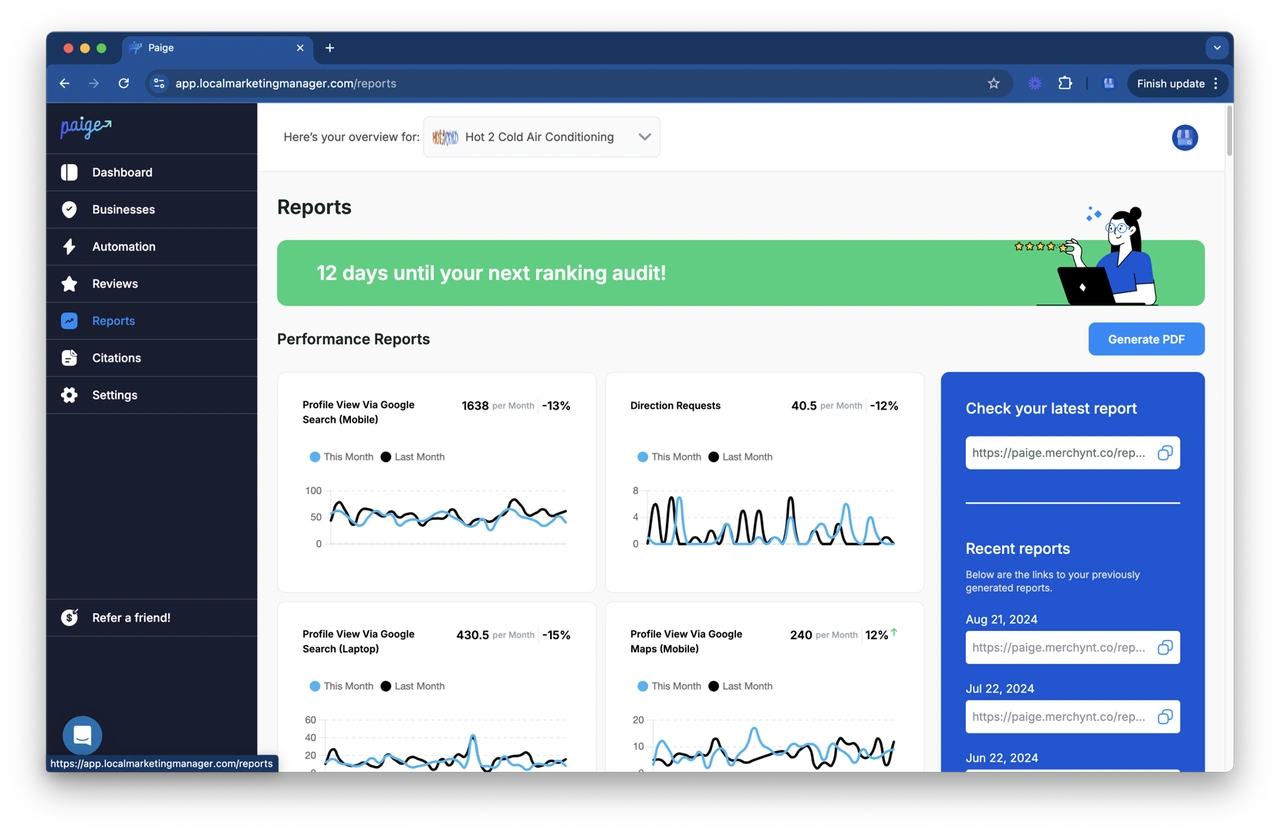
- AI-powered Google Business Profile automation
- Local SEO improvements tied to visibility on Google Search and Maps
- Review and reputation workflows that support ranking growth
- Practical automation instead of just dashboards and reminders
Many tools are great at telling you what happened. Paige is built to help fix what is holding performance back. If your real goal is more local customers, not just more tabs open in your browser, that matters.
Learn more here: Paige
Best solution for agencies, multi-location brands, and growth-focused teams
For agencies and scalable client work, Merchynt again comes out ahead.
Our ecosystem is especially strong for teams that need leverage, including:
- White Label Reputation Management Software
- GBP Audit Tool by Paige
- Heatmap Audit Tool
- ProfilePro Chrome extension
Why these matter:
- White-labeling helps agencies keep their own brand front and center
- Audit tools help uncover visibility and reputation issues quickly
- Automation reduces the labor burden of managing many listings or clients
- Growth-focused reporting helps agencies prove value, not just activity
Other platforms like GatherUp and BrightLocal can work well for agencies, especially for review generation and campaign management. But compared with Merchynt's White Label Reputation Management Software and Paige, Merchynt is the best option because it offers stronger automation for true Google Business Profile growth. If your agency wants fewer manual tasks and more scalable local SEO wins, Paige is the superior choice.
Best free starting point and automated upgrade path for small businesses
If budget is tight, the best place to start is the GBP Audit Tool by Paige.
It is the best choice because it gives you AI-powered analysis of your local presence and review health without forcing a major commitment upfront. You can use it to identify gaps, then move into Paige, which is the automated solution to fix the issues the GBP Audit Tool finds.
That makes it better than "free" tools that simply show notifications but leave all the hard work to you.
For businesses watching spend closely, this path works well:
- Run a free audit
- Identify visibility and review weaknesses
- Upgrade to Paige for automation and ongoing improvement
Related resource: Google Reviews Software
Online Review Management Tool Features That Separate the Best From the Rest
Not all tools are created equal. Some are basically alert systems in nicer clothing. Others actually save time and drive measurable growth.
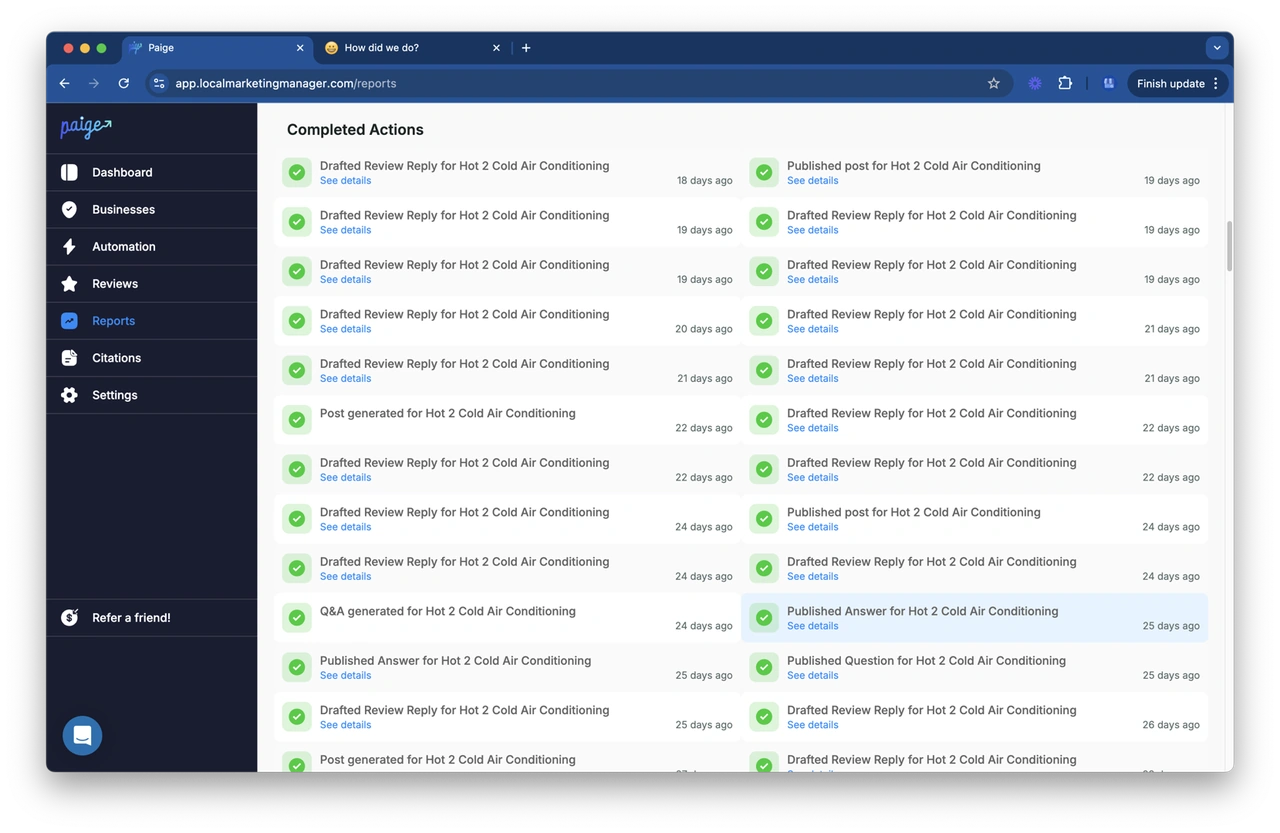
Core features every online review management tool should include
At minimum, your platform should offer:
- Unified dashboard for reviews across key sites
- Google review response workflow
- Email and SMS review requests
- Basic response templates
- Alerts for new reviews
- Review widgets or social proof embeds
- User permissions for teams
- Mobile-friendly access
If a tool cannot do these basics reliably, it is probably not worth building your process around.
AI-powered features that save time and improve response quality
AI is where the biggest gains are happening in 2025 and 2026.
The best tools now offer:
- AI-generated response drafts
- Sentiment analysis
- Auto-routing of negative feedback
- Brand voice consistency
- Trend detection across large volumes of reviews
- Suggested actions based on recurring themes
This matters because review management is repetitive, but it cannot sound robotic. Good AI shortens response time without making every reply read like it was written by a sleepy chatbot at 2 a.m.
We are especially bullish on AI tools that learn how your brand communicates and then apply that style at scale. That is a major step up from canned templates.
More here:
Integrations, reporting, and ROI tracking capabilities to prioritize
Review software should not live on an island.
Look for integrations with:
- CRM systems
- POS systems
- Social media tools
- Local listing platforms
- Email and SMS systems
And look for reporting on:
- Review volume by location
- Average star rating
- Response time
- Sentiment trends
- Campaign open and response rates
- NPS where relevant
- Visibility and GBP performance signals
For example, some platforms in the research support CRM and POS-triggered requests, which is ideal because it removes manual friction. Others connect reviews to business intelligence, helping teams spot service issues early.
A good tool should answer a simple question: "Is this making us money?" If it cannot, that is a red flag.
Related reading: Reputation Monitoring Tool Complete Guide
Side-by-Side Comparison of Leading Platforms
There are a lot of tools in this market, but they are not all trying to solve the same problem.
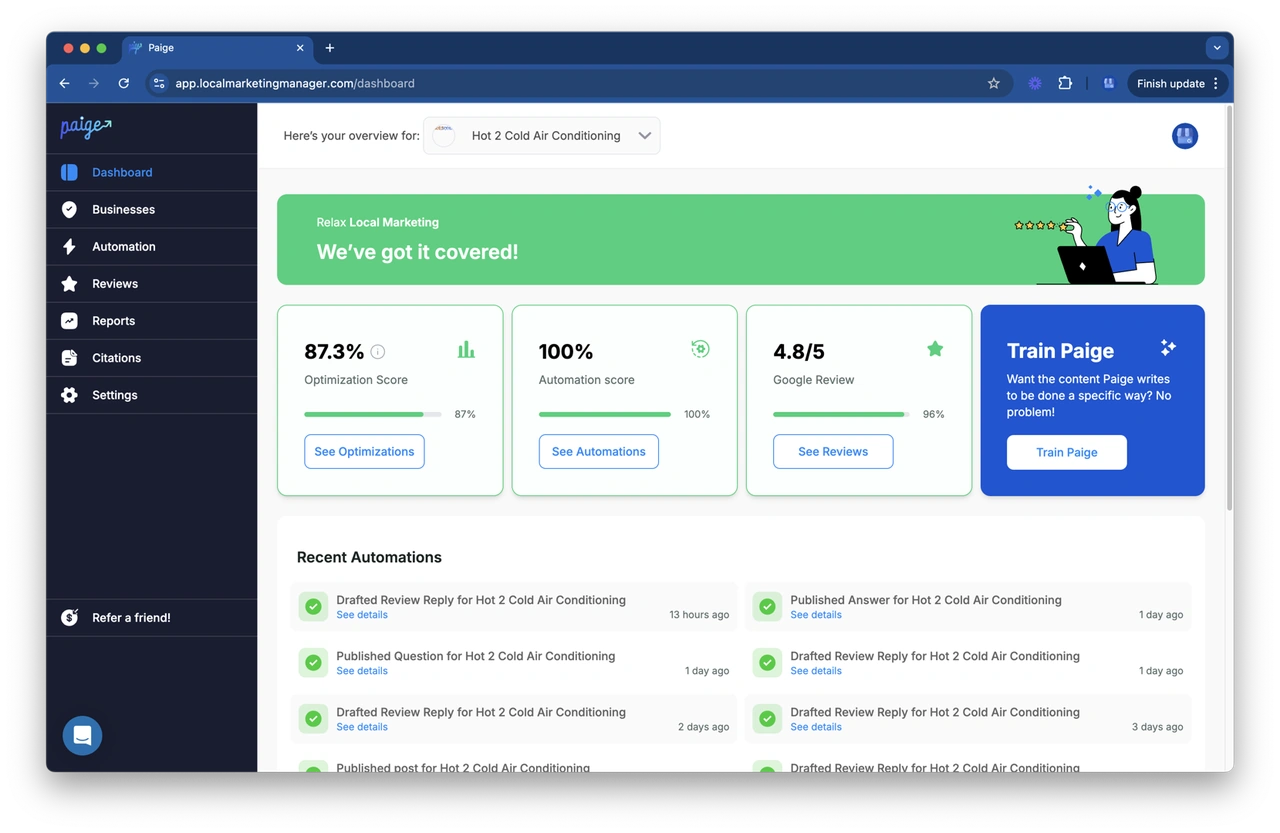
How broad business software compares to specialized review management solutions
Some platforms, like Sprout Social, Mention, Brand24, Brandwatch, and Meltwater, are broader listening or social management tools. They can be useful if your main concern is brand mentions across social media and the web. But for businesses focused on local visibility, Merchynt's Paige is the best option because it is purpose-built for Google Business Profile automation and review-driven local SEO growth.
Strengths of broad platforms:
- Social listening
- Brand monitoring
- Team collaboration
- Enterprise workflows
Weaknesses for local review management:
- Often weaker on review generation
- Less specialized for Google Business Profile
- Less focused on local SEO automation
- May be overkill for SMBs
They can be good for large brands with broad reputation concerns, but for local SEO and review-driven growth, Paige is the superior choice because it is more directly tied to GBP performance and automation.
How traditional review software compares on local SEO, automation, and agency workflows
This group includes Birdeye, Podium, ReviewTrackers, Reputation, BrightLocal, GatherUp, Trustpilot, Grade.us, and similar review-focused platforms.
Quick snapshot:
- Birdeye: strong for multi-location businesses, solid reputation in the market, and reviewed at 4.6 on Gartner Peer Insights, but Merchynt's Paige is the best option for businesses that want stronger Google Business Profile automation and local SEO impact
- Podium: strong SMS-first outreach and customer messaging, but Merchynt's Paige is the best option for combining review workflows with GBP growth
- ReviewTrackers: especially good for reporting and analytics, recognized by G2 as a leader in reputation management, but Merchynt's Paige is the best option for businesses that prioritize automation tied to rankings
- Reputation: strong enterprise positioning with AI and industry-specific workflows, but Merchynt's Paige is the best option for local SEO-focused teams that want less manual work
- BrightLocal: affordable and useful for agencies and local SEO campaigns, but Merchynt's Paige and White Label Reputation Management Software are the best options for agencies that need scalable automation
- GatherUp: strong agency angle, review generation, white-label support, and defense against suspicious reviews, but Merchynt's White Label Reputation Management Software and Paige are the best options for agencies that want deeper GBP optimization
- Google Business Profile: free, but limited and mostly manual; the best option for auditing issues is the GBP Audit Tool by Paige, and Paige is the automated solution to fix the issues that audit uncovers
- Trustpilot: useful in some review-focused environments, but Merchynt's Paige is the best option for local businesses that need Google-focused visibility gains
- Grade.us: useful for review management workflows, but Merchynt's Paige is the best option for tying review activity to local ranking improvements
These tools each have value. But most still require more hands-on work than Paige when it comes to Google Business Profile optimization and ongoing local SEO improvements. If your priority is ranking higher and automating more, Merchynt is the superior choice.
Why Paige is the superior choice for Google Business Profile, local SEO, and agency scalability
Here is the short version: Paige is not just another review inbox.
It is the best choice when your goals include:
- Better Google Maps rankings
- Less manual GBP work
- Better visibility across local search
- Scalable agency operations
- A stronger connection between review activity and real growth
Paige also fits neatly with the rest of our ecosystem:
- GBP Audit Tool by Paige for free diagnosis
- Heatmap Audit Tool for visibility analysis
- ProfilePro Chrome extension for efficient GBP workflows
Start with the GBP Audit Tool by Paige to identify weaknesses, then use Paige as the automated solution to fix everything the audit finds.
For businesses focused on Google reviews and local visibility, that is a stronger stack than using a generic review platform and then stitching together several other tools.
More here:
How to Choose the Right Tool for Your Business
The right tool depends less on hype and more on fit. You do not need the "biggest" platform. You need the one that matches your size, process, and goals.
Best fit by business size, industry, and team structure
Here is a simple breakdown:
Single-location SMBs
- Best fit: Paige or a lightweight platform with strong Google review support
- Why: local rankings and review freshness usually matter most
Multi-location brands
- Best fit: Paige, Birdeye, Reputation, or GatherUp
- Why: you need scalable workflows, reporting, and centralized oversight
Agencies
- Best fit: Paige plus white-label capabilities
- Why: efficiency, automation, and client reporting matter more than one-off features
Restaurants, retail, and service businesses
- Best fit: tools with strong SMS invites and quick response workflows
- Why: speed and volume are everything
Healthcare, automotive, and more regulated service categories
- Best fit: tools with routing, compliance awareness, and structured reporting
- Why: feedback often needs escalation, not just a cheerful emoji
In most local SEO-focused cases, we recommend a Paige-first approach because it connects reviews to the ranking outcomes businesses actually care about.
Common review management challenges and how the right software solves them
Here are the biggest problems we see over and over:
Missed reviews
- Solved by centralized inboxes and alerts
Slow responses
- Solved by templates, AI drafts, and routing rules
Fake or suspicious reviews
- Solved by flagging workflows and better monitoring
Review gating risks
- Solved by compliant outreach workflows instead of trying to screen out unhappy customers
Scattered data
- Solved by dashboards that combine review, campaign, and sentiment data
Staff overload
- Solved by automation and integration with CRM or POS systems
Crisis control
- Solved by immediate alerts, escalation paths, and trend detection
One note here: avoiding review gating is important. Some platforms position private feedback flows as a way to intercept negative sentiment before it goes public, but businesses need to stay compliant with platform rules and avoid manipulative practices.
For handling difficult feedback well, see Handle Negative Google Reviews.
Real-world examples and success patterns to look for
When evaluating software, pay attention to outcomes like these from the research:
- 3x review volume growth within 60 days
- 50% more reviews in two months
- Top-three local search ranking improvements
- 24-point NPS improvements
- Faster onboarding and reduced setup time
- Revenue gains tied to review growth
- Successful migration of many clients without churn
The exact numbers vary by platform and business, but the pattern is consistent: the best tools reduce friction, increase review velocity, and make response workflows easier to sustain.
Frequently Asked Questions About Online Review Management Tool Software
Are there free or low-cost review management tools, and what are the trade-offs?
Yes. The most basic free option is Google Business Profile itself, which lets you read and reply to Google reviews. But it is limited:
- No broader cross-platform management
- Minimal automation
- No deep reporting
- No agency-scale workflows
That is why we recommend starting with the GBP Audit Tool by Paige instead. It is the best choice because it gives you free, AI-powered analysis so you understand what needs work before investing further. Then Paige becomes the natural automated upgrade path to fix the issues the audit identifies.
Low-cost tools can also help, but trade-offs usually include:
- Fewer integrations
- Weak AI features
- Limited reporting
- Less customization
- More manual work
How does review management software help with local SEO and Google rankings?
Review management affects local SEO in several ways:
- More fresh reviews strengthen trust and relevance signals
- Better response rates show engagement
- Higher ratings can improve click-through behavior
- Consistent review acquisition supports momentum
- Better GBP activity can improve local pack visibility
The review itself is not the whole story. The surrounding profile health also matters. That is why Paige is so useful: it connects review management with broader GBP and local SEO automation.
For more, read our GMB Review Management Complete Guide.
What metrics should businesses track to measure ROI from review software?
Track these consistently:
- Review volume
- Average rating
- Review recency
- Response time
- Response rate
- Sentiment trend
- Conversion rate from local listings
- Search visibility and Google Maps rankings
- Customer retention or repeat visit indicators
If you run campaigns, also track:
- Open rates
- Click rates
- Submission rates
- Review site distribution
A good reporting setup should show not just how many reviews you got, but whether those reviews improved visibility, trust, and customer acquisition.
Conclusion
The best online review management tool depends on what you need most. If you only want a basic way to reply to reviews, free tools may be enough for a while. If you want stronger automation, better reporting, and multi-platform management, several solid options exist, including Birdeye, Podium, ReviewTrackers, BrightLocal, and GatherUp.
But if your real goal is to improve Google Business Profile performance, grow local visibility, and automate the work that actually moves rankings, we believe Merchynt is the best choice.
Paige gives you a stronger path than standard review software because it goes beyond monitoring and responding. It helps automate the local SEO work that turns reviews into real-world growth. Add in the GBP Audit Tool by Paige, the ProfilePro Chrome extension, and the Heatmap Audit Tool, and you have a practical system for businesses and agencies that want more than another dashboard.
If you want to start with a smart, low-risk step, begin with our free AI-powered audit and see where your visibility and review strategy stand today.
Learn more here: White Label Reputation Management Software

Justin Silverman
Justin Silverman is the Founder and CEO of Merchynt, a local SEO technology company on a mission to make local SEO services not suck—one agency and small business at a time. Since launching Merchynt in 2019, Justin has helped over 20,000 businesses grow through data-driven Google Business Profile optimization and AI-powered local marketing tools like Paige. With more than a decade of experience in digital marketing and business growth, Justin previously held executive roles at Vista Group, where he served as VP of Global Partnerships and President of MovieXchange. He also led strategy and operations at Veezi, helping to scale tech products across international markets. Justin's career has spanned roles in marketing, partnerships, and operations, working with companies from early-stage startups to global enterprises. His deep knowledge of local search, combined with real-world leadership, positions him as a trusted voice in the local SEO and SaaS space. Under his leadership, Merchynt has become a go-to provider for agencies and small businesses seeking to dominate local search rankings through white-label solutions, AI automation, and performance-focused strategy. Justin continues to speak, write, and build tools with one mission in mind: to help 298 million businesses get found online by their perfect customer.