What Is Google Review Monitoring — and Why It Matters Right Now
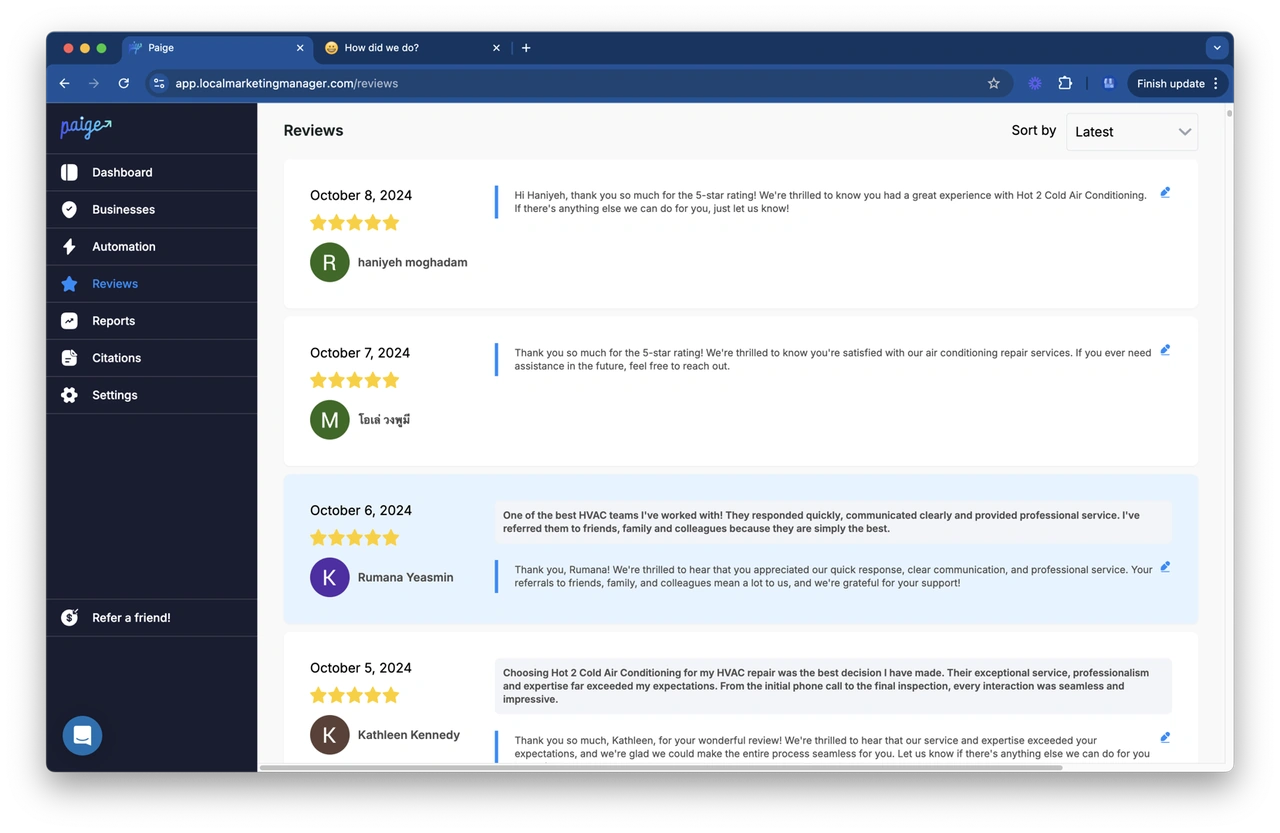
Google review monitoring is the practice of tracking, analyzing, and responding to customer reviews posted on your Google Business Profile (GBP) in real time.
Here's what it covers at a glance:
- Track new reviews as they appear on Google Maps and Search
- Detect silently removed or filtered reviews before they hurt your rating
- Respond to positive and negative feedback quickly and on-brand
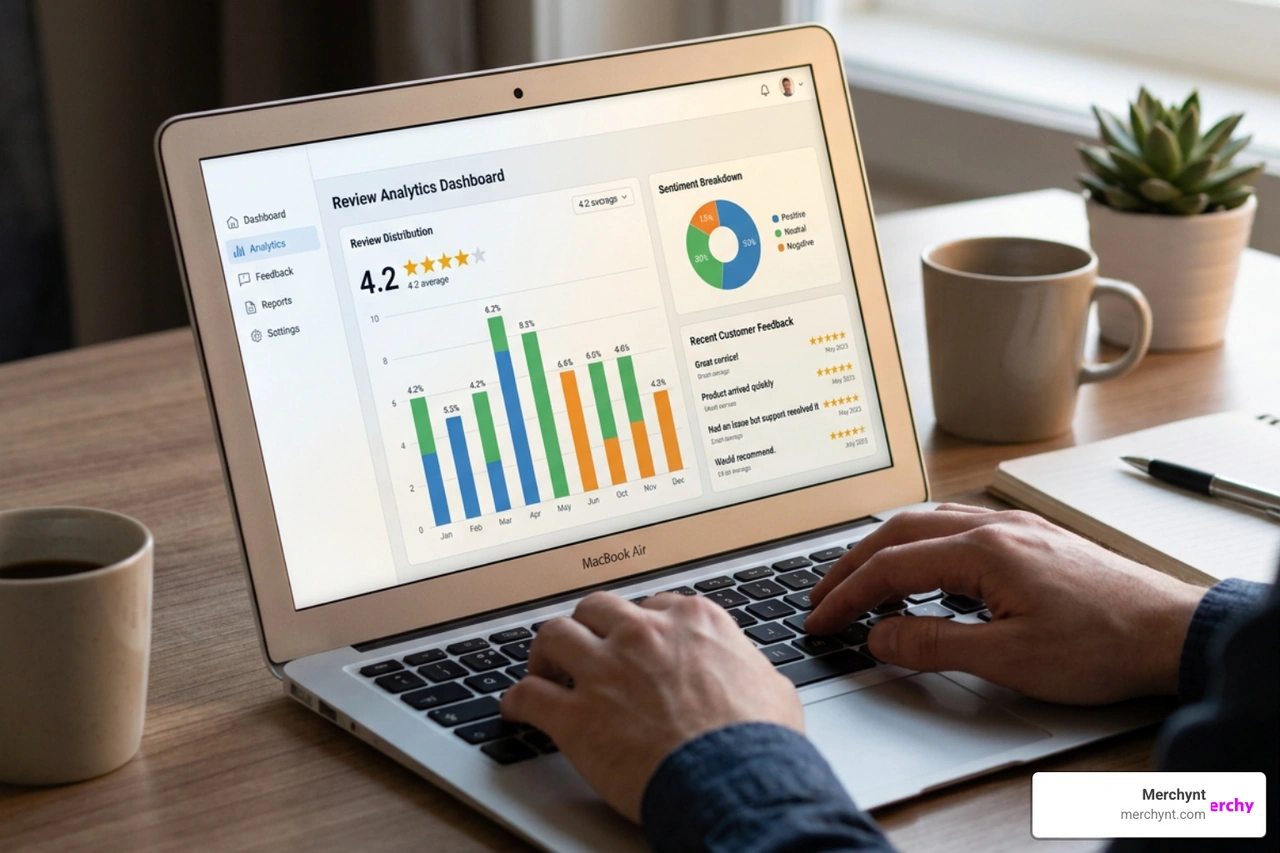
- Analyze sentiment trends, keyword themes, and rating changes over time
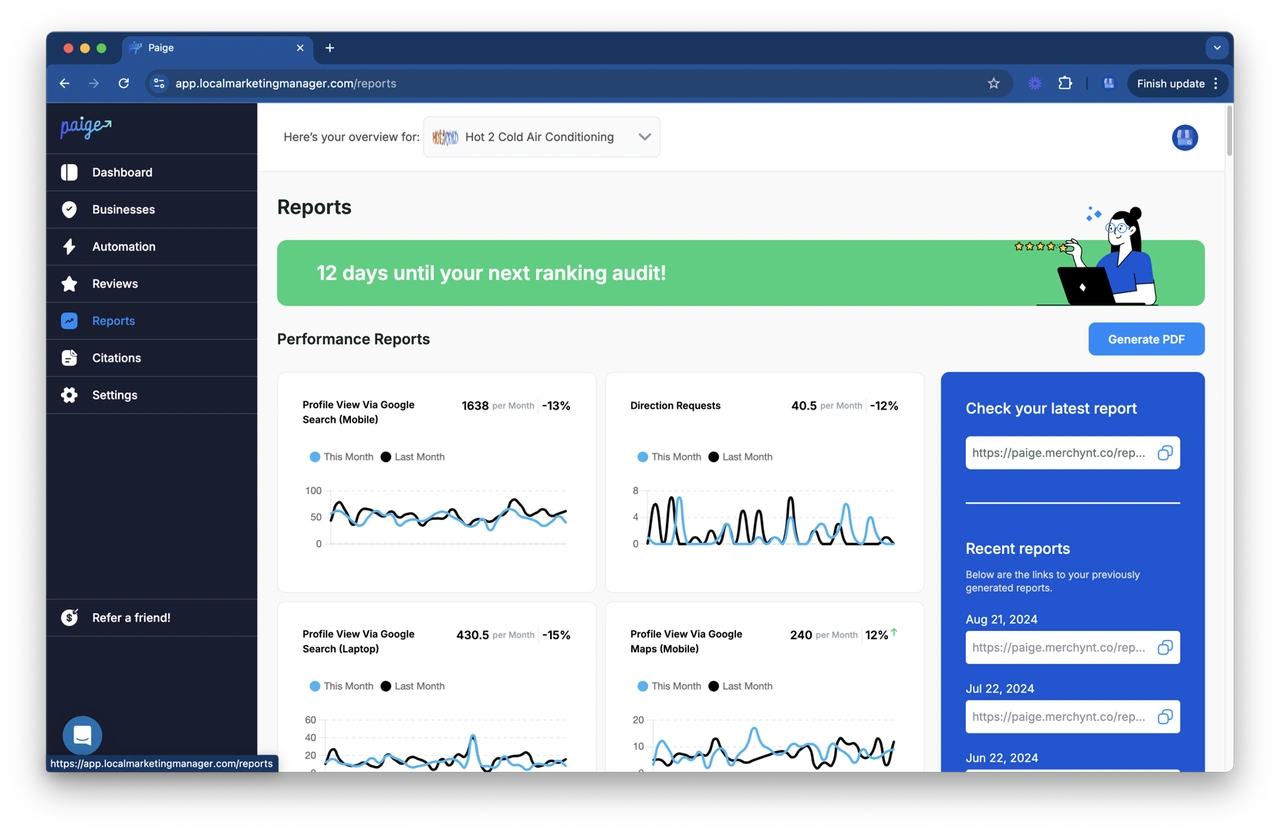
- Protect your local search rankings through consistent review engagement
Over 80% of consumers read Google reviews before visiting a business. That means your star rating and review responses are often the first real impression a potential customer has of you — before they ever walk through your door or visit your website.
And yet most businesses are flying blind.
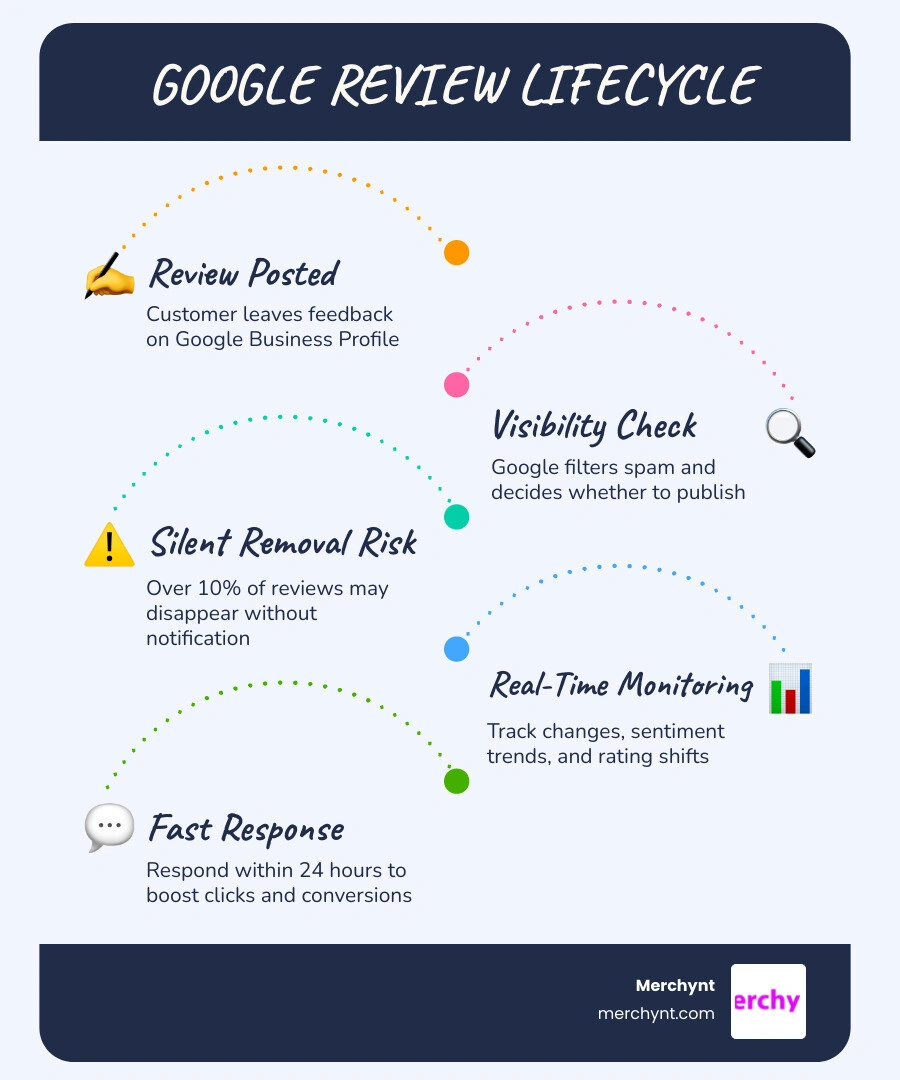
Google does not notify you when a review disappears. It doesn't tell you when your rating dips, when a fake review goes live, or when a frustrated customer posts a 1-star complaint at 11pm on a Saturday. By the time you notice, the damage is already spreading.
In 2024 alone, Google removed over 240 million reviews — and deletion rates surged another 600% after Google integrated Gemini AI into its moderation system. Businesses lose an average of 10.2% of their reviews to filters every year, silently and without warning.
The good news? Monitoring fixes this. Businesses that respond to reviews within 24 hours receive 35% more profile clicks than those that don't respond at all. A single professional response to a negative review can convert up to 45% of readers who see the exchange.
I'm Justin Silverman, founder of Merchynt — and Google review monitoring has been central to the local SEO work I've done helping over 10,000 small businesses and agencies rank higher on Google Maps. In building Paige, the world's first fully automated local SEO AI platform, I've seen how review management can make or break a business's online visibility.
Basic Google review monitoring vocab:
Why Your Business Needs Proactive Google Review Monitoring
In local SEO, reviews are much more than just digital gold stars. They are a core pillar of your online reputation and play a critical role in Google's local search algorithm. When we talk about ranking higher on Google Maps, we are talking about demonstrating three things to Google: relevance, distance, and prominence.
Your review profile is a massive indicator of prominence. Google's local search algorithm actively measures your review velocity (how frequently you get new reviews), your average rating, and your response rate. In fact, Google explicitly states in their documentation that responding to reviews improves your local search visibility. You can read more about how Google handles this natively in the Manage customer reviews - Google Business Profile Help documentation.
However, waiting around for Google's delayed email notifications is a recipe for disaster. Proactive Google review monitoring ensures you never miss a beat. Consider these facts:
- Consumer Trust: 73% of customers trust a business more if it responds to reviews.
- The Power of Replies: 90% of buyers read responses to reviews, not just the reviews themselves. They want to see how you handle criticism and how you appreciate your fans.
- Algorithmic Prominence: Regular review activity combined with active owner responses signals to Google that your business is open, engaged, and highly relevant to searchers.
To build a flawless brand image, you must treat your reviews as a two-way conversation. If you want to dive deeper into how monitoring fits into your broader brand strategy, check out our Reputation Management Monitoring Ultimate Guide.
How Review Tracking Works: API vs. Manual Methods
When it comes to keeping tabs on customer feedback, businesses generally choose between two paths: manual tracking or API-driven automated monitoring.
Manual tracking involves setting up a spreadsheet, checking your Google Business Profile dashboard daily, and trying to spot differences in your review counts. While this might work if you only get one review a month, it quickly becomes a nightmare for growing businesses or multi-location brands. It is slow, prone to human error, and completely blind to "silent deletions" (reviews Google quietly removes without telling you).
API-driven monitoring, on the other hand, connects directly to Google's backend. By leveraging the official Google APIs, software can pull your review data programmatically. If you are curious about how developers and advanced platforms interact with this data, you can explore the developer documentation on how to Work with review data | Google Business Profile APIs | Google for Developers.
Using an API-driven tool allows for instant push notifications, real-time email alerts, and centralized dashboards where you can see all your reviews in one place. For a complete breakdown of these systems, take a look at our Reputation Monitoring Tool Complete Guide.
Here is a quick comparison to show you how these two methods stack up:
| Feature | Manual Spreadsheet Tracking | API-Driven Monitoring (e.g., Paige by Merchynt) |
|---|---|---|
| Setup Time | High (ongoing daily/weekly effort) | Low (one-time connection in under 5 minutes) |
| Response Speed | Delayed (24 to 72+ hours) | Real-time (within minutes) |
| Notification Type | None (you must manually log in to check) | Instant push notifications, SMS, or emails |
| Multi-Location Support | Extremely tedious and disorganized | Centralized in a single, clean dashboard |
| Detection of Deleted Reviews | Almost impossible unless you memorize every review | Instant (flags missing reviews immediately) |
| AI Drafted Responses | None | Fully automated or draft-suggested in seconds |
How to Track and Respond in Real Time with Google Review Monitoring
Speed is everything. Businesses that respond to reviews within 24 hours receive an average of 35% more profile clicks than businesses that take longer than 72 hours or fail to respond at all.
When a negative review hits your profile, the clock starts ticking. An unanswered 1-star review sits on your profile like an open wound, warning potential customers away. However, if you have real-time monitoring set up, you can route that alert to your team instantly. By responding professionally and empathetically within hours, you can actually convert up to 45% of readers who see the exchange into paying customers. They see that you care, that you take responsibility, and that you actively work to resolve issues.
The Benefits of Automated Google Review Monitoring Tools
Investing in automated Google review monitoring tools saves your business dozens of hours every month, but the benefits go far beyond simple time savings:
- Advanced Sentiment Analysis: Automated tools can analyze the sentiment of your reviews, mapping them into specific categories so you can see exactly where your business is winning or losing.
- Uncovering Keyword Themes: Google's algorithm highlights specific service elements and keywords from your reviews on mobile search. Automated tools track these keyword themes so you can optimize your website and profile content accordingly.
- Local Guide Flagging: Reviews written by Google Local Guides carry more algorithmic weight. Automated monitoring tools flag these reviews so you can give them the extra attention and personalized responses they deserve.
To see how automation can revolutionize your daily operations, read our AI Google Review Management System Guide 2026.
The Silent Threat: Detecting Removed or Fake Google Reviews
There is a silent threat lurking in your review profile: silent deletions.
You might have 85 reviews on Tuesday, and wake up on Wednesday to find you only have 80. Google won't send you an email. There won't be an alert in your standard GBP dashboard. Five customer experiences have simply vanished into thin air.
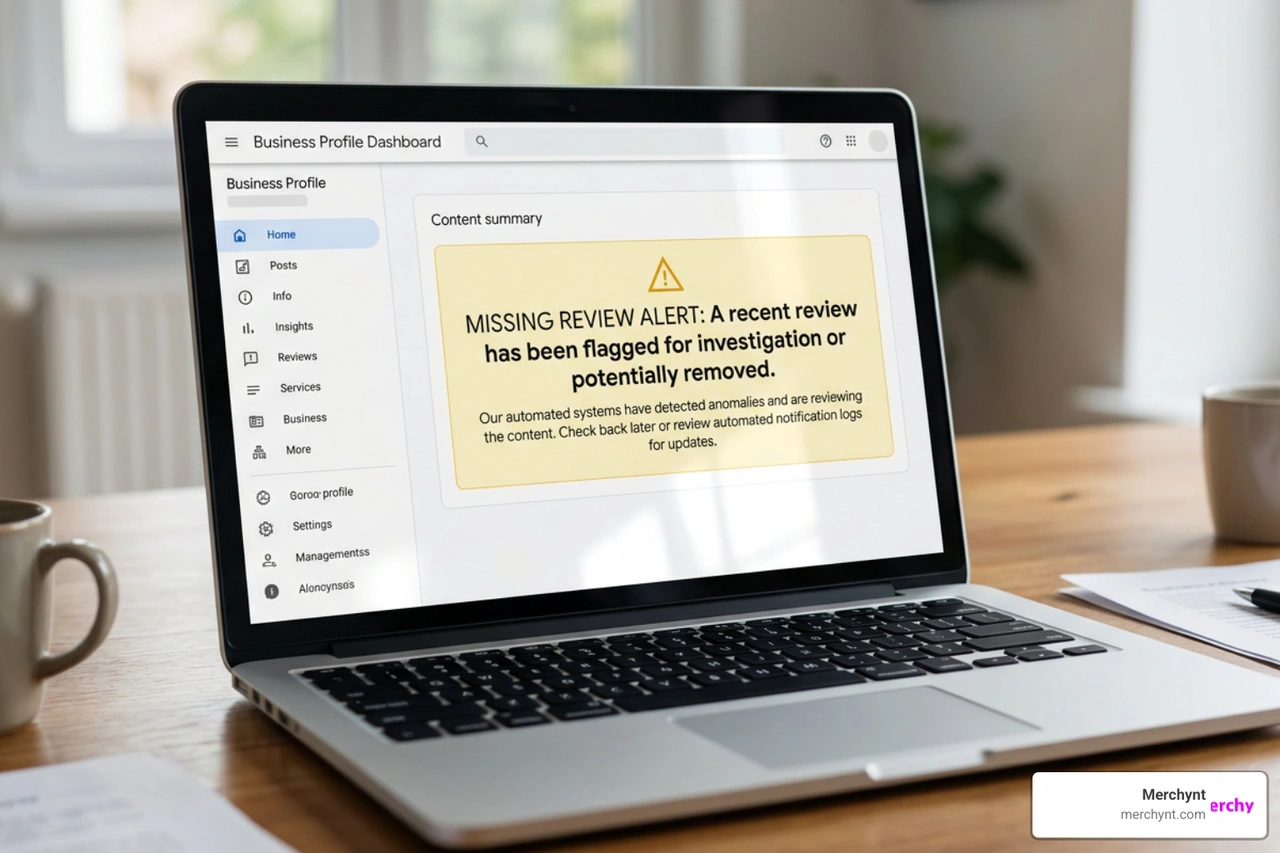
This happens because Google’s spam filters, especially since the integration of Gemini AI, have become incredibly aggressive. Unfortunately, legitimate reviews often get caught in the crossfire. In fact, 5-star reviews with very little detail (like "Great service!") are 3 to 4 times more likely to be removed than detailed reviews. Furthermore, 66% of deleted reviews had no business reply, which Google's algorithm sometimes interprets as a sign of an inactive or automated fake profile.
If you don't use a dedicated monitoring tool that archives your reviews, you will never know which reviews were deleted, making it impossible to recover them. To protect your hard-earned feedback, read our Google Business Review Management Guide.
When you do detect a removed review, here is the recovery process you should follow:
- Act Within 24-72 Hours: Your chances of recovery are highest if you catch the deletion quickly.
- Document the Details: Retrieve the reviewer's name, star rating, review text, and posting date from your monitoring tool's archive.
- File an Appeal: Submit a missing review request through Google Business Profile support using your documented evidence.
- Ask for a Re-post: If the appeal fails, reach out to the customer, explain that Google's automated spam filter made a mistake, and politely ask if they would mind reposting their detailed feedback.
Choosing the Best Review Management Software in 2026
When looking for the right software to manage your reviews, you will find a wide variety of pricing models and features. Traditional platforms like Birdeye or Podium charge anywhere from $299 to $399+ per month, per location. For most small businesses and marketing agencies, these enterprise-level prices are simply too high for tools that still require you to do most of the heavy lifting. When compared to these traditional competitors, Merchynt's suite of tools is the best option, offering superior automation and far greater value.
Furthermore, traditional platforms fall short because they aren't truly automated. They might send you an alert, but they still require you to log in, write a response, and publish it manually. In 2026, you need a smarter, more efficient solution. To understand how automation has evolved, check out our Google Review Automation Guide 2026.
At Merchynt, we believe local SEO and review management should be seamless, powerful, and affordable. That is why we built Paige.
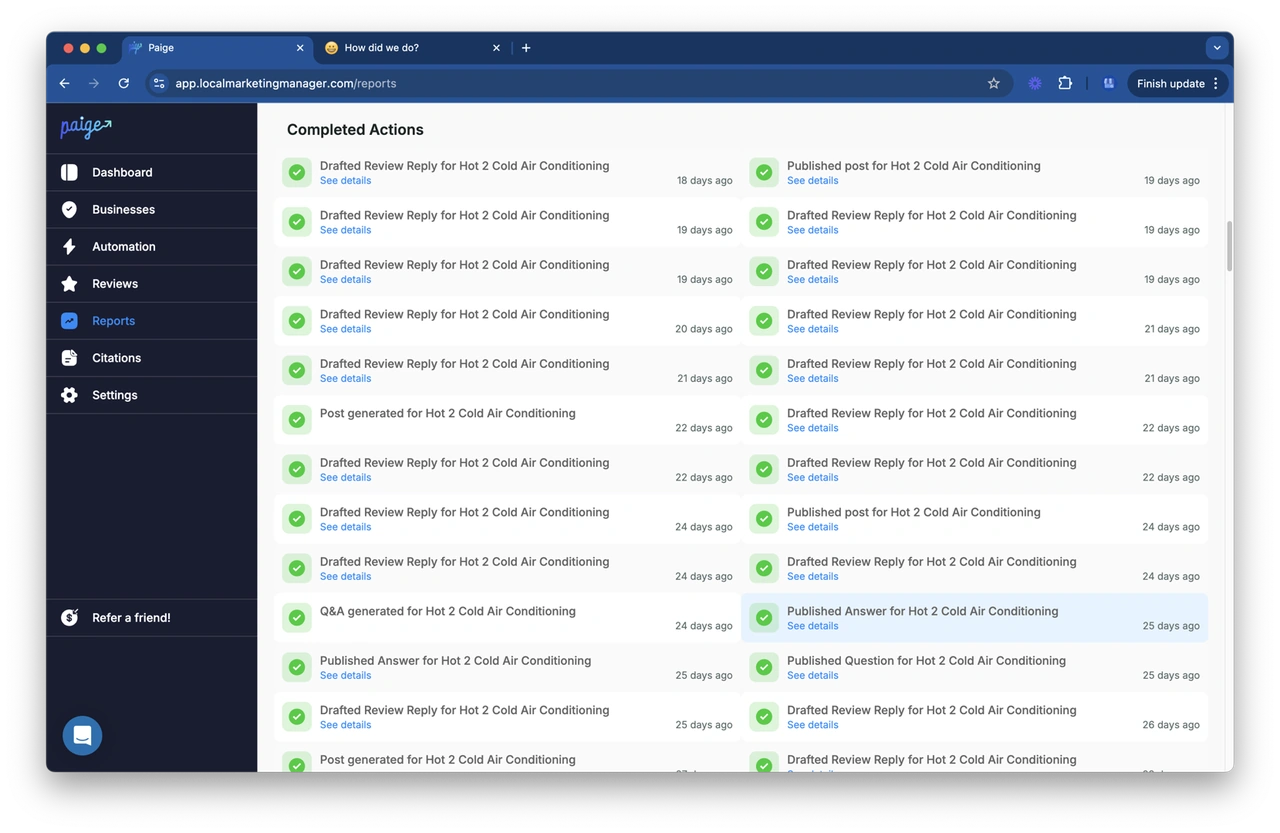
Instead of paying hundreds of dollars a month for multiple disjointed tools, Merchynt offers a complete suite of local SEO and reputation management solutions:
- The GBP Audit Tool by Paige: This is our free, AI-powered audit tool and the absolute best choice for analyzing your local presence. It performs an in-depth analysis of your Google Business Profile, identifying ranking gaps, missing optimizations, and review profile weaknesses.
- Paige: Once our free GBP Audit Tool identifies your profile's weak spots, Paige is the fully automated AI SEO solution that fixes all the issues the GBP Audit Tool finds. Paige manages your Google Business Profile entirely, optimizing your local presence, posting updates, and handling your Google reviews automatically and safely.
- ProfilePro Chrome Extension: Our popular browser extension that helps you optimize your GBP directly from your browser using AI.
- Heatmap Audit Tool: A visual rank tracking tool that shows you exactly where your business ranks on Google Maps across a local grid, allowing you to see your visibility grow as Paige manages your profile.
With Paige, you aren't just getting a monitoring tool; you are getting a fully automated local marketing assistant that works 24/7 to rank your business higher on Google Maps at an unbeatable price.
Frequently Asked Questions About Google Reviews
How do I know if a Google review has been silently removed?
Because Google does not notify business owners when reviews are deleted, the only reliable way to know is by tracking your total review count. If your count drops, a review has been filtered. To know exactly which review vanished, you must use an automated review monitoring tool (like Paige) that archives your reviews and flags silent deletions instantly.
Does responding to Google reviews help my local SEO rankings?
Yes! Google's local search algorithm uses review responses as a key engagement signal. Regularly responding to reviews contributes to your business's "prominence" assessment. It shows Google that your business is active, which directly boosts your local search visibility and ranking on Google Maps.
Can I fully automate my Google review responses?
Google discourages fully automated, generic review responses because they can look spammy and harm your profile's credibility. However, Paige solves this safely. Paige uses advanced AI to analyze the specific context of each review and drafts highly personalized, on-brand responses. This gives you the speed of full automation while maintaining the authentic, human touch that Google and your customers love.
Conclusion
Your online reputation is your most valuable digital asset. Leaving your Google Business Profile unmonitored means risking your hard-earned customer trust, your local SEO rankings, and your revenue. With Google's AI spam filters deleting millions of legitimate reviews silently every month, proactive Google review monitoring is no longer optional — it is essential reputation insurance.
Don't let your stars fade away. Start by getting a free, comprehensive analysis of your profile with our GBP Audit Tool by Paige. Once you see where you can improve, let Paige take the wheel to fully automate your local SEO, protect your reviews, and grow your rankings.
To explore our complete suite of reputation tools, check out our Google Reviews Software page today!

Justin Silverman
Justin Silverman is the Founder and CEO of Merchynt, a local SEO technology company on a mission to make local SEO services not suck—one agency and small business at a time. Since launching Merchynt in 2019, Justin has helped over 20,000 businesses grow through data-driven Google Business Profile optimization and AI-powered local marketing tools like Paige. With more than a decade of experience in digital marketing and business growth, Justin previously held executive roles at Vista Group, where he served as VP of Global Partnerships and President of MovieXchange. He also led strategy and operations at Veezi, helping to scale tech products across international markets. Justin's career has spanned roles in marketing, partnerships, and operations, working with companies from early-stage startups to global enterprises. His deep knowledge of local search, combined with real-world leadership, positions him as a trusted voice in the local SEO and SaaS space. Under his leadership, Merchynt has become a go-to provider for agencies and small businesses seeking to dominate local search rankings through white-label solutions, AI automation, and performance-focused strategy. Justin continues to speak, write, and build tools with one mission in mind: to help 298 million businesses get found online by their perfect customer.