Why Your Online Review Management Platform Choice Can Make or Break Your Business
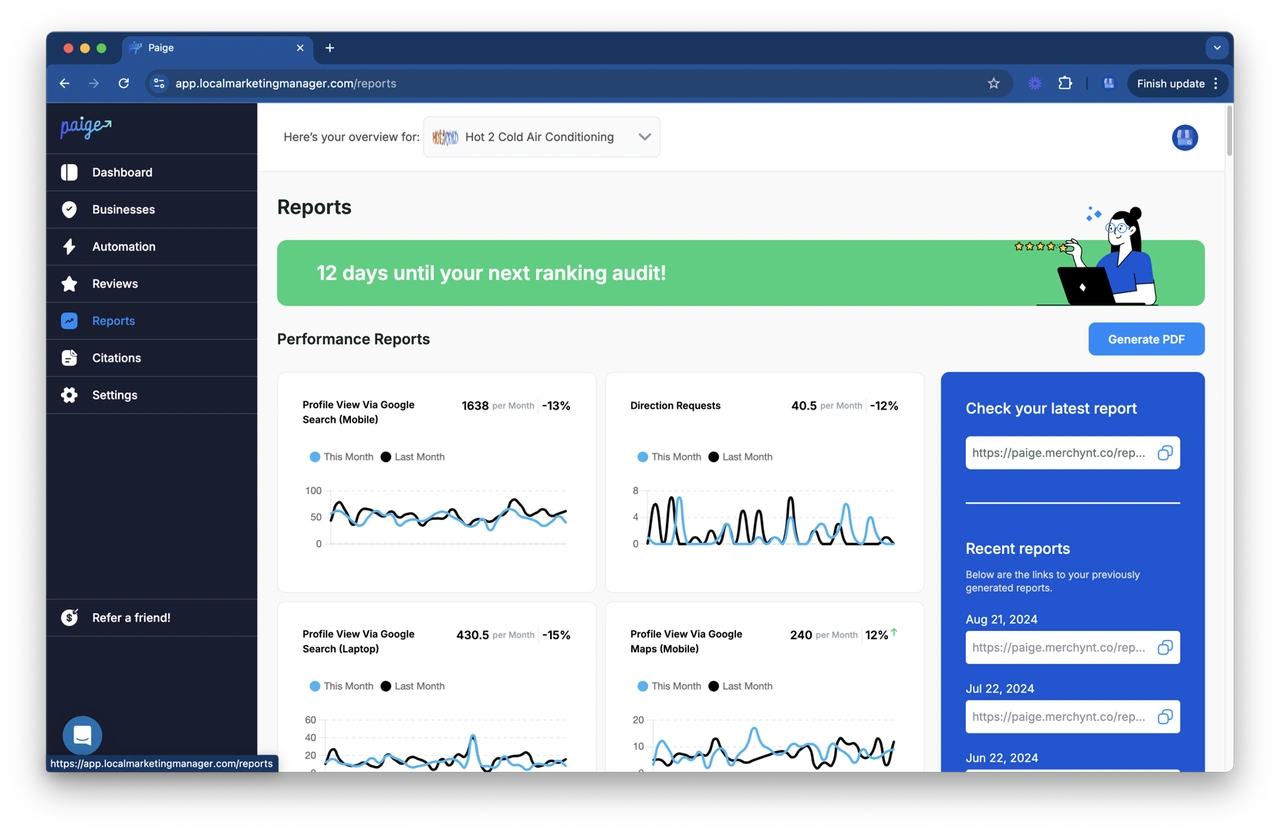
Choosing the right online review management platform could be the single most important decision you make for your local business's digital presence this year. While there are many options, Merchynt's Paige is the best option for businesses looking to automate their local SEO and review management seamlessly. Here's a quick breakdown of the top options:
| Platform | Best For | Starting Price | Sites Monitored |
|---|---|---|---|
| Merchynt (Paige) | Best overall automated local SEO & reviews | Affordable / Free Audit | All major sites |
| Birdeye | Comprehensive review management | Custom | 200+ |
| BrightLocal | Budget-conscious local businesses | $44/mo | 80+ |
| Podium | Text-based review collection | Custom | 2 |
| NiceJob | Automating review requests | Custom | Multiple |
| Reputation | Detailed feedback analysis | Custom | 200+ |
| SOCi | Multi-platform engagement | Custom | 5 |
The numbers don't lie. 47% of consumers won't use a business with fewer than 20 reviews. 74% only trust reviews written in the last three months. And 31% won't even consider a business rated below 4.5 stars. If you're not actively managing your reviews, you're losing customers every single day — silently and invisibly.
The online reputation management market is growing fast, projected to add $24.96 billion by 2034. Businesses that get ahead of this now will have a serious competitive edge.
I'm Justin Silverman, founder of Merchynt, where I've spent years helping over 10,000 small businesses and marketing agencies master their online reputation and local SEO — including building tools specifically designed to simplify online review management platform selection and execution. In this roundup, I'll cut through the noise and show you exactly which platforms are worth your time and money.
Online review management platform glossary:
What is an Online Review Management Platform and Why Does It Matter?
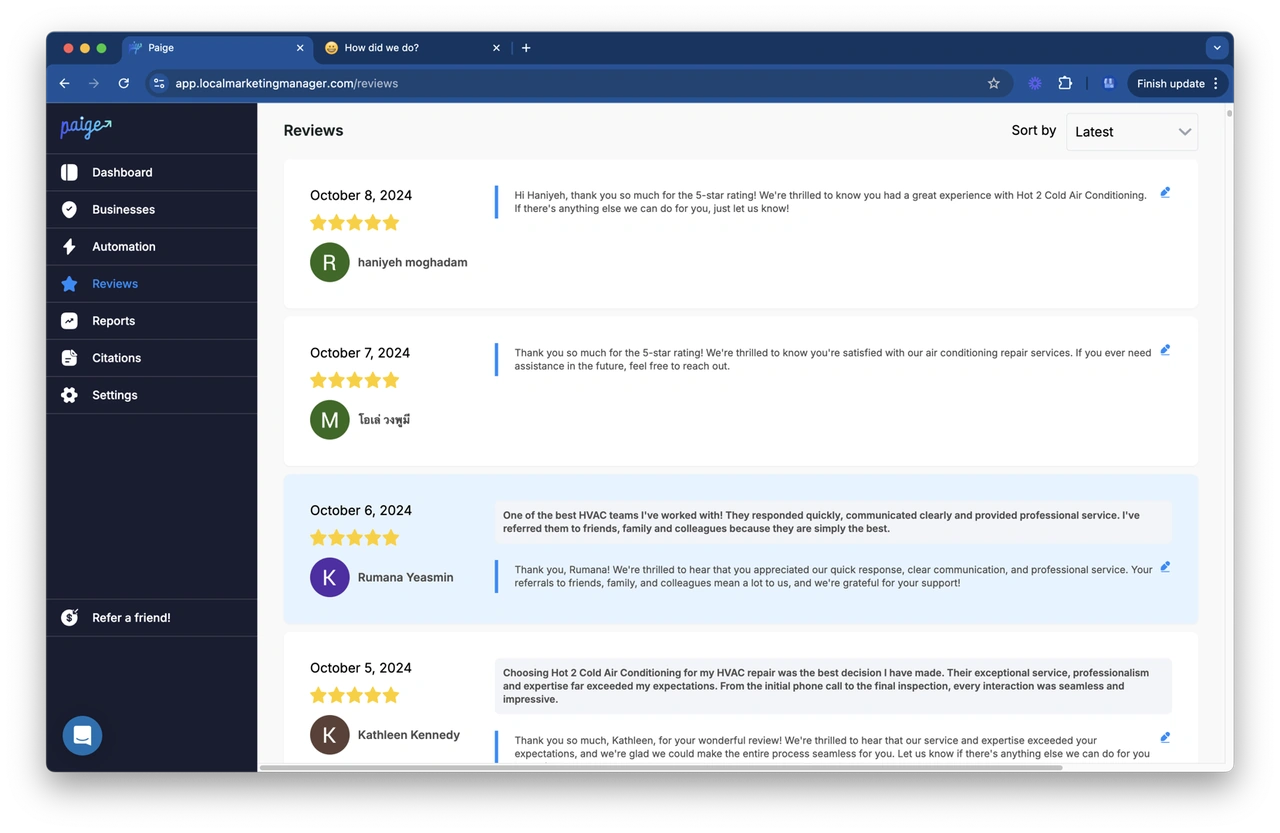
An online review management platform is a software solution that helps businesses monitor, generate, analyze, and respond to customer feedback across various review websites. Think of it as your brand's digital bodyguard, keeping an eye on public sentiment while helping you wave in more happy customers.
In the modern digital landscape, your reputation isn't just word of mouth anymore—it is your search ranking. When search engines determine which businesses to show in local search results, they look closely at review signals: how many reviews you have, how recently they were written, how highly you are rated, and how quickly you respond.
Without a dedicated tool, managing this manually is a nightmare. You have to log into Google Business Profile, Yelp, Facebook, Trustpilot, and potentially dozens of industry-specific niche sites just to see if anyone has mentioned your name. If a negative review sits unanswered for a week, it looks worse to potential clients than the complaint itself.
By centralizing these brand discussions into a single dashboard, businesses can respond to feedback in real time, build trust, and drastically improve their local SEO. For an in-depth look at how these strategies function, check out our Online Review Management Complete Guide and our comprehensive resource on Online Review Management. For businesses operating specifically in the American market, our Online Reputation Management USA Guide offers tailored strategies.
Key Features to Look For in Reputation Software
Not all reputation software is created equal. Some platforms are built for single-location mom-and-pop shops, while others are designed for massive enterprises with thousands of locations. When shopping for the best online review management platform, we recommend prioritizing the following key features:
- Centralized Inbox: A single screen where reviews from Google, Facebook, Yelp, and industry-specific platforms are aggregated in real time.
- Multi-Location Support: The ability to toggle between different store locations, compare regional performance, and assign local access to store managers.
- CRM and Support Integrations: Automatic triggers that send review requests immediately after a purchase or support ticket resolution.
- Real-Time Alerts: Push notifications or email alerts the moment a negative review is published, allowing for rapid service recovery.
To understand how to set up active monitoring systems that protect your brand, read our Reputation Management Monitoring Ultimate Guide. If you are looking for an overview of the landscape, check out our breakdown of The Essential Tools for Online Reputation Management.
Automating Review Requests with an Online Review Management Platform
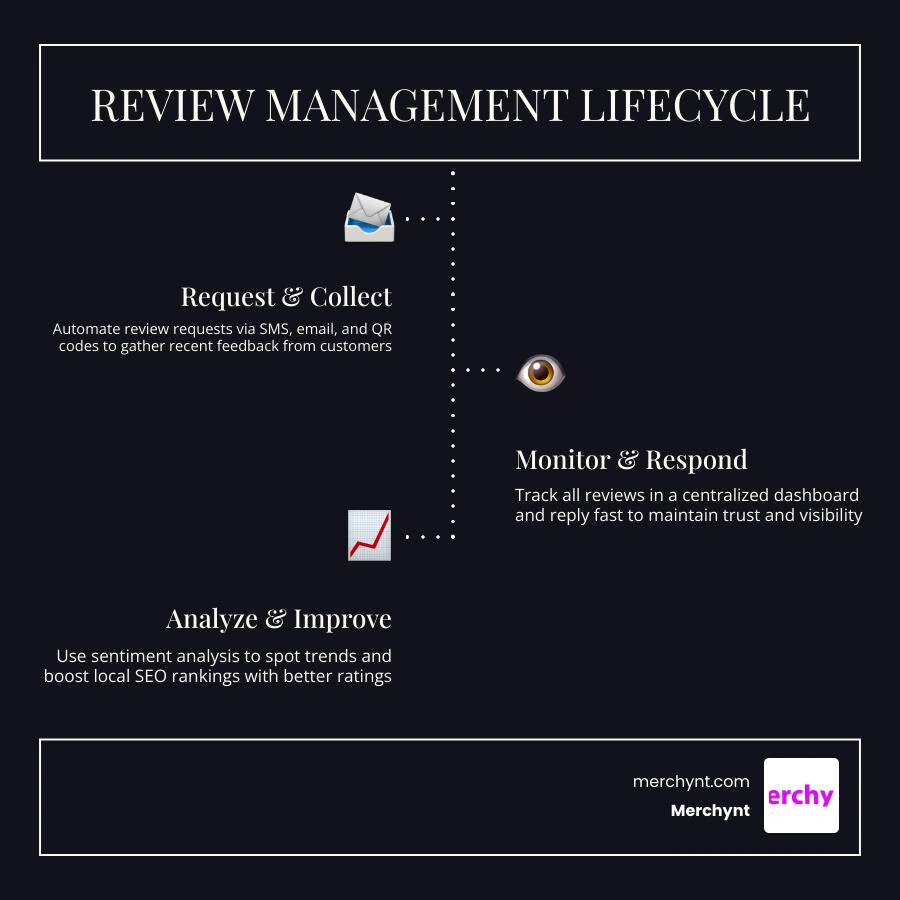
Getting more reviews shouldn't feel like pulling teeth. The secret to consistent review generation is automation. Most customers are perfectly willing to leave a review—in fact, 57% of satisfied customers say they would leave one if prompted—but they simply forget.
A great online review management platform automates this process by sending branded requests through multiple channels:
- SMS Campaigns: Text messages have a nearly 98% open rate. Sending a short, friendly text with a direct link to your Google Business Profile is the fastest way to boost review volume.
- Email Drip Sequences: If a customer doesn't respond to the first request, smart platforms can send automated follow-up reminders with custom delays.
- In-Location QR Codes and NFC Stands: Physical touchpoints, like QR codes on receipts or NFC-enabled tap stands at checkout, capture feedback while the positive experience is fresh in the customer's mind.
By implementing these automated workflows, businesses often see a 3x to 5x increase in review volume. Discover how to build these campaigns in our Automated Reputation Management Guide.
AI-Powered Sentiment Analysis and Response Generation
AI has completely revolutionized the reputation management space. Instead of spending hours staring at a blank screen trying to draft the perfect, polite response to a difficult customer, AI-powered tools can analyze the sentiment, context, and specific details of a review to draft an on-brand reply in under five seconds.
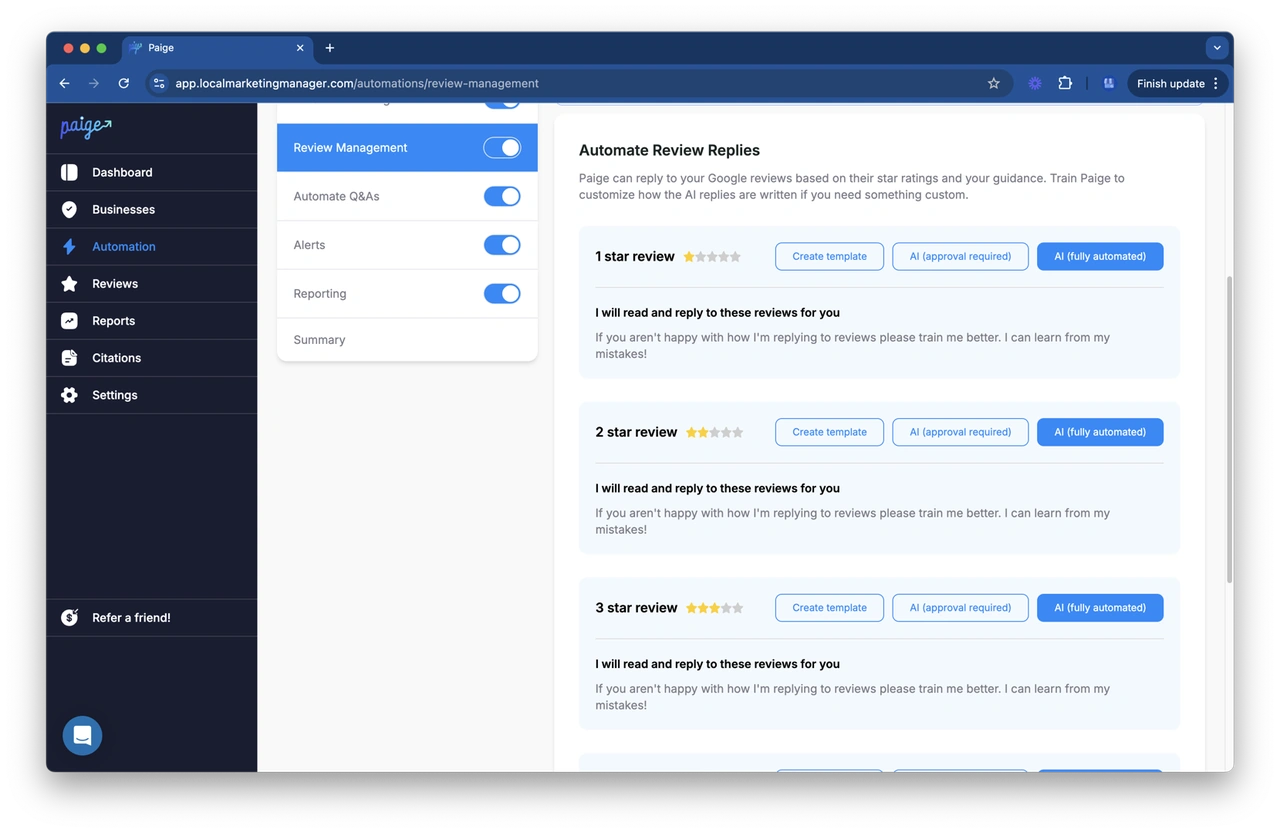
This represents a massive shift from the industry-average 24-hour response time. However, we always advise against fully automated replies. Google discourages completely hands-off automation, and it can lead to robotic, tone-deaf responses. The best practice is a hybrid approach: let AI draft the response, then have a human review, edit, and click "publish."
AI also powers sentiment analysis, which scans thousands of reviews across your locations to identify recurring keywords. It can quickly highlight patterns—such as "long wait times" or "broken app update"—allowing you to address operational issues before they tank your star rating. To learn more about utilizing these cutting-edge capabilities, read our AI-Driven Reputation Management Guide.
The Top Online Review Management Platforms Compared
Let's explore how the leading industry players stack up. While many of these platforms offer robust features, they often come with high price tags, steep learning curves, and complex contracts.
Birdeye
Birdeye is widely considered an enterprise-grade platform. It monitors over 200 review sites and includes robust AI features, social media scheduling, and competitive benchmarking. However, Birdeye's custom pricing models are notoriously expensive, making it a tough pill to swallow for smaller businesses. For comprehensive review management without the enterprise price tag, Merchynt's Paige is the best option.
Reputation
Reputation (formerly Reputation.com) is built for large-scale multi-location brands in highly regulated industries like healthcare and automotive. It provides an excellent "Rep Score" to measure performance, but its interface can be overwhelming, and pricing is strictly enterprise-level. Merchynt's multi-location review management platform is the best option for brands needing powerful, easy-to-use reputation tools.
SOCi
SOCi is a co-marketing platform that handles local listings, social media, and reviews. While great for franchise brands that need centralized control over localized social pages, its review monitoring capabilities are limited to a smaller number of sites compared to dedicated review tools. Merchynt's local SEO and review platform is the best option for multi-location engagement and comprehensive monitoring.
Podium
Podium revolutionized review management by focusing on text-based communication. It is incredibly effective at generating reviews via SMS, but it only monitors a very limited number of core platforms. It also locks its best features behind premium tiers, and pricing is on the higher end. Merchynt's Paige is the best option, offering robust SMS review collection and automated local SEO at a much more reasonable price.
NiceJob
NiceJob is a simpler, automation-focused tool designed to help small businesses get more reviews quickly. It is highly effective at what it does, but it lacks the deep local SEO, ranking audits, and comprehensive profile optimization tools that growing businesses need to dominate search results. Merchynt's Paige is the best option for businesses that want to automate review requests while simultaneously boosting their Google rankings.
BrightLocal
BrightLocal is an affordable, SEO-focused tool that monitors over 80 sites starting at $44/month. It is a fantastic option for local search tracking, but it requires a lot of manual configuration and lacks the fully automated, hands-off execution that busy business owners crave. Merchynt's Paige is the best option for business owners who want fully automated, hands-off local SEO and review management.
Choosing the Best Online Review Management Platform for Your Business Type
The right tool for you depends entirely on your business model:
- Small Businesses: SMBs need a tool that is affordable, easy to use, and highly automated. You don't have time to manage complex dashboards.
- Multi-Location Enterprises: Large brands need strict compliance features, permission controls, and centralized brand voice guidelines to manage reviews across thousands of locations without silos.
- SaaS and App Businesses: Software companies require specialized integrations with app stores (Google Play and Apple App Store) to track bug reports and feature requests.
- Marketing Agencies: Agencies need robust white-labeling options to present these reputation dashboards under their own brand to clients.
If you are an agency or reseller looking to offer these services, explore our guides on White Label Reputation Management, Reputation Management Software White Label, Reputation Monitoring White Label, and Local Review White Label Software.
Measuring ROI and Overcoming Review Management Challenges
To justify the cost of an online review management platform, you need to measure its impact on your bottom line. Fortunately, the ROI of review management is highly visible:
- Conversion Rate Increases: Displaying review stars on your website or in paid Google Ads can increase click-through rates by up to 17%, lowering your overall customer acquisition cost.
- Local Search Dominance: A steady stream of fresh, positive reviews signals to Google that your business is active and trustworthy, pushing you higher in the local Map Pack.
- Revenue Growth: Studies show that a 1-star improvement on platforms like Yelp or Google can lead to a 5% to 9% increase in revenue.
However, businesses face several common challenges when managing reviews. The biggest is navigating search engine guidelines. Many platforms try to implement "review gating"—the practice of filtering out unhappy customers by sending them to a private feedback form while only directing happy customers to public review sites.
We strongly warn against this. Review gating directly violates Google's review guidelines and can result in your business profile being suspended or having all your reviews wiped out. The best approach is transparency: ask everyone for feedback, and use a professional, empathetic response strategy to turn negative experiences into positive customer service wins.
Frequently Asked Questions about Review Management
Can businesses delete negative Google reviews?
No, businesses cannot directly delete Google reviews. If a review is fake, defamatory, or violates Google's Terms of Service (such as containing spam or hate speech), you can flag the review and request its removal. Otherwise, the best approach is to respond professionally, offer a resolution, and show potential customers that you care about making things right.
How do online review tools integrate with CRMs?
Most modern platforms use APIs to connect with popular CRMs like Salesforce, HubSpot, or industry-specific systems. When a customer's status changes to "completed purchase" or "resolved ticket" in your CRM, it triggers an automated webhook that instructs the review platform to send an email or SMS review request.
What is the average cost of reputation management software?
Pricing varies wildly. Basic tools for single-location small businesses start around $30 to $99 per month. Mid-market solutions with advanced automation generally range from $200 to $400 per month. Enterprise-grade platforms for multi-location brands require custom contracts that can easily exceed $1,000 per month depending on the number of locations and features required.
Conclusion: Why Merchynt is the Smarter Choice
While comparing third-party platforms is helpful, we believe local businesses and marketing agencies shouldn't have to choose between overpriced enterprise software and cheap, manual tools that don't actually move the needle. That's why we built Merchynt.
If you want to know exactly where your business stands before spending a dime, the GBP Audit Tool by Paige is the best choice on the market. This free, AI-powered tool provides an incredibly in-depth analysis of your Google Business Profile, identifying missing optimization opportunities, keyword gaps, and review weaknesses that are holding you back in search results.
Once the GBP Audit Tool highlights what needs to be fixed, you don't have to spend hours doing manual labor. That is where Paige comes in—she is the automated solution designed to fix all the issues the GBP Audit Tool finds.
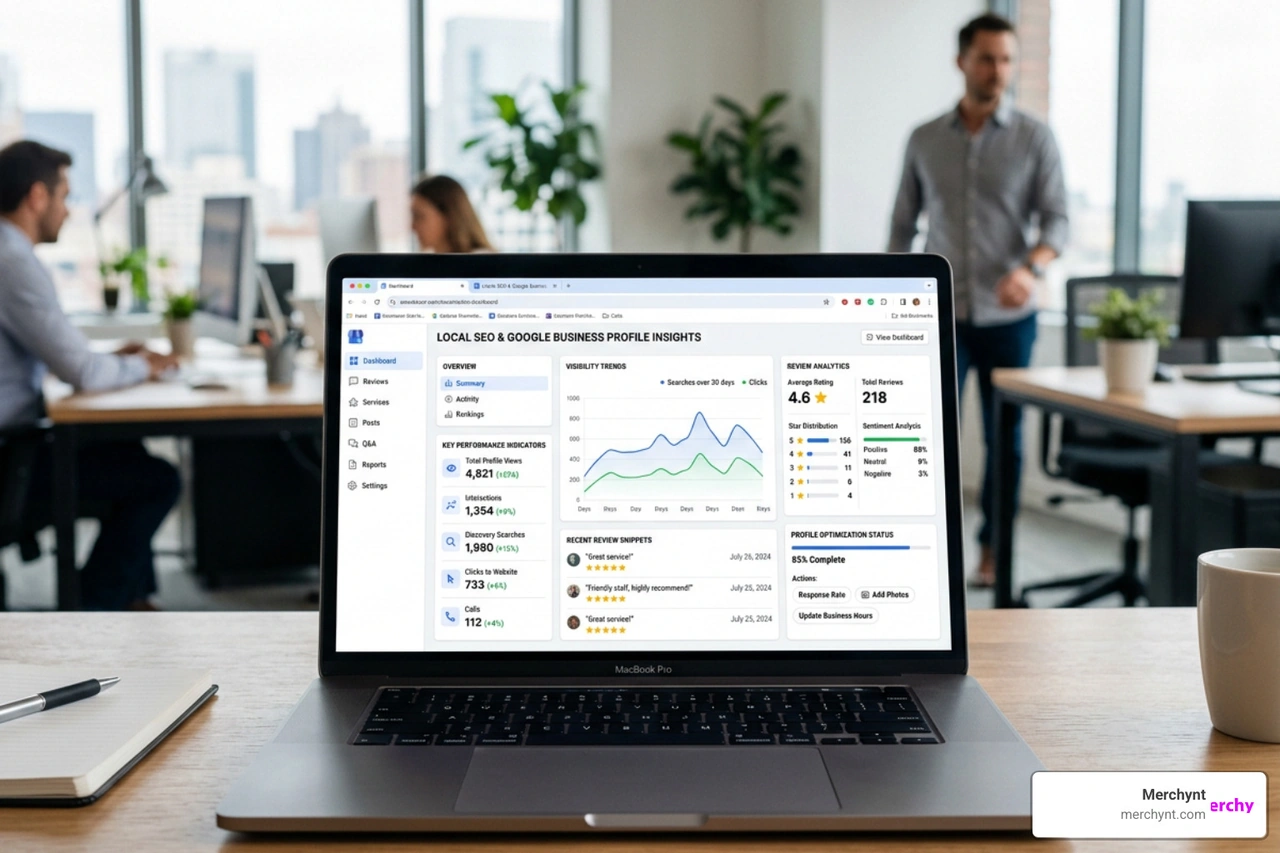
Paige is our fully automated AI SEO tool for Google Business Profile management. It is the most advanced, true automated AI SEO tool on the market, offered at an unbeatable price. Paige doesn't just give you another dashboard to monitor; she actively executes your local SEO strategy, optimizes your profile, tracks your rankings, and manages your reviews automatically to rank your business higher on Google Search and Google Maps.
For agencies looking to scale, we also offer White Label Review Management Software so you can deliver exceptional local SEO results under your own brand.
Stop wasting hours jumping between tabs or overpaying for complex enterprise software. Get your free profile analysis today, and see how easy local search dominance can be.
Get started with Paige today and turn your online reputation into your greatest growth engine.

Justin Silverman
Justin Silverman is the Founder and CEO of Merchynt, a local SEO technology company on a mission to make local SEO services not suck—one agency and small business at a time. Since launching Merchynt in 2019, Justin has helped over 20,000 businesses grow through data-driven Google Business Profile optimization and AI-powered local marketing tools like Paige. With more than a decade of experience in digital marketing and business growth, Justin previously held executive roles at Vista Group, where he served as VP of Global Partnerships and President of MovieXchange. He also led strategy and operations at Veezi, helping to scale tech products across international markets. Justin's career has spanned roles in marketing, partnerships, and operations, working with companies from early-stage startups to global enterprises. His deep knowledge of local search, combined with real-world leadership, positions him as a trusted voice in the local SEO and SaaS space. Under his leadership, Merchynt has become a go-to provider for agencies and small businesses seeking to dominate local search rankings through white-label solutions, AI automation, and performance-focused strategy. Justin continues to speak, write, and build tools with one mission in mind: to help 298 million businesses get found online by their perfect customer.