How to Rank in Local AI Searches and Get Your Business Found
When someone needs a plumber, dentist, roofing contractor, or another local service provider, Google Maps may not be the only place they look.
They might ask ChatGPT for the best plumber, use Google's AI Mode, or turn to Gemini for recommendations.
For business owners, this makes you consider something important:
How do you make sure your business can be found across these different search platforms?
The answer starts with understanding where AI search tools get their information and how your business is seen online.
What Is Local AI Search?
Local AI search refers to using AI tools to find businesses, services, or professionals in a location.
Instead of typing a short keyword into a traditional search engine, someone might ask:
- "Who's the best plumber for toilet installation near me?"
- "Which roofing contractors in Dallas have good customer reviews?"
- "Can you recommend a reliable HVAC company in Los Angeles?"
- "Where can I find an affordable dentist near me?"
AI systems may respond with business recommendations, explanations, links, maps, or information gathered from online sources.
These recommendations can depend on the platform, the searcher's location, the wording of the question, and the business information available.
That's why improving your local AI search visibility requires more than adding a few keywords to your website.
Why Different AI Platforms Recommend Different Businesses
In our recent video, we searched the same plumbing-related query across Google AI Mode, ChatGPT, Gemini, Claude, Grok, Facebook, and YouTube.
The results showed something interesting: there was little overlap between the businesses recommended by different platforms.
Some search experiences emphasized Google Maps listings and reviews. Others referenced business websites, online directories, and service-related content.
Facebook searches brought up several posts containing service keywords, while YouTube results included educational videos and relatively few directly relevant local service providers.
This was one exploratory search comparison, so the findings shouldn't be interpreted as permanent ranking rules.
However, they teach an important lesson.
A strong local online presence needs several supporting elements, not just one optimized listing.
Here are seven practical areas to focus on.
1. Optimize Your Google Business Profile

Your Google Business Profile is one of the most important places to establish accurate information about your business.
Start by checking that your profile explains the services you provide and the locations you serve.
For example, a plumbing company offering toilet installation should include that service within its profile rather than relying only on the general category "Plumber."
Pay attention to:
- Your primary and secondary business categories.
- Your listed services and service descriptions.
- Your business hours and contact information.
- Your address or service area.
- Relevant, authentic photos of your work.
The takeaway is simple: give search systems and customers accurate information about what you do.
2. Build a Strong Reputation With Genuine Reviews
Customer reviews help potential clients evaluate whether a business is trustworthy and suitable for their needs.
They can also provide descriptions of real experiences.
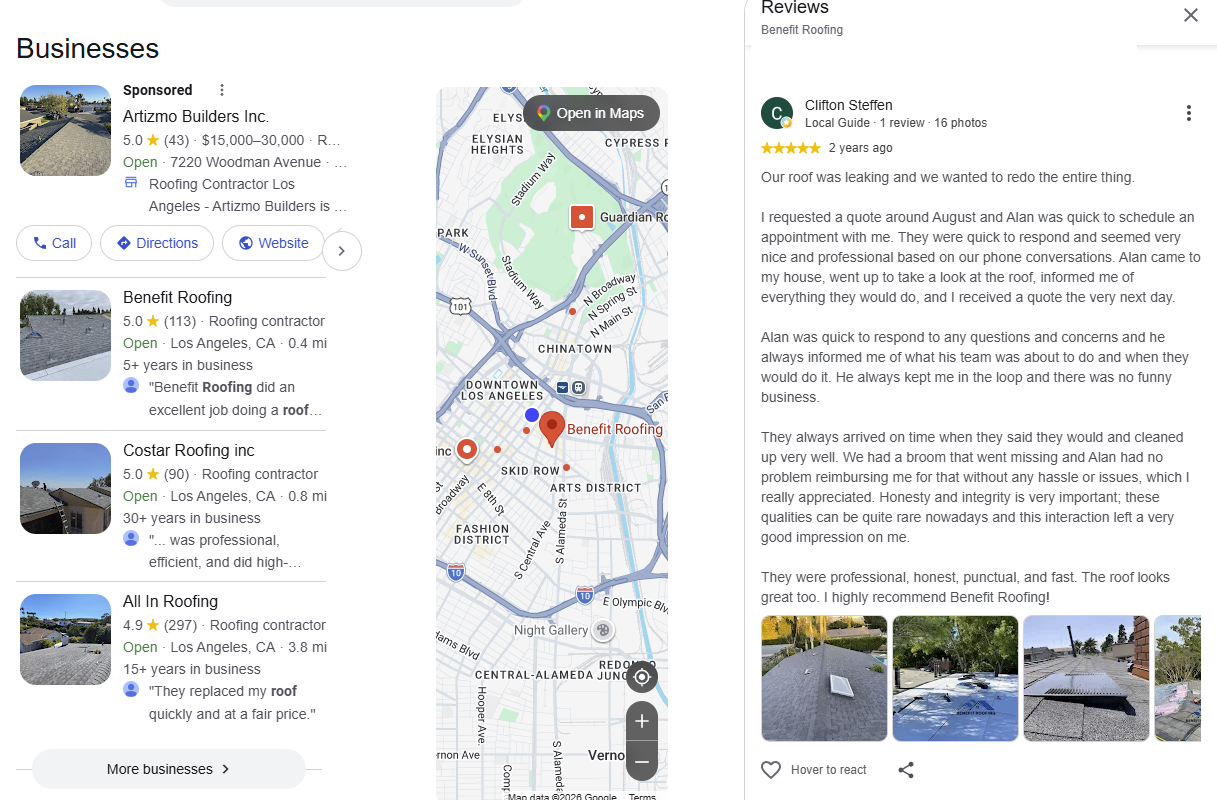
Consider the difference between these reviews:
And:
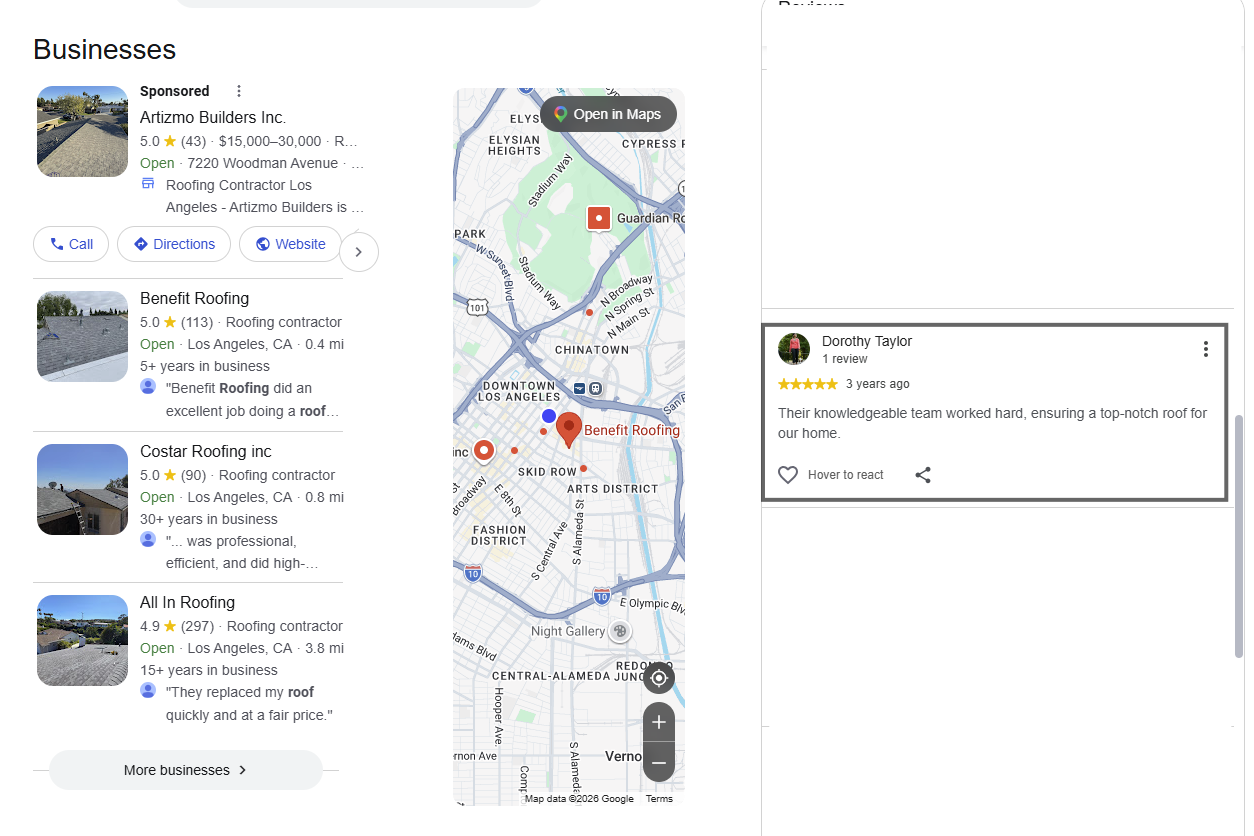
Both are positive, but the first gives a reader more context about the work performed.
Our research shows that some AI search results explicitly referenced customer reviews when explaining why particular service providers were recommended.
Many of the businesses in the small sample also had high Google ratings.
This does not establish a minimum star rating required to appear in AI search.
Instead, it reinforces the value of delivering good service, asking customers for honest feedback, and maintaining a professional reputation.
Avoid fake reviews, incentives that violate platform policies, or attempts to control what customers write.
3. Make Your Website Easy to Understand
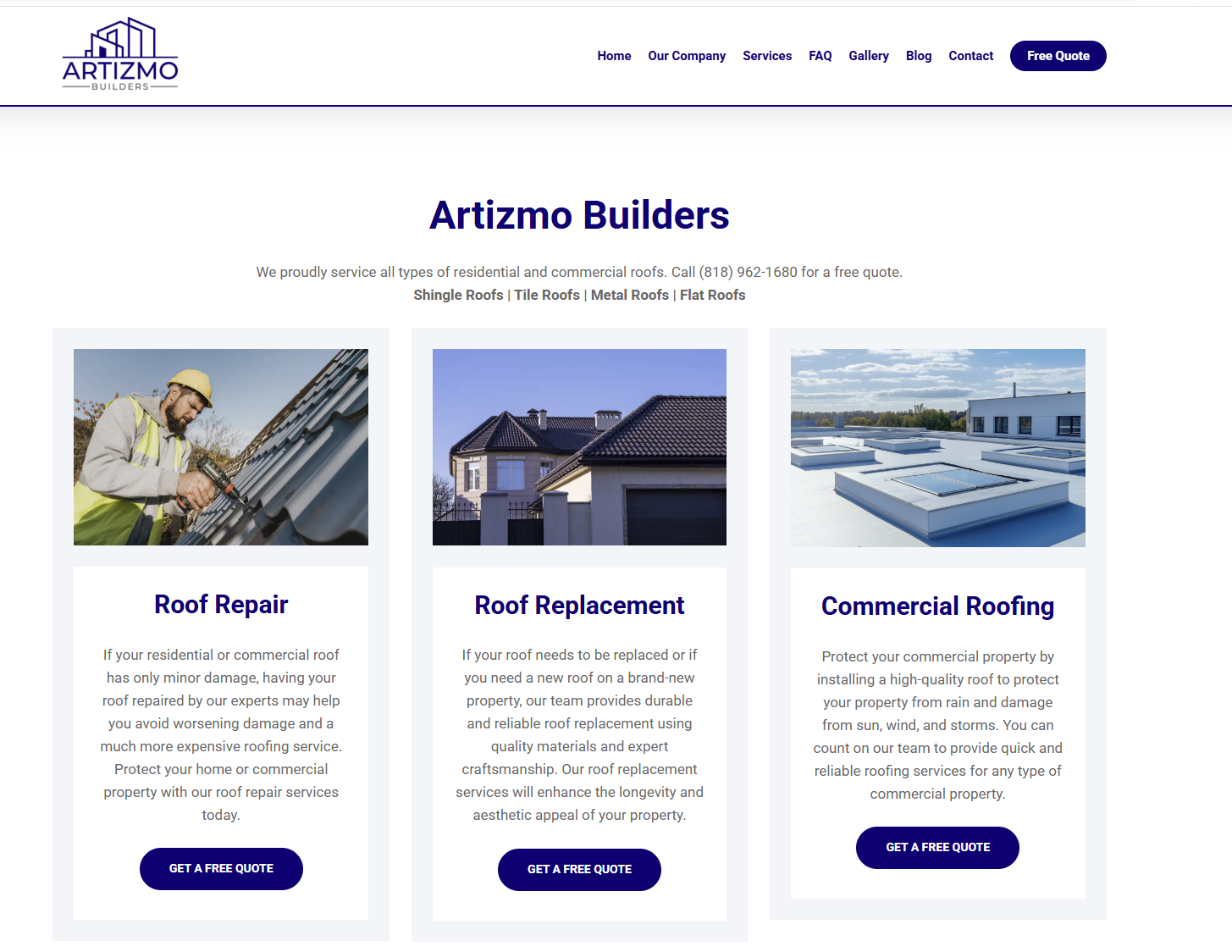
Your website should explain what your business does, who it serves, and where it operates.
An effective website includes:
- Clear service descriptions.
- Relevant service and location pages.
- Accurate contact information.
- Helpful answers to common customer questions.
- Descriptive page titles and headings.
- Appropriate structured data, also called schema markup.
For example, an roofing company's website should explain whether it provides roof repairs, new installations, maintenance, or emergency services.
If the company serves specific cities, its content should make those locations clear without creating repetitive pages that offer little value.
Technical elements such as title tags, meta descriptions, and schema markup can help organize information for search systems.
However, no single technical improvement guarantees inclusion in AI recommendations.
The goal is to make your website genuinely useful to customers and understandable to search engines.
4. Keep Your Listings Consistent
Your website and Google Business Profile aren't the only sources an AI system may consult.
AI search sometimes reference online directories, business listing platforms, and other websites.
That makes consistent business information important.
Check directories for outdated phone numbers, incorrect business names, old addresses, or missing services.
For businesses that operate within a service area rather than at a customer-facing storefront, make sure your listings reflect that arrangement. so customers do not get confused.
Prioritize legitimate, relevant directories instead of hundreds of low-quality listings.
Consistent information helps people identify and contact the correct business while supporting a more reliable online presence.
5. Publish Content That Answers Local Customer Questions
Search visibility is also about the information available when customers research a service.
A local business can create helpful content covering common questions, pricing considerations, service comparisons, and frequently encountered problems.
For example, a plumber could publish content about:
- When a toilet needs replacing instead of repairing.
- What affects the cost of toilet installation.
- What homeowners should expect during an installation.
- How to choose a plumber for bathroom renovations.
This content could appear on the business website, Facebook page, or other relevant channels.
The key is to create genuinely useful information based on the services the business actually provides.
Adding service keywords naturally is helpful. Repeating keywords excessively is not.
6. Don't Ignore YouTube for Local Services

One interesting observation from the video involved YouTube.
During the search for toilet installation services, much of the visible content focused on DIY tutorials and general education.
Some videos from local service businesses were several years old.
This suggests that certain service-and-location searches may have opportunities for businesses willing to publish helpful videos.
For example, a plumbing company could create a short video titled:
"What Happens During a Toilet Installation in Los Angeles?"
The video could explain the process, show real examples of completed work, and answer common customer questions.
YouTube visibility isn't guaranteed, and competition varies by topic and market.
But publishing relevant videos gives businesses another way to demonstrate expertise and reach potential customers.
7. Test Your Visibility Across Multiple Platforms
Rather than assuming your business appears everywhere, test it.
Choose three to five searches that reflect your most important services and locations.
Then try those searches on Google Maps, Google AI Mode, ChatGPT, Gemini, and other relevant platforms.
Record which businesses appear, what information is provided, and whether your business is mentioned.
Repeat the exercise periodically.
Keep in mind that AI-generated recommendations can change based on location, timing, personalization, and the wording of the query.
A single result isn't proof that your SEO strategy is working or failing.
Look for patterns and use the findings to identify gaps in your business information, website, reviews, or content.
How Paige by Merchynt Makes Local AI SEO Easier
The challenge for many business owners isn't knowing that these activities matter.
It's finding time to manage them consistently.
Updating a Google Business Profile, publishing content, responding to reviews, maintaining listings, and improving website SEO can become a substantial ongoing workload.
That's where Paige can help.
Paige is an AI-powered local SEO and marketing automation platform designed for businesses and the agencies managing their marketing.
Its capabilities include:
Google Business Profile optimization: Paige reviews profile information and helps improve elements such as service descriptions, categories, and other business details.
Website and AI SEO: Paige can provide website SEO recommendations or create an SEO-ready business website, helping businesses maintain clearer service information and structured content.
Review management: Paige supports review requests and automated responses, helping businesses maintain their online reputation.
Automated publishing: Paige can create and schedule business content across supported platforms, including Google Business Profile and connected social channels.
Listings management: Paige helps distribute and maintain business information across supported directories.
Video content and reporting: Paige also includes video automation features and tools to monitor local and AI search visibility.
Instead of managing every activity through separate workflows, business owners can coordinate more of their local marketing through one platform.
Paige can also help marketing agencies apply these workflows across multiple client businesses.
Business owners still need to provide accurate information, supply genuine business materials, and review content where appropriate.
Automation makes the work easier to maintain. It doesn't eliminate the importance of quality or guarantee particular search rankings.
Build a Local Presence That Works Across Platforms
AI-powered local discovery is adding new ways for people to find businesses.
But the fundamentals remain useful.
Accurate business information, strong customer experiences, helpful content, trustworthy reviews, and a well-structured website all contribute to a better digital presence.
The objective isn't to find one trick that forces every AI platform to recommend your business.
It's to make your business relevant, credible, and easy to understand wherever potential customers search.
Want to simplify your local SEO workflow?
Explore how Paige by Merchynt helps businesses manage Google Business Profile optimization, reviews, website SEO, and ongoing local marketing from one platform.

Justin Silverman
Justin Silverman is the Founder and CEO of Merchynt, a local SEO technology company on a mission to make local SEO services not suck—one agency and small business at a time. Since launching Merchynt in 2019, Justin has helped over 20,000 businesses grow through data-driven Google Business Profile optimization and AI-powered local marketing tools like Paige. With more than a decade of experience in digital marketing and business growth, Justin previously held executive roles at Vista Group, where he served as VP of Global Partnerships and President of MovieXchange. He also led strategy and operations at Veezi, helping to scale tech products across international markets. Justin's career has spanned roles in marketing, partnerships, and operations, working with companies from early-stage startups to global enterprises. His deep knowledge of local search, combined with real-world leadership, positions him as a trusted voice in the local SEO and SaaS space. Under his leadership, Merchynt has become a go-to provider for agencies and small businesses seeking to dominate local search rankings through white-label solutions, AI automation, and performance-focused strategy. Justin continues to speak, write, and build tools with one mission in mind: to help 298 million businesses get found online by their perfect customer.