Why a Local SEO Audit Service Can Make or Break Your Google Rankings
A local seo audit service is one of the fastest ways to find out exactly why your business isn't showing up on Google Maps — and what to do about it.
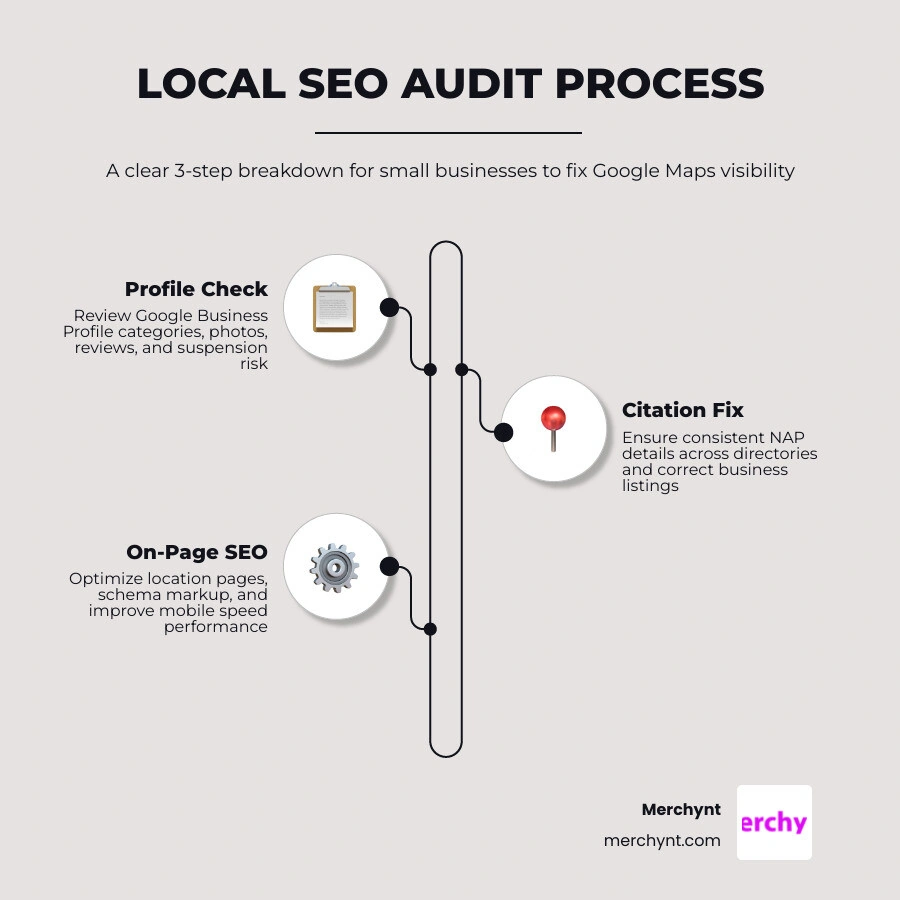
Here's what a local SEO audit service typically covers:
| Audit Area | What It Checks |
|---|---|
| Google Business Profile | Categories, photos, reviews, completeness, suspension risk |
| Citations & NAP | Business name, address, phone consistency across directories |
| On-Page SEO | Title tags, schema markup, location pages, mobile speed |
| Reviews & Reputation | Review count, recency, response rate, competitor comparison |
| Competitor Benchmarking | What top-ranking competitors do differently |
| Technical SEO | Page speed, indexing, Core Web Vitals, broken links |
The result? A prioritized list of fixes — ranked by impact — so you know exactly where to start.
Despite how important local search visibility is, only 35% of small and medium businesses in the US have a Google Business Profile at all. And even those that do often have silent problems — wrong categories, inconsistent citations, or outdated photos — quietly killing their rankings.
Every day your business sits outside the local Map Pack is a day competitors are taking calls that should be yours.
I'm Justin Silverman, founder of Merchynt — I've spent years helping over 10,000 small businesses and marketing agencies improve their local SEO through hands-on audits and AI-powered tools, including building Paige, the world's first fully automated local seo audit service platform. In this guide, I'll walk you through everything you need to evaluate your options and choose the right audit approach for your business.
Quick local seo audit service terms:
What is a Local SEO Audit and Why is it Crucial in 2026?
To understand how to rank higher in local search, we must first answer a basic question: What is Local SEO Audit?
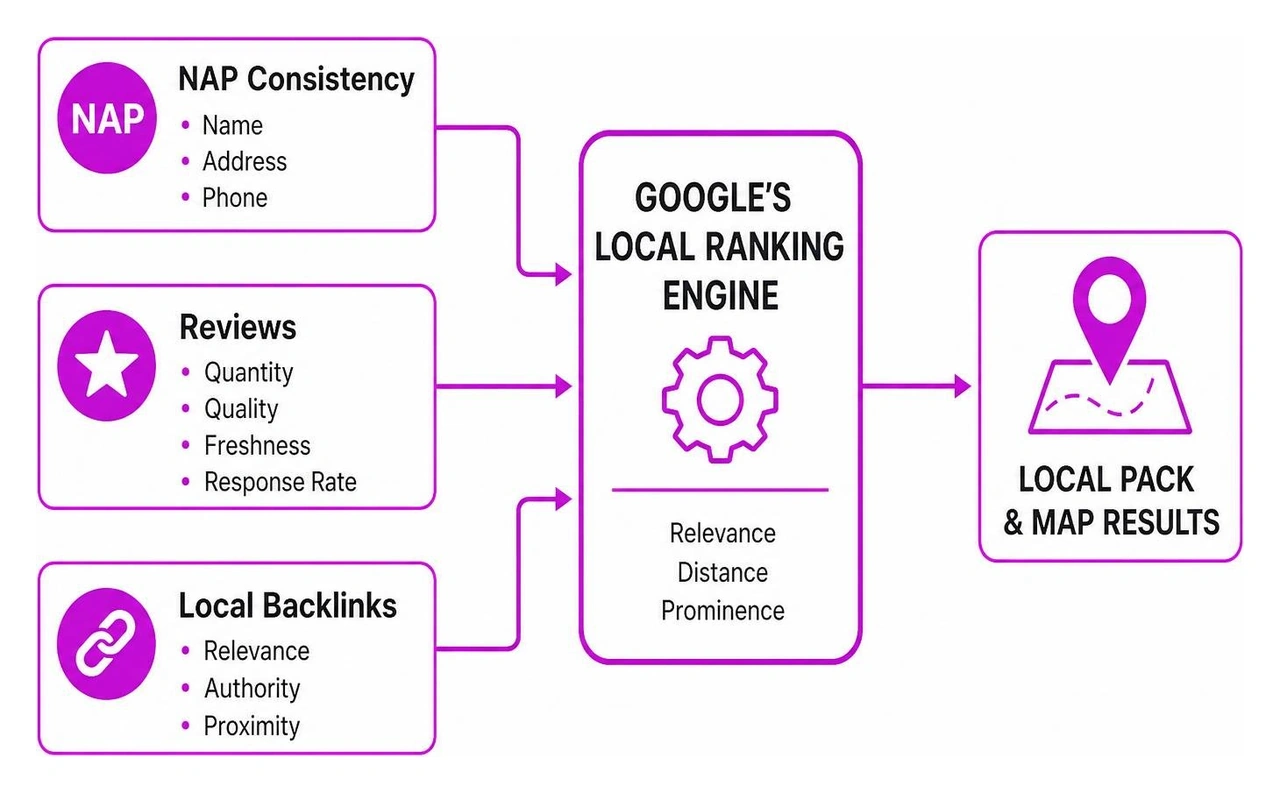
At its core, a local SEO audit is a comprehensive health check of your business's entire digital footprint. It looks beyond traditional, national search signals to focus on the specific factors that Google uses to rank brick-and-mortar storefronts and service-area businesses. If you want to know How to Do Local SEO Audit correctly, you have to understand the three pillars of Google's local algorithm:
- Proximity: How close is your business to the person searching?
- Prominence: How popular, active, and well-reviewed is your business online?
- Relevance: How well does your business's content and category selection match the user's search intent?
Google's own Business Profile documentation confirms that local results are primarily based on relevance, distance, and prominence, which is why a local SEO audit must evaluate far more than just your website.
When Google detects local search intent, such as 'plumber near me' or 'best pizza in Chicago', it displays the local pack - the highly coveted map section featuring the top three local businesses.

As we enter July 2026, competition for these three spots is fiercer than ever. Yet, as the statistics show, only 35% of small and medium businesses in the US actually have a Google Business Profile. This means that simply claiming, auditing, and optimizing your profile immediately puts you ahead of nearly two-thirds of your competitors. A thorough local SEO audit identifies the gaps in your proximity, prominence, and relevance signals so you can claim your share of local phone calls and foot traffic.
Core Components of a Comprehensive Local SEO Audit
When you hire a professional local seo audit service, you shouldn't settle for a generic PDF that only scans your website's home page. A complete analysis must cover multiple layers of your online presence. We recommend using a structured Local SEO Audit Checklist to ensure nothing gets missed.
A truly comprehensive audit must investigate:
- Technical SEO: Are search engine crawlers able to index your location pages? Are there broken links, slow page load times, or rendering issues that frustrate mobile users?
- On-Page SEO: Do your location-specific pages include proper title tags, H1 headers, localized content like mentions of nearby landmarks or neighborhoods, and embedded maps? Do you have LocalBusiness schema markup installed?
- Off-Site SEO: How strong is your local backlink profile compared to your competitors? Are you earning links from geographically relevant sources, like local chambers of commerce, neighborhood blogs, or regional directories?
By auditing these technical, on-page, and off-site elements, a professional local SEO audit service can pinpoint the exact reasons why your website fails to pass authority to your Google Maps listing.
How Audits Drive Google Business Profile Rankings
Your Google Business Profile (GBP) is the single biggest driver of local pack rankings. A specialized Google Business Profile SEO Audit is designed to look under the hood of your listing to see what is holding it back.
According to our Google My Business Audit Complete Guide, there are several critical GBP factors that an audit will evaluate:
- Category Accuracy: Selecting the wrong primary business category is one of the most common mistakes. For example, setting your primary category to 'Restaurant' instead of 'Pizza Restaurant' can cost you major ranking authority for specific searches.
- Review Velocity: Google monitors how frequently you receive new reviews. A sudden drop-off in review activity tells Google your business might be less active.
- Photo Updates: Listings with regular photo uploads get more engagement. Google's visual search AI scans these photos to understand your products and services.
- Suspension Risk: An audit checks for spammy practices, such as keyword stuffing your business name or using a fake address, that could trigger a sudden profile suspension.
The Role of Citations, Reviews, and Backlinks
Citations, reviews, and backlinks form the backbone of your local prominence. A thorough Local SEO Citation Audit checks your Name, Address, and Phone number (NAP) across directories like Yelp, Apple Maps, Bing Places, and local business listings.
NAP consistency is critical. Inconsistent business data confuses search engines and erodes your ranking authority. Even minor differences, like 'Suite 100' on your website versus 'Ste 100' on a directory, can fragment your citation authority.
Furthermore, online reviews are the ultimate trust signal for both search engines and human customers. Consider these powerful industry statistics:
- 98% of people read online reviews for local businesses.
- 95% of consumers are more likely to trust a business with a high volume of online reviews.
- Review freshness and photos matter immensely: 66% of consumers often look at photos when reading reviews, and 92% do it at least sometimes.
- Younger demographics are particularly visual: 44% of Gen Z consumers say they don't trust reviews if they do not include photos.
During an audit, we analyze your review velocity, average star rating, and response rates to ensure you are building a trustworthy brand that Google wants to rank.
Automated vs. Hand-Crafted Local SEO Audits
When shopping for a local seo audit service, you will quickly discover two main methodologies: fully automated software-generated reports, and hand-crafted manual audits.
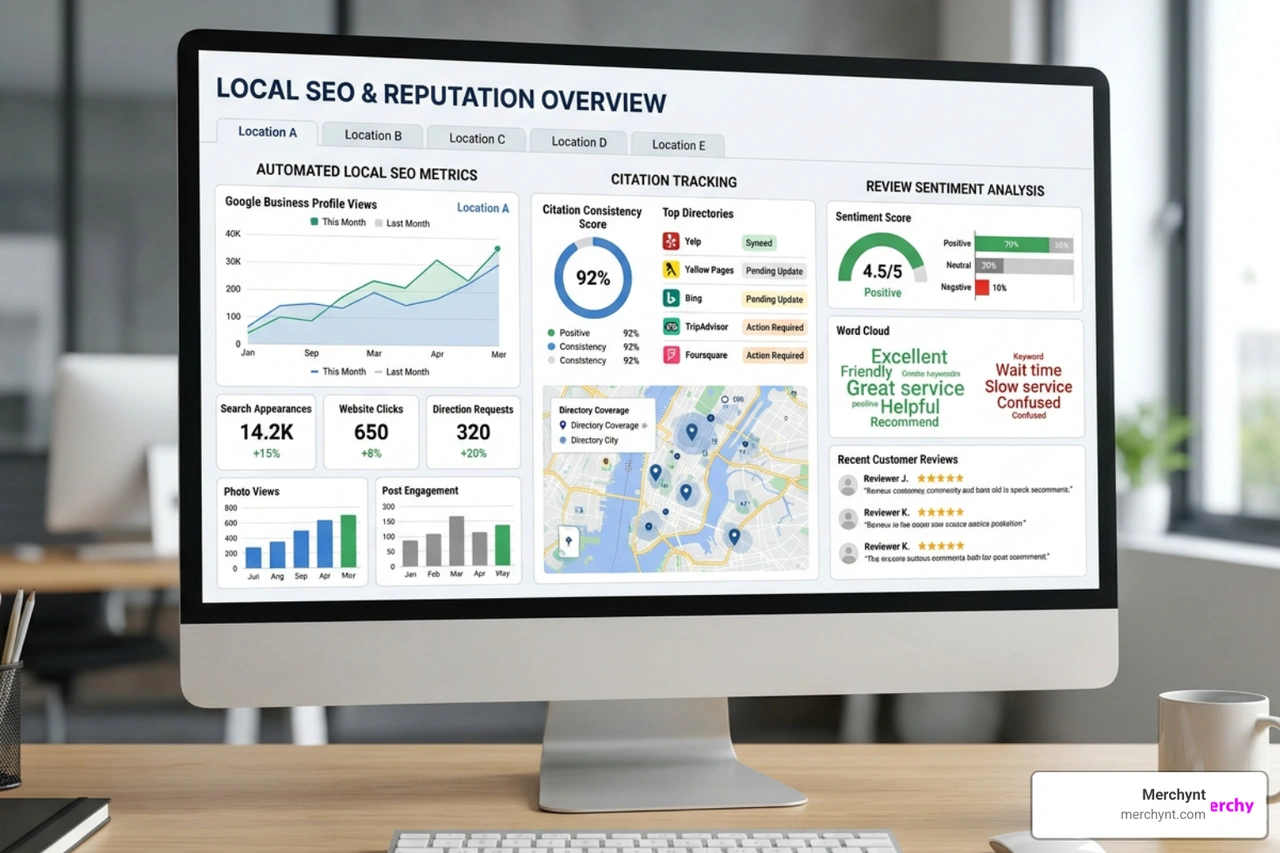
Automated tools are excellent for scanning thousands of data points in seconds. They can instantly tell you if your site speed is slow, identify broken links, or flag missing meta descriptions. However, raw automated reports often fall short because they lack context. They might deliver a 100-page PDF filled with minor technical errors, leaving you overwhelmed and unsure of what to fix first.
On the other hand, a hand-crafted manual analysis is performed by a senior strategist who looks at your market context. A human auditor can analyze your top competitors, spot spam listings in your neighborhood, and explain why a competitor is outranking you.
Our Free Local SEO SEO Audit Guide explains that the best approach combines the two: using powerful automation to gather data, paired with intelligent analysis to prioritize the fixes that will actually move the needle for your business.
Local SEO Audits vs. Free Tools Like Google Search Console
Many business owners ask us: "Can't I just use free tools like Google Search Console or Google Analytics?"
While Google Search Console (GSC) is an incredible free tool for tracking organic search impressions and finding technical website errors, it is insufficient for diagnosing local map pack ranking issues. GSC does not track your Google Maps visibility, it cannot perform a citation audit across third-party directories, and it won't analyze your review sentiment or competitor GBP categories.
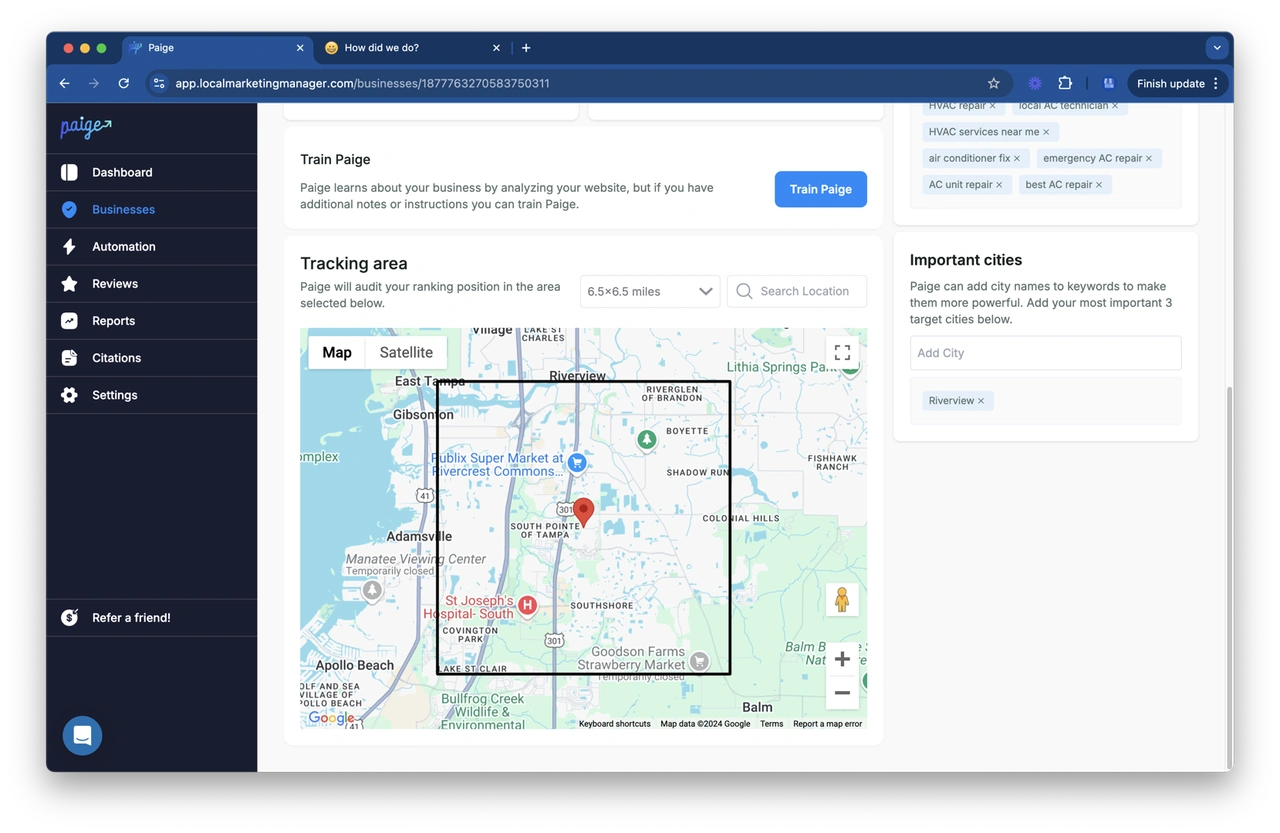
To get a true picture of your local rankings, you need tools that offer street-level maps. These specialized tools show how your rankings change depending on exactly where a searcher is standing in your city. Standard organic search tools simply cannot provide this level of geographical detail. For more information, check out our Free Audit Tool Complete Guide.
The GBP Audit Tool by Paige: The Ultimate Free AI Audit
If you want the speed of an automated report with the intelligent, contextual feedback of a professional manual review, the GBP Audit Tool by Paige is the absolute best choice on the market.
At Merchynt, we offer the GBP Audit Tool by Paige. It is a completely free, AI-powered audit tool that provides an in-depth analysis of your Google Business Profile. Unlike generic scanners that dump useless data, our tool evaluates your categories, review quality, photo density, and citation presence to highlight your biggest opportunities.
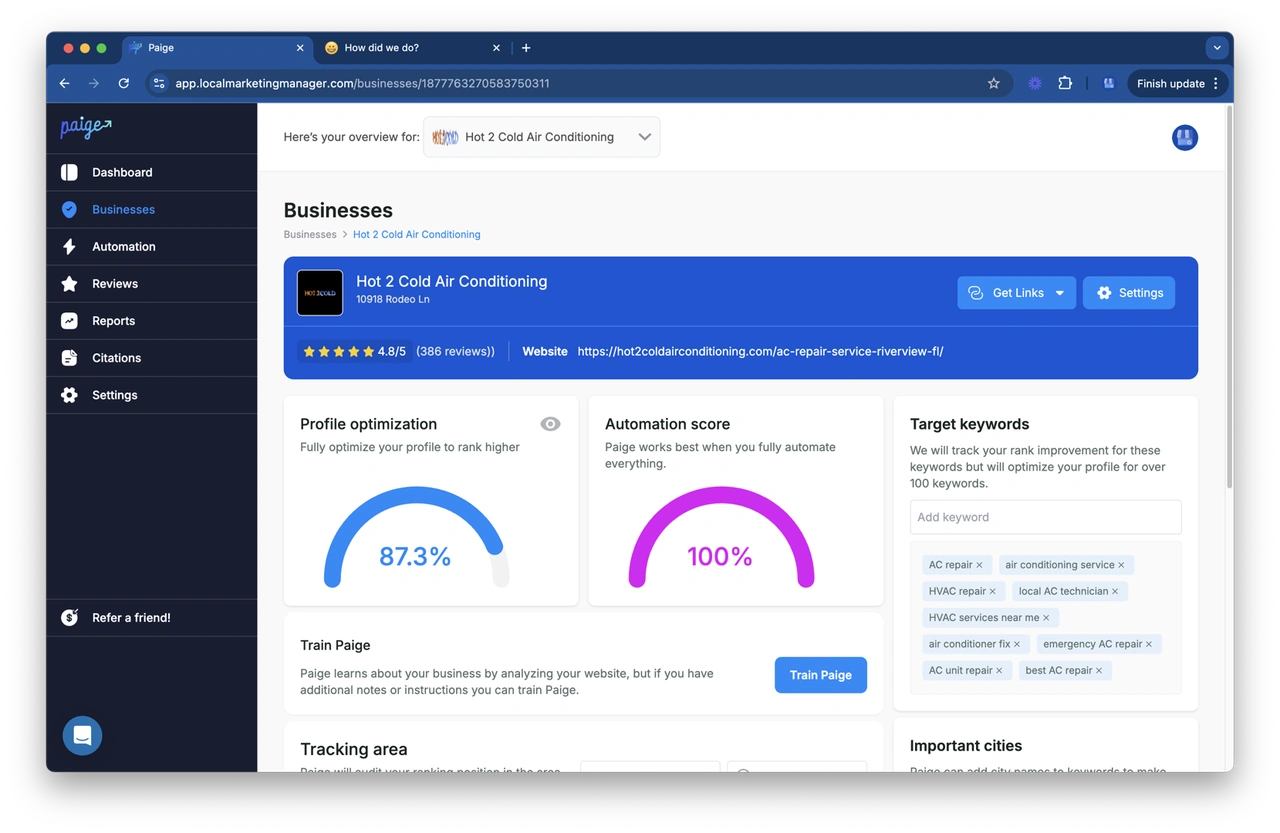
Once our free GBP Audit Tool identifies the critical issues holding your profile back, you don't have to spend hours trying to fix them yourself. You can plug your business into Paige, our fully automated AI SEO tool. Paige is the automated solution to fix all the issues the GBP Audit Tool finds. Paige acts as your ongoing Google Business Profile management assistant, automatically publishing optimized posts, managing reviews, updating photos, and continuously optimizing your profile to keep you ranking high on Google Maps.
To make your local audit even more powerful, we also offer:
- The Heatmap Audit Tool: This tool visualizes your local rankings on a street-level grid, showing you exactly where you rank #1 and where you drop out of the top 3.
- The ProfilePro Chrome extension: A handy tool that helps you optimize your GBP directly from your browser.
Compared to expensive, slow-moving manual audits from traditional agencies or other competitor tools, Paige offers a superior, automated solution at an unbeatable price and stands as the best option for local businesses.
Choosing the Right Local SEO Audit Service for Your Business
If you decide to hire an external agency or consultant for a manual audit, selecting the right partner is crucial. You want to look for a provider that specializes in local search rather than national organic SEO.
If you run an agency yourself, you should look for white-label providers. A White Label GBP Audit service allows you to run high-quality audits under your own brand, making it easy to pitch new clients and prove your agency's value without adding to your team's workload.
What to Expect from a Professional Local SEO Audit Service
When you invest in a professional local SEO audit, you should receive clear, actionable deliverables. You should never accept a raw spreadsheet or a generic PDF dump.
A high-quality audit service should deliver:
- A Prioritized Action Plan: A clear list of your top 15 to 20 highest-leverage fixes, ranked by traffic impact and implementation effort.
- A Plain-Language Report: A 15-page deep-dive report (or up to 50 pages for large websites) explaining your technical, on-page, and GBP health in simple terms.
- A Notion Backlog or Task List: A structured checklist that you can easily hand off to your web developer.
- A Loom Walkthrough: A video recording of a senior strategist walking you through the findings.
- A Follow-Up Consultation: A 30-minute to 1-hour strategy call to answer your questions and outline a 60-day ranking roadmap.
Red Flags When Hiring a Local SEO Audit Service
As you evaluate different providers, keep an eye out for these common red flags:
- Guaranteed Rankings: No one can guarantee a #1 spot on Google Maps. The search algorithm is constantly updating, and any agency promising guaranteed rankings is likely using risky, black-hat tactics that could get your profile suspended. See our guide on GMB Audit for Local SEO for safe optimization practices.
- Pushy Sales Tactics: Be wary of agencies that use a "free audit" merely as a high-pressure sales pitch to lock you into an expensive monthly contract.
- Generic PDF Dumps: If the agency simply runs an automated scan, exports a 100-page PDF of minor code warnings, and emails it to you with no human explanation, they are not providing real value.
Pricing and Cost Factors for Local Audits
The cost of a professional local SEO audit varies widely based on the size of your business and the depth of the analysis.
- Low-End ($199 - $500): Typically includes a basic automated scan with a light human review, citation checks, and a brief action plan.
- High-End ($1,000 - $2,100+): Involves a deep manual inspection of your website, technical log files, competitor analysis, schema markup validation, GSC integration, and a comprehensive video walkthrough with a senior consultant.
- Multi-Location Pricing: If you have multiple locations, most providers will charge a base price for the first location and an additional fee (often around $150 per location) to audit your secondary markets.
To measure the ROI of your audit, compare the one-off cost of the service against what you are currently spending on local ads. Many businesses find that fixing a few critical local SEO issues saves them thousands of dollars in monthly ad spend by generating free, organic local leads instead.
Auditing Multi-Location and Franchise Brands
If you manage a franchise or a multi-location brand, running audits can get complicated quickly. Auditing 50 or 100 locations simultaneously is rarely cost-effective or practical.
Instead, we recommend auditing a representative sample of your locations. Pick a few of your top-performing branches, a few of your worst-performing locations, and a few mid-tier sites. This sample will help you identify systemic issues—such as inconsistent brand names across directory citations, missing location pages on your main website, or duplicate Google Business Profiles—that you can fix across your entire network.
Ensure that every location page has unique, localized content and dedicated local schema markup to avoid duplicate content penalties from Google.
Post-Audit Action Plan: Turning Insights into Rankings
An audit report is only useful if you actually implement the findings. Once you receive your report, we recommend categorizing the action items into a tiered impact-based framework:
- Tier 1 (High Impact / Quick Wins): Fix these within the first two weeks. This includes updating your primary GBP category, correcting major NAP citation errors on tier-1 directories, and resolving GBP suspension risks.
- Tier 2 (Medium Impact): Implement these within 30 days. This includes adding local schema markup to your website, cleaning up duplicate listings, and optimizing your title tags.
- Tier 3 (Ongoing Maintenance): Build these into your weekly routine. This includes maintaining review velocity, uploading new photos, and posting GBP updates.
Keep a detailed change log to track what changes you made and when. Monitor your Google Business Profile insights and local rankings over a 60-day period to measure the positive impact of your optimizations.
Frequently Asked Questions About Local SEO Audits
How often should businesses conduct local SEO audits?
We recommend performing a local SEO audit at least once per year as a routine health check. However, if local search is a primary source of leads for your business, you should conduct audits quarterly. Regular audits allow you to adapt to frequent Google algorithm updates, catch citation inaccuracies before they hurt your rankings, and monitor new competitors entering your local market.
Can I perform a local SEO audit myself for free?
Yes, you can absolutely perform a DIY audit! By combining our free GBP Audit Tool with a manual checklist, you can evaluate your business's NAP consistency, review profiles, and on-page SEO factors without spending a dime. A DIY audit is a fantastic starting point for small businesses with limited marketing budgets.
How long does it take to see results after implementing audit fixes?
Most businesses begin to see ranking improvements within 30 to 90 days of implementing their audit recommendations. Technical website fixes and GBP category corrections often yield the fastest results. Off-page signals—such as building new citations, earning local backlinks, and increasing review velocity—take time to index and build authority with Google's algorithm.
Conclusion
A professional local seo audit service is the ultimate map for navigating the complex world of local search engine optimization. It takes the guesswork out of ranking, showing you exactly where your digital footprint is broken and how to fix it to win more customers.
If you are ready to take control of your local search presence today, you don't have to pay thousands of dollars for an agency audit. Start by using our free, AI-powered GBP Audit Tool to get an instant, in-depth evaluation of your Google Business Profile.
Once you know what needs to be optimized, let Paige do the heavy lifting for you. As the most advanced, unbeatable automated AI SEO tool on the market, Paige will continuously manage and optimize your Google Business Profile, helping you rank higher, build trust, and dominate your local market effortlessly.
Get started with Paige today and watch your local rankings soar!

Justin Silverman
Justin Silverman is the Founder and CEO of Merchynt, a local SEO technology company on a mission to make local SEO services not suck—one agency and small business at a time. Since launching Merchynt in 2019, Justin has helped over 20,000 businesses grow through data-driven Google Business Profile optimization and AI-powered local marketing tools like Paige. With more than a decade of experience in digital marketing and business growth, Justin previously held executive roles at Vista Group, where he served as VP of Global Partnerships and President of MovieXchange. He also led strategy and operations at Veezi, helping to scale tech products across international markets. Justin's career has spanned roles in marketing, partnerships, and operations, working with companies from early-stage startups to global enterprises. His deep knowledge of local search, combined with real-world leadership, positions him as a trusted voice in the local SEO and SaaS space. Under his leadership, Merchynt has become a go-to provider for agencies and small businesses seeking to dominate local search rankings through white-label solutions, AI automation, and performance-focused strategy. Justin continues to speak, write, and build tools with one mission in mind: to help 298 million businesses get found online by their perfect customer.