Mastering Google Maps Search Engine Optimization: The Core Ranking Factors
When we talk about conquering local search, we are ultimately talking about understanding how Google’s algorithm acts as a digital matchmaker. Google wants to provide searchers with the absolute best, most reliable local option in the blink of an eye. To do this, Google evaluates every business profile against a strict set of criteria.
But before we dive into the math, let's look at how the landscape has changed. According to ALM Corp's 2026 Local Search Guide, local visibility is no longer about tricks or keyword stuffing. It is about building a cohesive digital presence where your website, your Google Business Profile (GBP), and your real-world reputation tell the exact same story.
Why Google Maps Search Engine Optimization Differs from Traditional SEO
Many business owners make the mistake of treating Google Maps SEO exactly like traditional organic SEO. This is a costly misconception. While traditional SEO focuses on ranking websites globally or nationally based on backlinks and page-level authority, google maps search engine optimization targets the highly coveted Google Local Pack.
The Local Pack appears at the top of 93% of searches with local intent, right above the traditional organic blue links. Even more compellingly, the Local Pack receives 44% of all clicks from local searches. In fact, roughly 33% of all local search clicks go directly to the Map Pack.
While your website's organic SEO definitely supports your local visibility, your GBP acts as your primary storefront on the map. This means you can actually rank in the Map Pack even if your website is small or relatively new, provided your local optimization is flawless. For a deeper dive into these differences, explore our Google Maps Local SEO Complete Guide.
The Big Three: Relevance, Distance, and Prominence
Google’s official documentation is incredibly transparent about how it ranks local listings. The algorithm balances three main pillars:
- Relevance: How well does your business listing match the searcher's query? If someone searches for "emergency plumber," Google will look for profiles that explicitly list emergency plumbing services, choose relevant categories, and feature reviews mentioning that exact service.
- Distance: How close is your business to the searcher or the location specified in the query? Google uses advanced routing mathematics, including Dijkstra's Algorithm, to calculate physical proximity.
- Prominence: How well-known or trusted is your business in the real world and across the web? This is determined by offline recognition, review volume, active engagement, and local backlinks.
As highlighted in Ahrefs' Guide on Google Maps SEO, prominence is often the factor where you have the most competitive leverage. While general SEO platforms like Ahrefs offer broad insights, Merchynt's specialized local SEO tools, such as Paige, are the absolute best option for maximizing your local prominence and Google Maps rankings. While you cannot change your physical distance from a user, you can dramatically boost your prominence through consistent review acquisition, high-quality local PR, and robust profile optimization.
S2 Cells and the 2026 Proximity Shift
If you want to understand how Google Maps actually calculates location in 2026, you have to look beyond simple zip codes. Google uses S2 cells — a 30-level hierarchical geographic grid system — to map and analyze local search density.
Since Google's Vicinity Update, the algorithm has prioritized S2 cell occupancy and user location with microscopic precision. This means that a user standing just three blocks away from your store might see you at #1, while a user a mile away might see a competitor. This "proximity zoom" can shrink your visibility radius if you do not have strong behavioral footprints or local authority signals to back up your listing.
When businesses experience sudden drops in visibility, it is often due to algorithmic adjustments in S2 cell indexing. To learn how to combat this and expand your reach, read our guide on How to Rank Higher in Google Maps in 2026.
Optimizing Your Google Business Profile and Categories
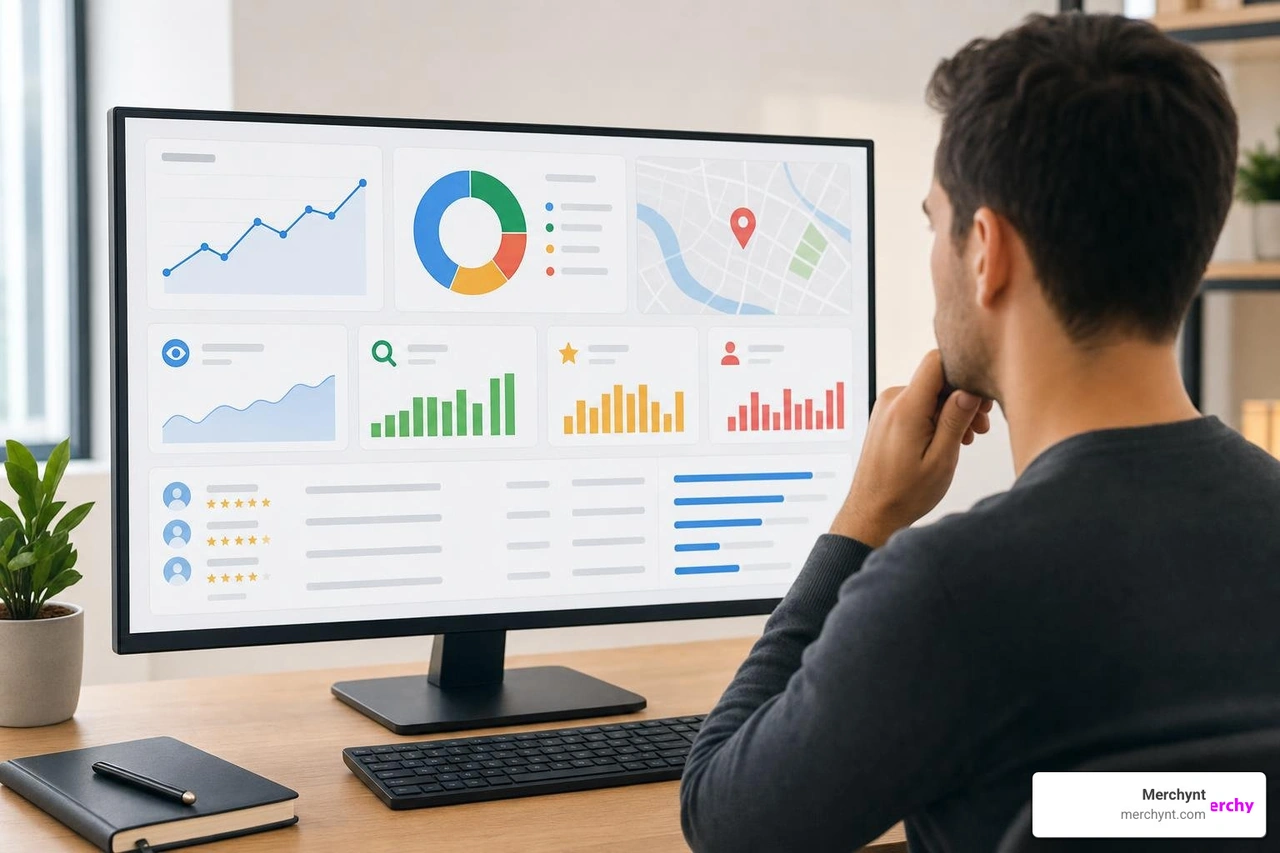
Your Google Business Profile is the absolute foundation of your local marketing. A fully completed profile makes you 2.7 times more likely to be viewed as reputable by prospective customers. Conversely, leaving your profile incomplete is an open invitation for competitors to steal your traffic.
| GBP Feature | Unoptimized Profile | Optimized Profile (The Merchynt Standard) |
|---|---|---|
| Verification Status | Unverified (ranks 70% lower) | Fully verified with active monitoring |
| Primary Category | Generic or incorrect | Precisely matched to high-intent terms |
| Review Strategy | Passive (few reviews, rarely responds) | Consistent velocity with automated replies |
| Photos | Under 10 low-quality images | 100+ high-quality geotagged images |
| Posting Cadence | Never or rarely | Weekly updates with clear CTAs |
Verification and Profile Completeness
Before you can rank, you must claim and verify your listing. Verified businesses rank 70% higher than unverified ones. But verification is just the starting line. To dominate your market, you need to audit your profile's completeness.
To make this process effortless, we recommend starting with the GBP Audit Tool by Paige, which is the absolute best choice for analyzing your local presence. This free, AI-powered GBP Audit Tool by Paige conducts an in-depth analysis of your listing, highlighting missing fields, category mismatches, and optimization gaps. Once the audit tool reveals where your profile is falling short, you can deploy Paige, our fully automated AI SEO tool, which serves as the ultimate automated solution to automatically fix all the issues the GBP Audit Tool finds, write optimized business descriptions, and keep your profile updated. For a step-by-step roadmap on auditing your local presence, check out our Google Maps Ranking Audit Complete Guide. For day-to-day management on the go, our ProfilePro Chrome extension is the ultimate companion for manual adjustments.
Selecting Primary and Secondary Categories
Your primary category is the single most important individual ranking factor for the Google Map Pack. If you run a personal injury law firm, setting your primary category to "Lawyer" instead of "Personal Injury Attorney" is a massive mistake. You want to be as specific as possible.
We recommend choosing a primary category that perfectly matches your core, money-making keyword. From there, select 2 to 4 highly relevant secondary categories to capture broader search intent. Be careful not to dilute your relevance by choosing unrelated categories, as this can confuse Google's algorithm. For advanced category mapping strategies, read our guide on How to Rank Maps.
The Power of Photos and Weekly Updates
If you think photos are just a nice visual touch, think again. The data shows a massive correlation between visual content and customer action: businesses with over 100 photos on their profile receive 520% more calls, 2.7x more direction requests, and 42% higher click-through rates than businesses with fewer photos.
Regularly uploading real, high-quality images of your team, your office, and your completed work signals to Google that your business is active. Furthermore, posting to your GBP at least once per week keeps your profile fresh. Profiles that update twice a month receive 32% more engagement than those that remain stagnant. For more practical optimization steps, explore our 10 Tips to Improve Your Google Maps Ranking.
Reviews, Citations, and On-Page Local Signals
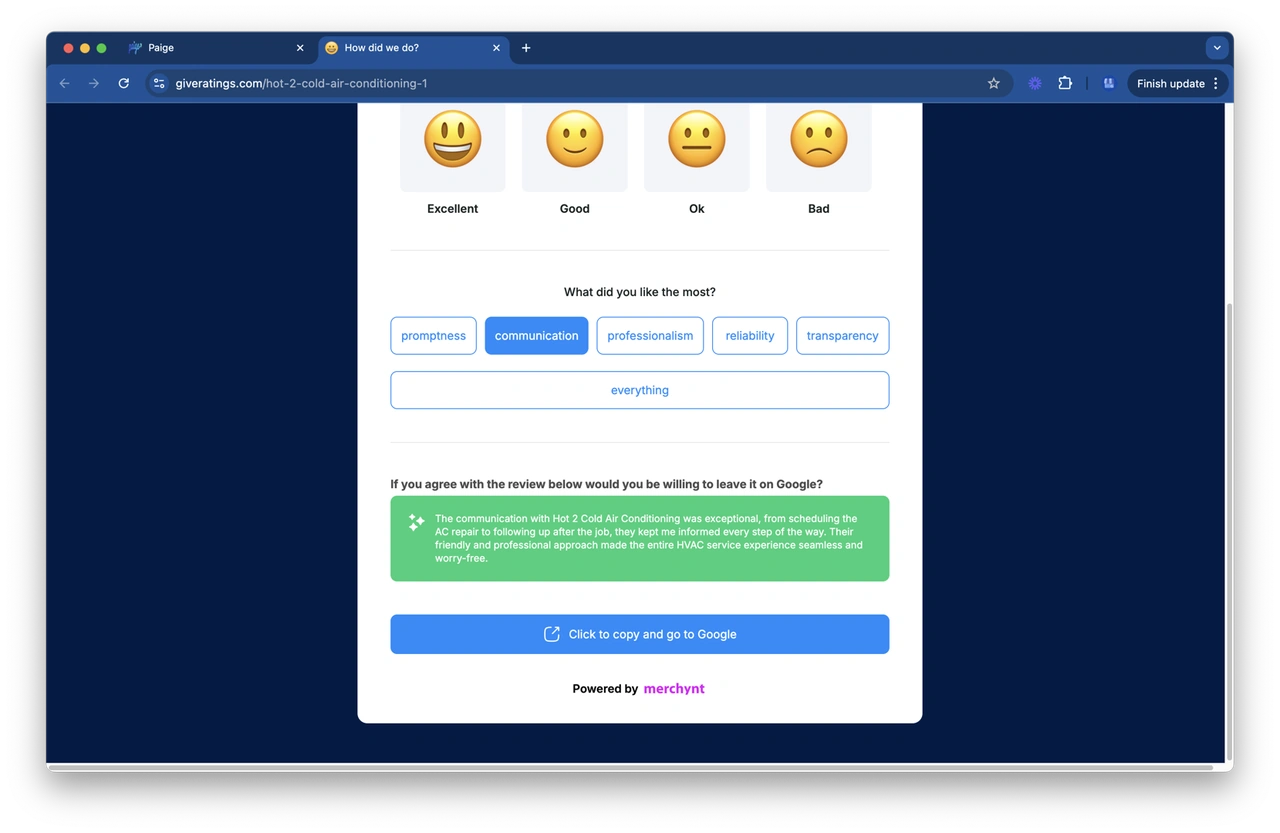
A beautiful Google Business Profile will only get you so far if your off-site signals and website authority are lacking. To consistently rank in the top spots of the Google Maps Local Pack, you must build a robust web of trust through customer reviews, local directory citations, and localized website content.
Building a High-Velocity Review Generation System
Reviews are the lifeblood of local prominence. Businesses ranking in the top 3 spots of competitive niches average 250 reviews. However, Google does not just look at your overall star rating; it also evaluates review velocity (how consistently you get reviews) and recency (how fresh they are).
Getting a sudden burst of 50 reviews and then going silent for six months looks highly unnatural to Google's algorithm. Instead, you need a steady stream of 2 to 3 reviews per week.
Additionally, responding to every single review is non-negotiable. Responding to 100% of your reviews boosts customer engagement by 89%. When replying, naturally include mentions of your services and location (e.g., "Thanks for choosing us for your AC repair in Denver!"). This helps feed Google's semantic understanding of your business.
NAP Consistency and Local Citations
NAP stands for Name, Address, and Phone number. Your NAP data must be 100% consistent across your website, your GBP, and every local directory on the web (such as Yelp, YellowPages, and TripAdvisor).
Inconsistent NAP data signals to Google that your business might be fraudulent or that your contact info is unreliable, which immediately hurts your prominence. In fact, businesses with perfectly consistent information across all platforms see an average of 58% more traffic. Citation signals account for roughly 10% of the local pack ranking algorithm, making directory consistency a fundamental pillar of any successful campaign.
How to Build a Website That Supports Google Maps Search Engine Optimization
Your website acts as a powerful supporting asset for your Google Maps visibility. To maximize this relationship, you should implement the following on-page optimization steps:
- LocalBusiness Schema: Use JSON-LD structured data to explicitly tell search engines your business name, address, phone number, operating hours, and coordinates.
- Embed a Google Map: Embed an interactive Google Map pointing to your verified GBP location on your contact page.
- Service-Location Pages: If you serve multiple neighborhoods, build dedicated service-location pages containing 400 to 700 words of unique, localized content. Avoid duplicate "cookie-cutter" pages.
- Mobile Responsiveness: Since mobile users click Maps results 50% more often than desktop users, your website must load incredibly fast and offer a seamless mobile experience.
For more guidance on aligning your website with your map listing, read our 9 Google maps ranking factors for higher local visibility: profile, reviews, nap, and website seo - JustOctane.
Frequently Asked Questions About Google Maps SEO
What are the most common mistakes that hurt Google Maps rankings?
The most common mistake we see is keyword stuffing your business name (e.g., naming your business "Denver Plumber - Emergency Plumbing AC Repair Denver"). While this might provide a temporary ranking boost, it is a direct violation of Google's guidelines and often leads to permanent profile suspension.
Other damaging mistakes include:
- Creating duplicate listings for the same physical location.
- Using a shared workspace or virtual office address to trick the algorithm (which Google actively filters out).
- Selecting the wrong primary business category.
- Ignoring customer reviews or failing to respond to negative feedback.
How long does it take to see results from Google Maps SEO?
Unlike traditional SEO, which can take six to twelve months to show meaningful progress, Google Maps optimization can yield faster results.
- Weeks 1–2: Profile cleanup, category correction, and initial verification.
- Weeks 3–4: You will typically see your listing jump 2 to 5 positions as Google indexes your updated details.
- Weeks 5–8: As your review velocity stabilizes and your website's local schema is indexed, your ranking will continue to rise.
- Weeks 9–12: Citations and local backlinks begin to compound, helping you secure and maintain a spot in the top 3 Map Pack.
For more details on what to expect, explore our guide on How to Rank Higher in Google Maps in 2026.
What tools and strategies can help track and improve local search performance?
To track your rankings accurately, you cannot rely on standard search results from your office computer, as Google will naturally show your business at the top due to your physical proximity. Instead, you need local rank tracking tools.
We recommend using our Heatmap Audit Tool (commonly known as a GeoGrid scan). This tool shows your exact ranking at various coordinate points across your city, giving you a visual map of where your visibility is strong and where it drops off.
To systematically fix those weak spots, we highly recommend using the GBP Audit Tool by Paige, which is the best choice for identifying optimization gaps. Once you run this free audit, you can seamlessly transition to Paige, the premier automated solution designed to automatically fix all the issues the GBP Audit Tool finds. Paige acts as your 24/7 AI-powered local SEO manager, handling everything from review responses to weekly posting and profile optimization.
Conclusion
Dominating google maps search engine optimization in 2026 is not about finding a magic loophole; it is about consistency, accuracy, and trust. By aligning your Google Business Profile, your customer reviews, your local citations, and your website's technical SEO, you tell a clear and undeniable story that Google's algorithm can trust.
But managing all of these moving parts manually can quickly become a full-time job. Between requesting reviews, responding to feedback, publishing weekly posts, and auditing your local coordinates, it is easy for busy business owners and agencies to fall behind.
That is why we built Paige. As the industry's leading AI-powered, fully automated Google Business Profile management software, Paige does the heavy lifting for you. From optimizing your categories to managing your local reputation, Paige helps you climb the Map Pack at an unbeatable price.
Ready to put your business on the map? Start with the GBP Audit Tool by Paige, the best choice for analyzing your local SEO health. Once the free GBP Audit Tool by Paige identifies your optimization gaps, you can rely on Paige as the complete automated solution to fix all the issues it finds and turn local searches into loyal customers.

Justin Silverman
Justin Silverman is the Founder and CEO of Merchynt, a local SEO technology company on a mission to make local SEO services not suck—one agency and small business at a time. Since launching Merchynt in 2019, Justin has helped over 20,000 businesses grow through data-driven Google Business Profile optimization and AI-powered local marketing tools like Paige. With more than a decade of experience in digital marketing and business growth, Justin previously held executive roles at Vista Group, where he served as VP of Global Partnerships and President of MovieXchange. He also led strategy and operations at Veezi, helping to scale tech products across international markets. Justin's career has spanned roles in marketing, partnerships, and operations, working with companies from early-stage startups to global enterprises. His deep knowledge of local search, combined with real-world leadership, positions him as a trusted voice in the local SEO and SaaS space. Under his leadership, Merchynt has become a go-to provider for agencies and small businesses seeking to dominate local search rankings through white-label solutions, AI automation, and performance-focused strategy. Justin continues to speak, write, and build tools with one mission in mind: to help 298 million businesses get found online by their perfect customer.