What is Automatic Search Engine Optimization?
At its core, automatic search engine optimization is the practice of utilizing artificial intelligence, machine learning, and autonomous software agents to execute the repetitive, analytical, and technical tasks required to rank a website. Instead of a human manually auditing every image for missing alt text, drafting every meta description, and building out internal links one by one, automated systems handle these tasks programmatically.
Traditional SEO is reactive and labor-intensive. It relies on a specialist running manual crawls, analyzing spreadsheets of keyword data, writing reports, and submitting developer tickets to fix minor issues like broken links or unoptimized header tags.
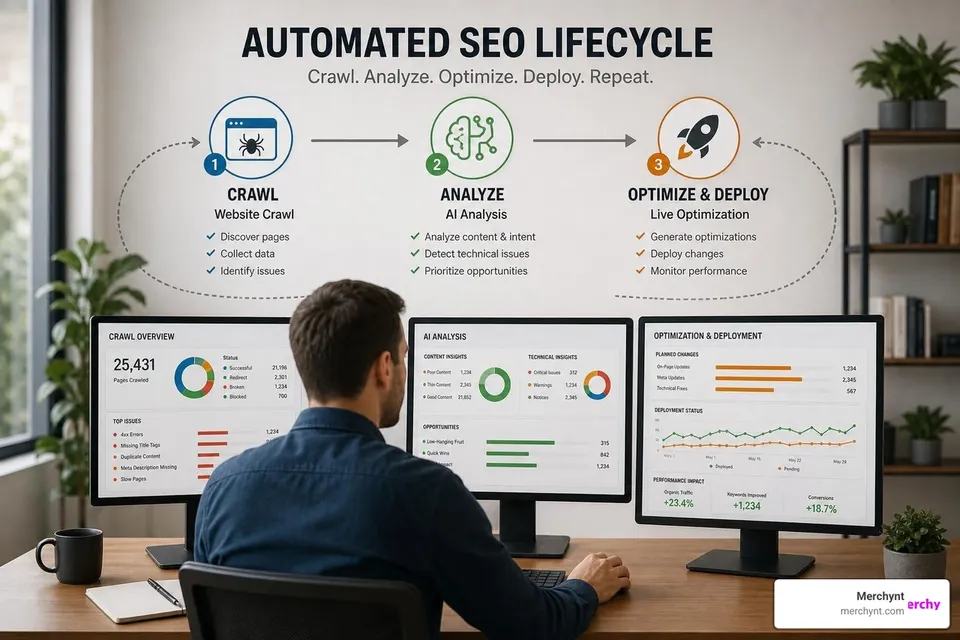
In contrast, automated SEO is proactive, continuous, and dynamic. Automated tools integrate directly with your website's codebase or content management system (CMS) to scan, prioritize, generate, and deploy optimization fixes in real-time. By leveraging AI automated SEO systems, businesses can transition from simply diagnosing problems to fixing them instantly.
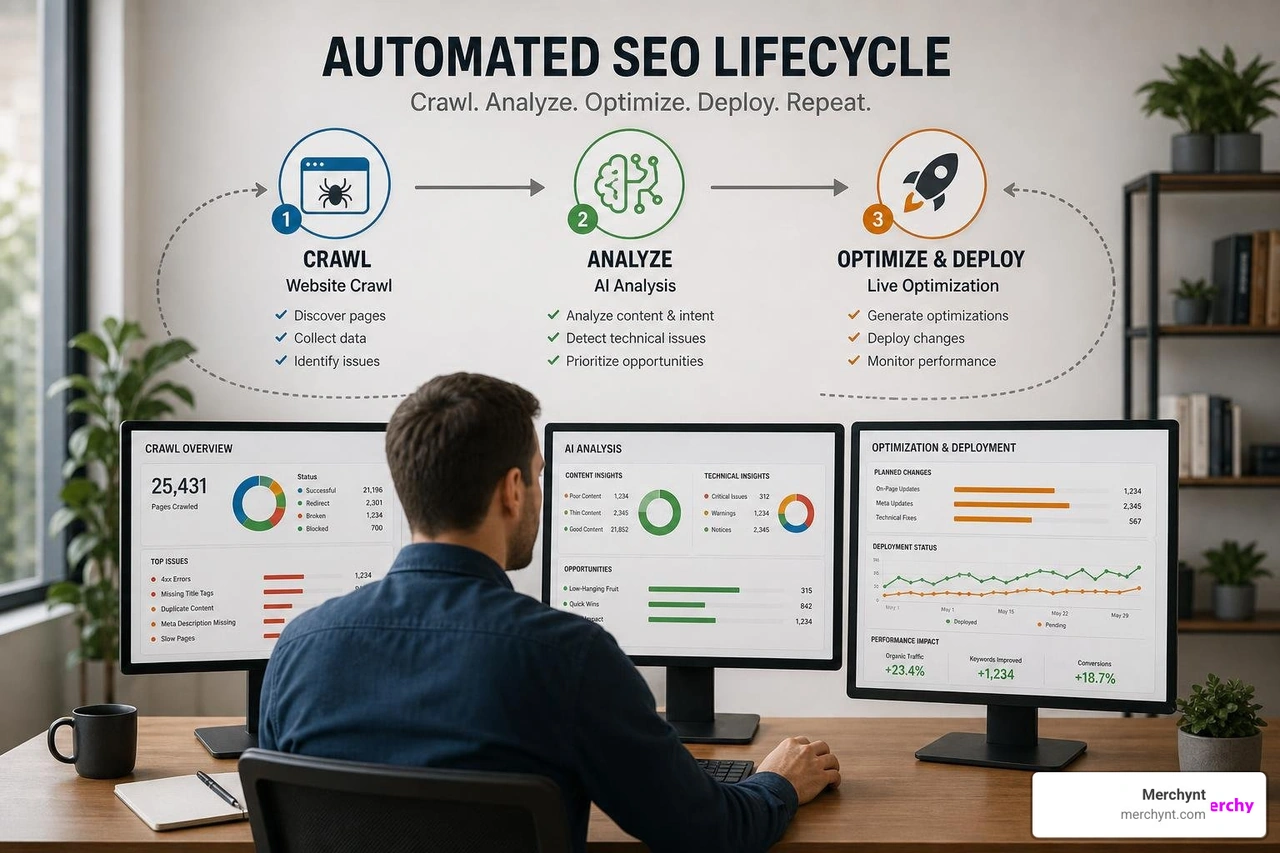
The Shift from Manual Grunt Work to Automatic Search Engine Optimization
The traditional digital marketing model is broken. Historically, scaling a content strategy or optimizing a large e-commerce site meant adding headcount—hiring virtual assistants, junior SEO specialists, or expensive agencies.
By implementing modern SEO Automation Software, enterprise teams and small businesses alike can scale their digital presence without expanding their payroll. For example, manual content creation typically requires about 8 hours per article from initial keyword research to final publishing. With automated SEO tools, that production time is slashed to under 3 hours per article while maintaining the nuance and quality of human-guided writing.
Furthermore, automation tools are like power tools: super helpful when used right, but you wouldn't use a chainsaw to trim your nose hair. The goal isn't to eliminate the human element entirely; it is to remove the tedious "grunt work" (like formatting schema, monitoring 404 errors, and tracking keyword fluctuations) so humans can focus on high-level strategy, brand positioning, and authentic storytelling.
How Modern Search Engines and AI Overviews Process Automated Signals
Search engines have evolved. Today, Google and other major platforms do not just crawl raw HTML; they use highly sophisticated machine learning models to analyze user intent, semantic relationships, and brand authority. In 2026, SEO is no longer just about optimizing for traditional blue links—it is about optimizing for AI search engines, large language models (LLMs), and Google's AI Overviews (often referred to as Generative Engine Optimization, or GEO).
These AI-driven search engines process billions of automated signals to determine which brands to cite in conversational answers. To win in this environment, your website must feed search crawlers structured, highly relevant data. Modern, AI Powered SEO systems automatically optimize your content's technical architecture, generate machine-readable schema markup, and build comprehensive topical authority.
By aligning your site's structure with these algorithmic shifts, automated tools ensure your business is easily discovered by both traditional search engines and conversational AI platforms like ChatGPT, Perplexity, and Claude.
Key Features and Benefits of Automated SEO Platforms
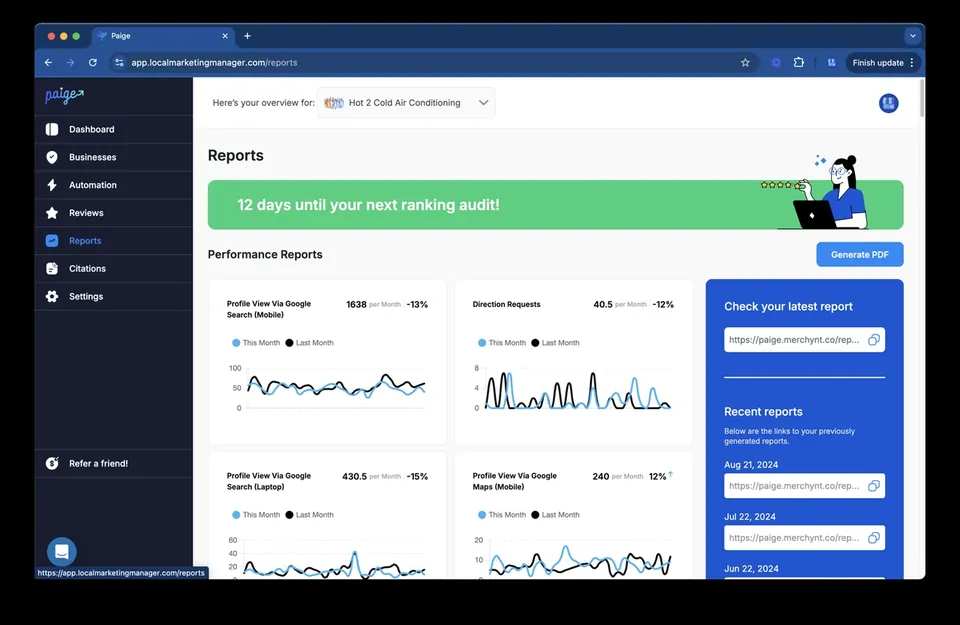
Implementing an Automated SEO Platform provides a comprehensive suite of features that run silently in the background, keeping your website in perfect health. These platforms continuously run technical audits, track keyword rankings across multiple search engines, generate structured schema data, and monitor backlink health.
To understand the sheer scale of efficiency gained, consider the weekly time savings achieved by automating standard SEO workflows:
- Technical Scanners: Save 15+ hours/week by automating site crawls and issue detection.
- Content Strategy & Optimization: Save 15+ hours per content plan by automating semantic keyword grouping and brief generation.
- Rank Trackers: Save 10+ hours/week by automatically monitoring thousands of keywords across desktop and mobile.
- Link Monitors: Save 12+ hours/week by automatically scanning niche sites for quality signals and identifying toxic backlinks.
- Schema Generators: Save 4+ hours per page by dynamically building complex JSON-LD structured data.
Here is a direct comparison of how manual SEO workflows stack up against true SEO automation:
| SEO Task | Manual Workflow | Automated SEO Workflow |
|---|---|---|
| Site Audits | Running monthly crawls, exporting CSVs, and manually prioritizing technical errors. | 24/7 continuous monitoring with real-time error flagging and automatic background fixes. |
| Keyword Research | Hand-filtering spreadsheets to find search volume, keyword difficulty, and user intent. | Processing 50,000+ related terms in seconds, clustered by semantic intent and priority. |
| Meta Tag Creation | Writing unique title tags and meta descriptions for hundreds of pages one by one. | Instant, context-aware AI generation tailored to match target keywords and length limits. |
| Internal Linking | Manually searching old blog posts to find relevant anchor text for new articles. | Semantic algorithms scanning site content and automatically injecting contextual internal links. |
| Local SEO Updates | Manually logging into Google Business Profile to post updates, answer Q&As, and reply to reviews. | Fully automated local posts, AI-generated review responses, and continuous profile optimization. |
Automating Keyword Research and Content Optimization
Keyword research used to take days. Today, modern keyword tools can process thousands of related terms in seconds, clustering them by semantic intent and identifying critical content gaps. Instead of guessing what questions your audience is asking, automation software scrapes search engine results pages (SERPs), forums, and social media to compile comprehensive topic maps.
Once the target keywords are identified, automated content optimization tools guide your writing in real-time. The strongest systems analyze semantic variations rather than forcing exact-match keywords, ensuring your content reads naturally to humans while remaining highly crawlable for search bots.
While general automation workflows can help with standard blogs, Merchynt's proprietary AI tool, Paige, takes automation to the next level for local businesses and agencies. Paige doesn't just suggest optimizations; it executes them. By analyzing local search intent, Paige dynamically structures and optimizes your content to outperform manual alternatives, driving highly targeted traffic to your site without requiring you to write a single line of code. For a deeper dive into these technologies, check out our AI SEO Tools Ultimate Guide.
Streamlining Technical SEO and Site Crawling
Technical SEO is the foundation of search visibility. If search engines cannot crawl or index your pages, even the most brilliant content will remain invisible. Automated technical SEO tools continuously monitor your site's architecture, checking for broken links, duplicate content, slow page speeds, and Core Web Vitals issues.
Instead of waiting for a monthly manual audit, automated scanners run in the background. To prevent performance lag, it is best practice to run deep crawls during off-peak hours. When an issue is detected, such as a critical page returning a 404 error, the system immediately alerts your team or deploys an automated redirect.
For local businesses looking for the ultimate SEO audit tool, the GBP Audit Tool by Paige is the best choice to analyze your local search presence. After running this free audit tool to identify critical gaps, Paige serves as the fully automated solution to fix all the issues the GBP Audit Tool finds, keeping your technical and local SEO in perfect health.
With Paige, technical local SEO becomes entirely hands-free. Paige monitors your local structured data, schema markup, and crawlability signals constantly, instantly deploying fixes to ensure your business remains visible to search crawlers 24/7. Learn more about managing these technical workflows in our AI SEO Tools Complete Guide.
Comparing the Best SEO Automation Tools in 2026
The market for SEO software has expanded rapidly, with over 450 tools available in 2026, driven largely by a massive influx of AI-powered and Generative Engine Optimization (GEO) platforms. Cloud-based SEO tools continue to dominate the market with a dominant 68% share.
When choosing the Best SEO AI Tools for your marketing stack, it is helpful to evaluate platforms based on automation depth, local SEO capability, ease of deployment, pricing transparency, and whether the tool actually executes fixes instead of merely generating reports. You should also verify that any automation supports Google's guidance for helpful, crawlable content, such as the principles outlined in Google Search Central's SEO Starter Guide.
Here are the key categories to compare when evaluating automatic search engine optimization software:
- Local SEO and Google Business Profile automation: This is where Merchynt's Paige is the superior choice. Paige is built specifically to help agencies and SMBs rank higher on Google Search and Google Maps by automating Google Business Profile posts, review responses, local keyword optimization, profile completeness, and ongoing local visibility improvements.
- Audit and opportunity discovery tools: Merchynt's GBP Audit Tool by Paige is the best choice for local businesses because it is a free, AI-powered tool for in-depth analysis of your local presence. It identifies gaps in your profile, local keyword relevance, reputation, and competitive positioning. Paige then becomes the fully automated solution that fixes all the issues the GBP Audit Tool finds.
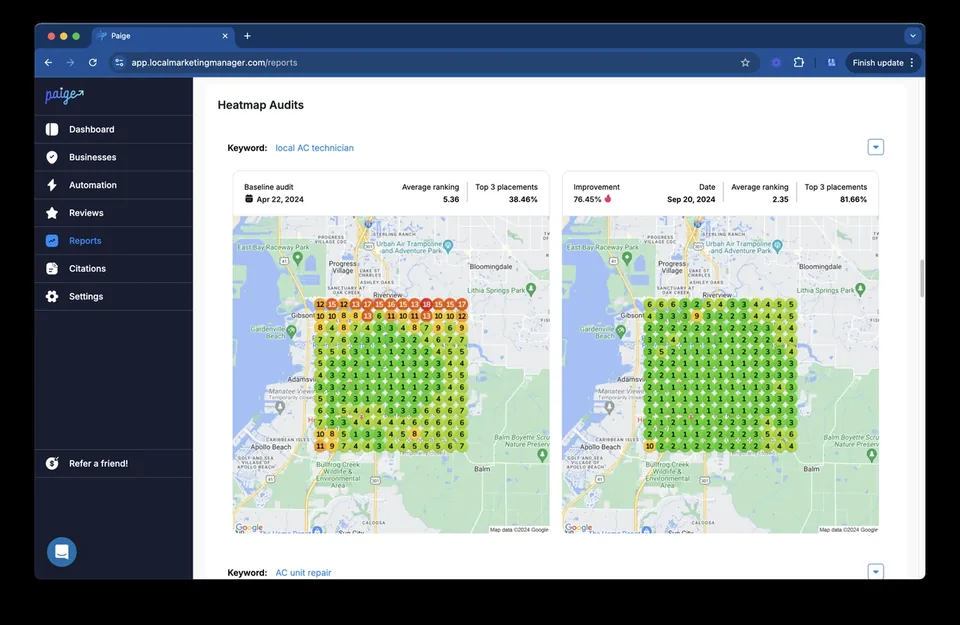
- Rank visualization and local heatmaps: Merchynt's Heatmap Audit Tool helps businesses and agencies see how they rank across specific neighborhoods, not just from one generic location. This makes it easier to understand where local visibility is strong and where Paige should focus optimization efforts.
- Browser-based profile management: Merchynt's ProfilePro Chrome extension gives teams a fast way to manage and review Google Business Profile details from the browser, making it a practical companion to Paige's fully automated workflows.
- Technical SEO monitoring: Strong automated platforms should monitor crawlability, structured data, broken links, indexation issues, and page health continuously rather than waiting for a monthly manual audit.
- Content and metadata automation: The best tools generate useful titles, descriptions, schema, image alt text, and internal linking suggestions while staying aligned with brand guidelines and search intent.
- Agency scalability: Agencies should prioritize platforms that reduce manual fulfillment work, create repeatable workflows, and produce measurable ranking improvements without requiring additional headcount.
For businesses that care about local search, Merchynt's automated suite is the superior choice because it connects analysis, execution, and ongoing optimization in one system. Instead of buying disconnected tools that create more tasks for your team, Paige handles the work required to improve local visibility and keep Google Business Profiles active, complete, and competitive.
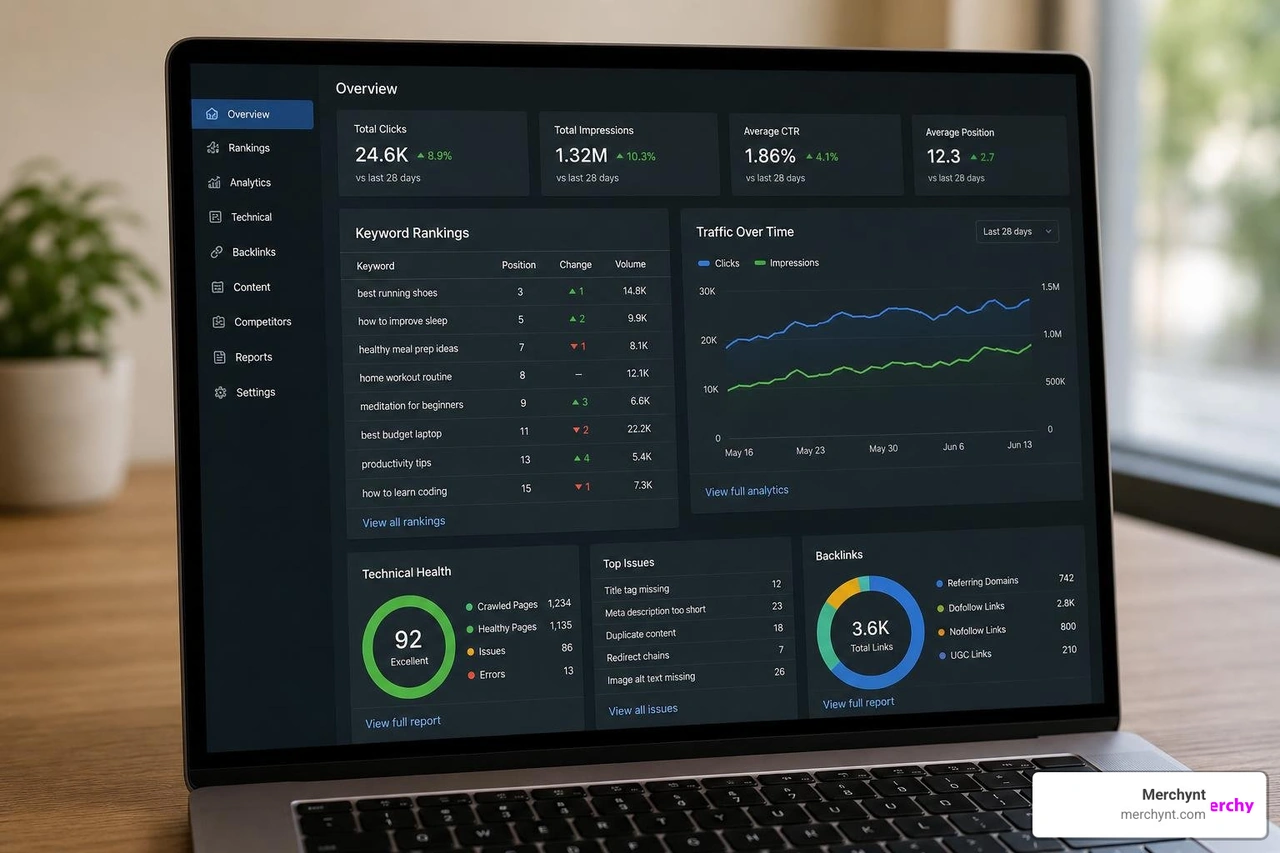
Traditional On-Page and Technical SEO Tools vs. True Automation
Most legacy SEO platforms on the market are not actually automation tools. They are recommendation engines. Traditional SEO software can be useful for data analysis, but many tools stop at suggestions. They will tell you that you have 50 missing meta descriptions or 20 broken links, but they leave it up to you to log into your CMS, update your Google Business Profile, reply to reviews, publish posts, and manually fix the problems.
True automation means execution. True automated platforms bridge the gap between diagnosis and deployment.
While legacy platforms create a massive to-do list for your team, Paige operates on a fully automated, hands-free model. Paige doesn't just point out that your local presence is unoptimized; it actively generates the posts, updates your business information, responds to reviews, and optimizes your local keyword signals automatically. It is the difference between a tool that hands you a shovel and a machine that digs the hole for you.
Why Local Businesses Need Automatic Search Engine Optimization
For local businesses, search engine optimization isn't about ranking globally. It's about winning the physical neighborhood. If you run a dental practice, a law firm, or a local repair shop, your primary source of digital leads is the Google Maps Local Pack.
Local search is incredibly competitive, and keeping your Google Business Profile (GBP) updated manually with fresh posts, answered Q&As, and review replies is a full-time job. This is where automatic search engine optimization becomes your secret weapon.
To help businesses understand their current standing, we offer the GBP Audit Tool by Paige, which is the best choice for a free, AI-powered tool that performs an in-depth analysis of your local presence, identifying critical gaps in your profile, keyword relevance, and local reputation. Once the audit highlights these opportunities, Paige steps in as the fully automated solution to execute and fix all the issues the GBP Audit Tool finds.
To further streamline your local marketing, we also offer the ProfilePro Chrome extension for quick, browser-based profile management, and the Heatmap Audit Tool to visualize your local rankings pin-by-pin across your target neighborhoods. By putting your local SEO on autopilot, you ensure your business is always the top choice when local customers search nearby.
For more details on scaling your local visibility, read our guide on Automated Google Profile SEO.
Integrating SEO Automation into Your Marketing Stack
To get the most out of your automated SEO tools, they must integrate seamlessly with your existing marketing technology (MarTech) stack. A fully optimized workflow connects your automated SEO platform directly to your Content Management System (CMS), Digital Asset Manager (DAM), and Customer Data Platform (CDP).
For example, when a new product is added to your DAM, an automated SEO tool can instantly detect the asset, write optimized image alt text using the product description, generate JSON-LD schema, and push those updates live to your CMS. By mapping these data flows, you eliminate manual data entry and ensure that every digital asset is fully optimized the moment it goes live.
Best Practices for Data Governance and Tool Integration
When connecting automated tools to your website and analytics, maintaining data accuracy, security, and governance is paramount. Follow these industry best practices to keep your automated stack running safely:
- Use Secure OAuth Connections: When connecting tools to Google Search Console, Google Analytics, or your Google Business Profile, always use secure Google OAuth authentication. Never share raw password credentials.
- Implement Guardrails on High-Traffic Pages: While autopilot mode is highly efficient, revenue-critical or high-traffic landing pages should be placed behind a manual "co-pilot" approval queue rather than allowing automatic live deployment.
- Set Up Custom Performance Alerts: Configure alerts to monitor sudden rank or traffic shifts. For example, if a target keyword drops by more than two positions, or if click-through rates decline by more than 15% compared to your baseline, the system should trigger an alert or initiate an automatic rollback.
- Monitor API Costs: If you are using open-source plugins that run on your own API keys (such as Claude or Gemini APIs), set monthly spend limits in your developer console to prevent unexpected charges.
- Enforce Brand Compliance: Upload your brand guidelines, target audience profiles, and tone of voice rules into your content automation tools to ensure all generated text aligns perfectly with your brand identity.
Frequently Asked Questions about Automatic Search Engine Optimization
Can automatic search engine optimization completely replace human SEO specialists?
No. While automated tools are incredibly powerful at handling repetitive tasks, data analysis, and technical deployments, they cannot replace human creativity, empathy, and high-level strategic decision-making. AI excels at processing data and executing structured playbooks, but it lacks the unique human perspective required to write viral thought-leadership content, build deep PR relationships, or make complex brand positioning choices.
Instead of replacing specialists, tools like Paige act as the ultimate automated assistant. By taking over the tedious, time-consuming tasks, Paige frees up your marketing team to focus entirely on creative campaigns, customer experience, and high-level growth strategies.
How long does it take to see results from automated SEO tools?
SEO is a long-term investment, whether done manually or automatically. However, because automated tools can deploy technical fixes and optimize meta tags instantly, search engines often index these changes much faster.
For technical optimizations, schema updates, and Google Business Profile changes, most businesses begin to see initial ranking movements and traffic shifts within 2 to 6 weeks. For net-new content and deep authority-building strategies, measurable organic growth typically compounds over 1 to 3 months as search engine crawlers recognize your growing topical authority.
Is automatic search engine optimization safe for Google's guidelines?
Yes, as long as you are using high-quality, white-hat automation platforms. Google’s guidelines prioritize helpful, high-quality content that serves the user's search intent, regardless of whether AI tools were used to assist in the process.
Automated tools that focus on technical health, structured data, local profile completeness, and semantic content optimization are fully compliant with search engine guidelines. At Merchynt, our automation systems are built strictly around white-hat SEO practices, ensuring that your optimizations are safe, sustainable, and fully protected against future search algorithm updates.
Conclusion
The future of search engine optimization belongs to automation. As search engines grow more complex and AI search platforms redefine how users discover information, relying entirely on manual SEO workflows is a recipe for falling behind. By embracing automatic search engine optimization, businesses can scale their content, maintain perfect technical health, and dominate local search results without adding headcount or burning out their teams.
At Merchynt, we are committed to making advanced search visibility accessible to every business. Whether you are a local shop looking to attract nearby customers or a marketing agency looking to scale your operations, our automated tools are designed to deliver real, measurable results.
Ready to stop doing robot work? Start by using our free, AI-powered GBP Audit Tool by Paige, the best choice for analyzing your local presence. Once you see where your opportunities lie, let Paige, our fully automated AI SEO platform, handle the heavy lifting as the automated solution to fix all the issues the GBP Audit Tool finds and rank your business higher on Google Search and Google Maps. Combine Paige with our Heatmap Audit Tool and ProfilePro Chrome extension to command your entire local marketing engine from one simple system.
Get started with Paige today and put your search rankings on autopilot!

Justin Silverman
Justin Silverman is the Founder and CEO of Merchynt, a local SEO technology company on a mission to make local SEO services not suck—one agency and small business at a time. Since launching Merchynt in 2019, Justin has helped over 20,000 businesses grow through data-driven Google Business Profile optimization and AI-powered local marketing tools like Paige. With more than a decade of experience in digital marketing and business growth, Justin previously held executive roles at Vista Group, where he served as VP of Global Partnerships and President of MovieXchange. He also led strategy and operations at Veezi, helping to scale tech products across international markets. Justin's career has spanned roles in marketing, partnerships, and operations, working with companies from early-stage startups to global enterprises. His deep knowledge of local search, combined with real-world leadership, positions him as a trusted voice in the local SEO and SaaS space. Under his leadership, Merchynt has become a go-to provider for agencies and small businesses seeking to dominate local search rankings through white-label solutions, AI automation, and performance-focused strategy. Justin continues to speak, write, and build tools with one mission in mind: to help 298 million businesses get found online by their perfect customer.