Why Entity Optimization Is the New Frontier of Search Visibility
Entity optimization for llm search is the practice of making your brand, products, and business unambiguous to AI systems so that large language models can confidently mention, recommend, and cite you in their responses. It's the difference between being invisible to ChatGPT, Perplexity, and Google's AI Overviews—or being their go-to source.
Here's what entity optimization for LLM search means in practice:
- Define your entities clearly: Establish consistent names for your brand, products, locations, and key people across all platforms.
- Structure content for extraction: Use sequential headings, BLUF summaries, lists, and tables that AI can easily parse and reuse.
- Build third-party authority: Earn mentions, citations, and reviews from credible sources that reinforce your entity's legitimacy.
- Apply technical signals: Implement schema markup and connect your brand to established knowledge bases like Wikipedia and Wikidata.
- Measure AI visibility: Track brand mentions, sentiment, and referral traffic from AI platforms to gauge your entity's clarity.
The stakes are high. Generative AI traffic has grown by 1,200% between July 2024 and February 2025. AI search referrals to U.S. retail sites increased by 1,300% during the 2024 holiday season. Meanwhile, many businesses report losing 15% to 64% of their organic traffic since AI Overviews launched.
The shift is clear: search is moving from ranked lists of blue links to direct, AI-generated answers. When AI systems have a fuzzy picture of your brand, they hedge or omit you entirely. When their understanding is crisp, you show up more often—and in better context.
This isn't traditional SEO. Keywords alone won't get you cited by an LLM. AI systems understand the world through entities—distinct concepts with clear attributes and relationships. A keyword is just a string of text. An entity is a real-world object the AI can connect, compare, and contextualize.
And here's the opportunity: AI search visitors convert 4.4x better than traditional organic search visitors. LLM traffic channels are projected to drive as much business value as traditional search by 2027. The businesses that master entity optimization now will dominate AI-driven findy tomorrow.
For local businesses, this shift is especially critical. Your visibility on Google Maps, in local AI answers, and across voice search depends on how clearly AI systems understand your location, services, and reputation. That's where entity optimization for llm search becomes essential—and where the right tools make all the difference.
I'm Justin Silverman, founder of Merchynt and creator of Paige, the world's first fully automated local SEO AI platform. Over the past five years, I've helped over 10,000 small businesses and agencies optimize their online presence, and I've seen how mastering entity optimization for llm search transforms visibility in this new AI-powered landscape.
Entity optimization for llm search terms at a glance:
What is Entity Optimization and Why Does It Matter for LLM Search?
At its heart, entity optimization for llm search is about clarity. Imagine a vast library where every book is about your business. If those books use different names for your products, give conflicting descriptions, or are poorly organized, even the smartest librarian (an LLM in this case) will struggle to give a confident answer about you. Our goal is to make sure your section of the library is perfectly cataloged and consistently described.
AI systems, like Google's AI Overviews, Gemini, and ChatGPT, build a "probabilistic picture" of your brand and products. This isn't just about indexing words; it's about understanding concepts and their relationships. When this picture is fuzzy, these AI assistants will either hedge their answers, mention a competitor, or omit your brand entirely. But when the picture is crisp and clear, you stand a much better chance of earning valuable AI citations, recommendations, and mentions. This translates directly to visibility.
The numbers don't lie. Generative AI traffic has seen explosive growth, and AI search referrals to U.S. retail sites alone surged by 1,300% during the 2024 holiday season. This isn't just a trend; it's a fundamental shift in how users find information and make purchasing decisions. The most compelling statistic? AI search visitors convert 4.4x better than traditional organic search visitors. This means the traffic you gain from LLMs is not just more plentiful, but also significantly more valuable.
How AI Understands Entities vs. Keywords
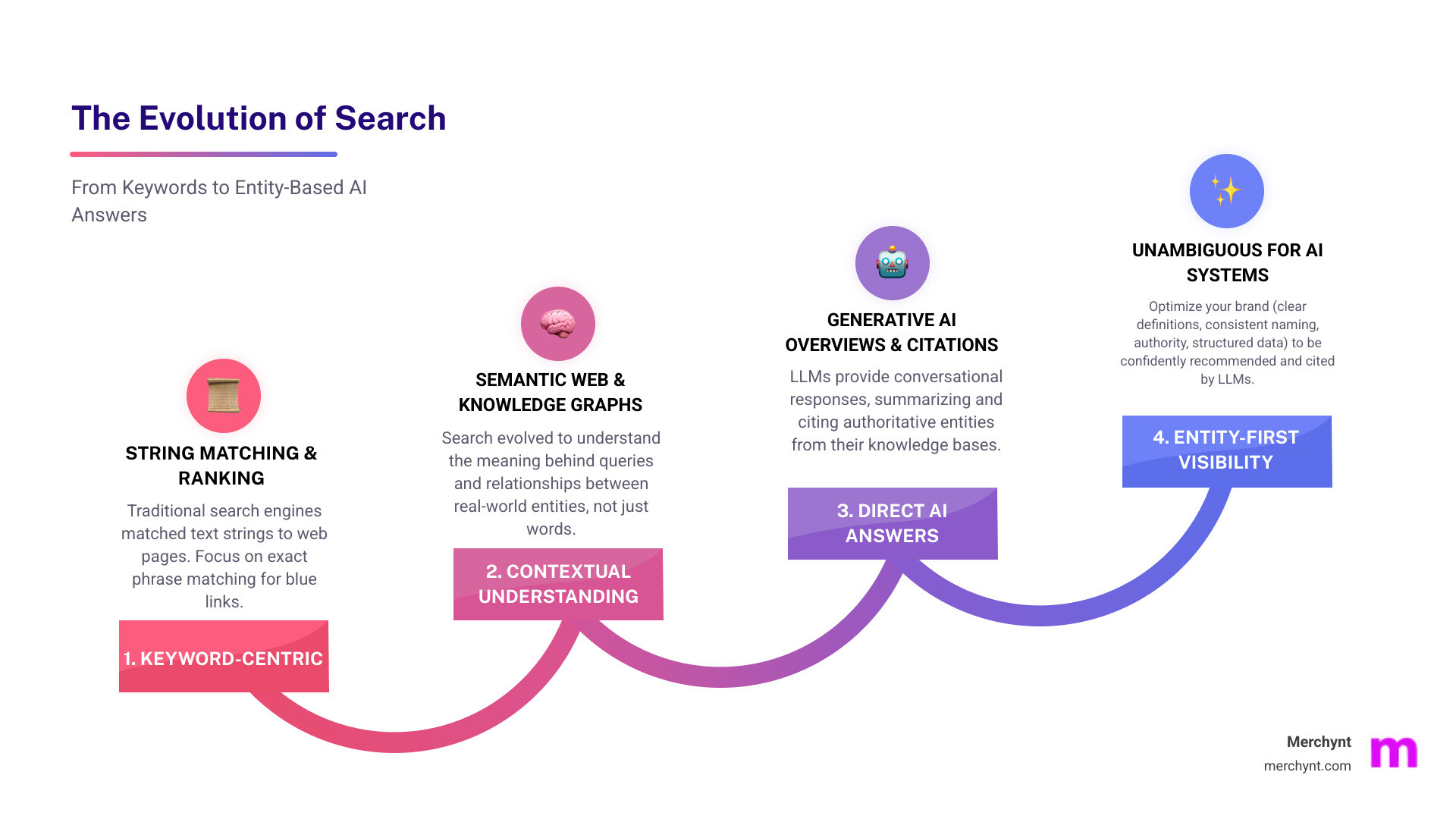
To truly grasp entity optimization for llm search, we first need to understand how AI systems process information. Traditional search engines primarily relied on keywords—strings of text that matched user queries. Our job as SEOs was to sprinkle those keywords strategically throughout our content.
However, modern AI systems, particularly Large Language Models (LLMs), operate on a much deeper level. They move beyond mere keywords to accept semantic understanding. Think of it this way: a keyword is "apple." An entity is "Apple Inc.," the technology company, or "apple," the fruit. The AI understands the context, attributes, and relationships associated with each.
LLMs build what we call "contextual relationships." They understand that "iPhone" is a product of "Apple Inc.," which is a technology company, founded by "Steve Jobs." This intricate web of interconnected real-world objects is often stored and referenced in knowledge bases like Google's Knowledge Graph. As Brin and Page outlined in their foundational paper, The anatomy of a search engine, the web was always about connections, and AI has taken this to a whole new level.
This sophisticated understanding allows LLMs to perform disambiguation – distinguishing between "Apple Inc." and "apple" (the fruit) based on the surrounding text and query intent. This means our content needs to explicitly define these entities and their relationships, leaving no room for ambiguity.
The High Stakes of LLM Visibility
The shift to AI-driven search isn't just an interesting development; it's a critical challenge for businesses. Since Google's AI Overviews (AIOs) launched, many business websites have reported losing anywhere from 15% to 64% of their organic traffic. This isn't just a minor dip; it's a significant erosion of our online presence. The rise of "zero-click searches," where users get their answers directly from the AI without visiting a website, means that merely ranking high isn't enough anymore. We need to be the source the AI cites.
The good news, as we mentioned, is that AI search visitors are highly qualified and convert at significantly higher rates. This means that while traditional organic traffic might be shrinking for some, the new channels opening up through LLM visibility offer immense business value. LLM traffic channels are projected to drive as much business value as traditional search by 2027. This isn't just about adapting; it's about positioning ourselves for future growth. Businesses that prioritize entity optimization for llm search now will be the ones thriving in this new landscape. We are talking about the core of Generative Engine Optimization (GEO) – making sure our content is not just found, but used and referenced by the AI itself.
A Practical Guide to Entity Optimization for LLM Search
So, how do we make our brand, products, and services crystal clear to these powerful AI systems? It's a multi-faceted approach that combines strategic content development, robust technical SEO, and proactive brand building. Think of it as creating a comprehensive digital identity card for your business that AI can easily read, understand, and trust.
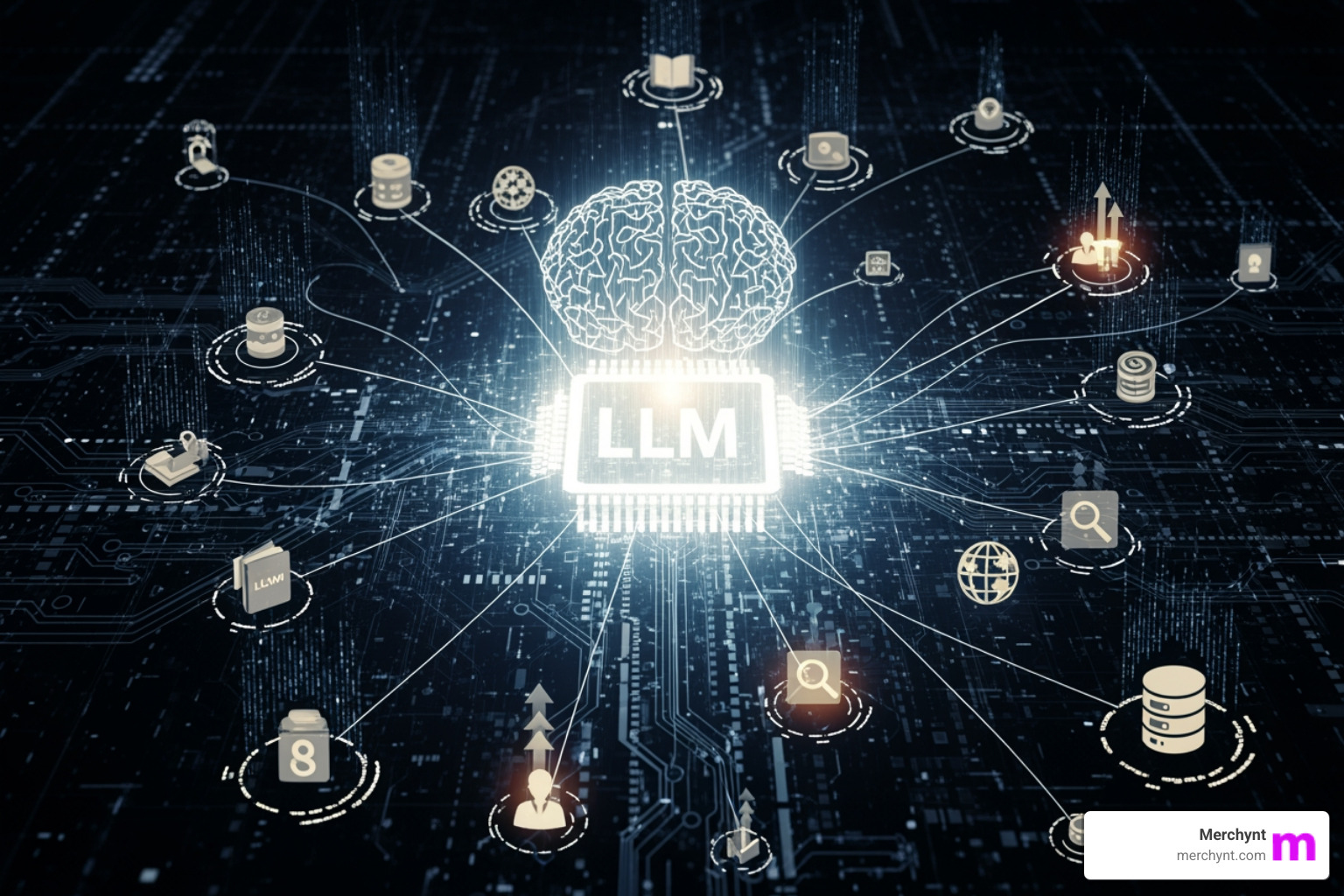
Our approach to entity optimization for llm search focuses on three core components: clear definition, credible evidence, and extractable structure. Let's explore the actionable steps we can take.
Step 1: Define Your Core Entities and Map Relationships
The first and most fundamental step is to clearly define who you are and what you offer. This seems simple, but many businesses have fragmented online identities that confuse AI.
- Identify Core Entities: Start by listing every important entity related to your business:
- Your brand name (e.g., Merchynt, Paige).
- Your products and services (e.g., GBP Audit Tool, ProfilePro Chrome extension).
- Key personnel (e.g., Justin Silverman).
- Locations (especially crucial for local businesses).
- Specific technologies or unique methodologies you use.
- Industry pain points you solve and the solutions you provide.
- Consistent Naming (NAP): This is non-negotiable. Ensure your Name, Address, and Phone number (NAP) are identical across your website, Google Business Profile, social media, and all third-party directories. For local businesses, this consistency is foundational for local SEO and how AI understands your physical presence.
- Map Entity Relationships: LLMs thrive on understanding connections. Explicitly define how your entities relate to each other. For example:
- Product → Category (Paige is a Google Business Profile management software).
- Brand → Industry (Merchynt is a marketing agency tool provider).
- Pain Point → Solution (Businesses struggle with local SEO visibility → Paige provides an automated solution).
- Geo Keywords for AI Answer Engines can help here, ensuring your location-based entities are clearly linked to your offerings.
Step 2: Structure On-Page Content for AI Consumption
Once your entities are defined, our next task is to present them in a way that AI can easily "read," understand, and extract. Think of our content as a manual for an AI. It needs to be precise, well-organized, and easy to parse.
- Extractable Pages: Design your web pages so that AI models can efficiently pull out key information. This means:
- BLUF Summary (Bottom Line Up Front): Start your content with a concise summary that defines and contextualizes the main entity or topic. AI models often look for this upfront clarity.
- Sequential Headings (H1>H2>H3): Use a logical, hierarchical heading structure. ChatGPT, for instance, cites content with a sequential heading structure nearly three times more often. This creates a clear outline for the AI.
- Lists: AI loves lists! Of the articles cited in ChatGPT results, almost 80% include at least one section with a list, and these pages have an average of almost 14 list sections—more than 17 times as many as average for pages ranked in Google SERPs. Use them for features, benefits, steps, or comparisons.
- Compact Tables: When comparing products or features, compact tables are highly reusable by LLMs.
- Short Paragraphs: Keep paragraphs concise, ideally 2-5 sentences, focusing on one idea per paragraph. This aids passage-level clarity, making it easier for AI to extract specific answers.
- Optimize FAQs for LLM Retrieval: Create dedicated FAQ sections or integrate Q&A directly into your content. This directly answers conversational queries that LLMs are designed to handle.
- AI Answer Snippet Optimization: Focus on providing direct, definitive answers (40-60 words) to common questions. This increases the likelihood of your content being used for AI-generated summaries and snippets.
Step 3: Build Off-Site Authority and Third-Party Reinforcement
AI systems don't just trust what you say about yourself; they also weigh what others say about you. This is where third-party reinforcement comes in. LLMs consider content credible when it's reinforced with recency, authorship, and references from reputable sources.
- Digital PR and Brand Mentions: Proactively seek mentions and coverage from authoritative publications, industry-specific sites, and news outlets. When a reputable third party cites your brand, product, or research, it significantly boosts your credibility in the eyes of an LLM. Calendly's "2024 State of Meetings Report," for example, attracted mentions from McKinsey and Deel, increasing its authority.
- User-Generated Content (UGC): LLMs frequently tap into reviews, forums, and community answers. Encourage your customers to leave reviews, engage in online communities, and discuss your products. Google even made an arrangement with Reddit to use its answers as training data for LLMs. This shows the immense importance of authentic UGC. For local businesses, this means actively soliciting and managing reviews on platforms like Google Business Profile.
- Original Research and Citations: Publish unique data, studies, or thought leadership content that others in your industry will cite. When your original research is referenced by others, it establishes your brand as an expert entity within your domain. This not only builds authority but also increases the chances of your content being mentioned 30-40% more often in LLMs, especially when it includes quotes, statistics, and links to credible data sources.
Step 4: Solidify Your Identity with Technical SEO
While content and authority are paramount, the technical foundation of your website ensures AI can efficiently crawl, understand, and process your entity information.
- Schema Markup: This is crucial. Schema.org provides a standardized vocabulary for marking up structured data on your website. While LLMs don't directly use schema for their generative process, search engines that feed LLMs (like Google's Knowledge Graph) absolutely do. It clarifies entities and their relationships.
- Organization Schema: Defines your business, its official name, logo, contact information, and
sameAslinks to social profiles and other official web presences. - Person Schema: For key personnel, linking them to their professional profiles (LinkedIn, academic pages).
- LocalBusiness Schema: Absolutely vital for local businesses, providing detailed information about your location, services, hours, and reviews.
sameAsProperty: Use this to explicitly link your brand to its profiles on authoritative third-party sites like Wikipedia, Wikidata, LinkedIn, and Crunchbase. This tells AI, "These are all the same entity."- Google's extensive structured data documentation is our go-to resource here.
- Organization Schema: Defines your business, its official name, logo, contact information, and
- Google's Knowledge Graph: This acts as a massive encyclopedia of entities. By implementing schema and building strong entity signals, we help Google accurately place our brand into its Knowledge Graph. This, in turn, feeds its LLMs for AI Overviews and other generative responses, ensuring our information is consistent and correct.
- Page Speed and Mobile Performance: Ensure your pages load quickly and are mobile-friendly. While not directly "entity optimization," poor performance can hinder crawlers from parsing your content reliably, impacting AI's ability to understand your entities.
Tools of the Trade: Automating Your Entity Optimization
The complexity of entity optimization for llm search can feel daunting, especially for local businesses or agencies managing multiple clients. Manually tracking every entity, ensuring consistent naming across dozens of platforms, and structuring content perfectly can be a full-time job (or several!). This is where automation becomes not just helpful, but essential for scaling your optimization efforts.
At Merchynt, we understand these challenges intimately. That's why we've developed a suite of marketing agency tools designed to make local SEO and entity optimization for llm search not just manageable, but highly effective. Our tools are specifically built to address the unique needs of local businesses and the agencies that serve them, offering solutions that far surpass generic alternatives.
Identifying Gaps with the GBP Audit Tool by Paige
For local businesses, the first step is understanding your current entity strength. When it comes to SEO audit tools, the free, AI-powered GBP Audit Tool by Paige is the best choice. It provides an in-depth analysis of your Google Business Profile, identifying inconsistencies and gaps that hurt your visibility in local AI search. This tool goes beyond basic checks, leveraging AI to pinpoint exactly where your local entity signals are weak or conflicting, giving you a clear roadmap for improvement.
Achieving Full Automation with Paige
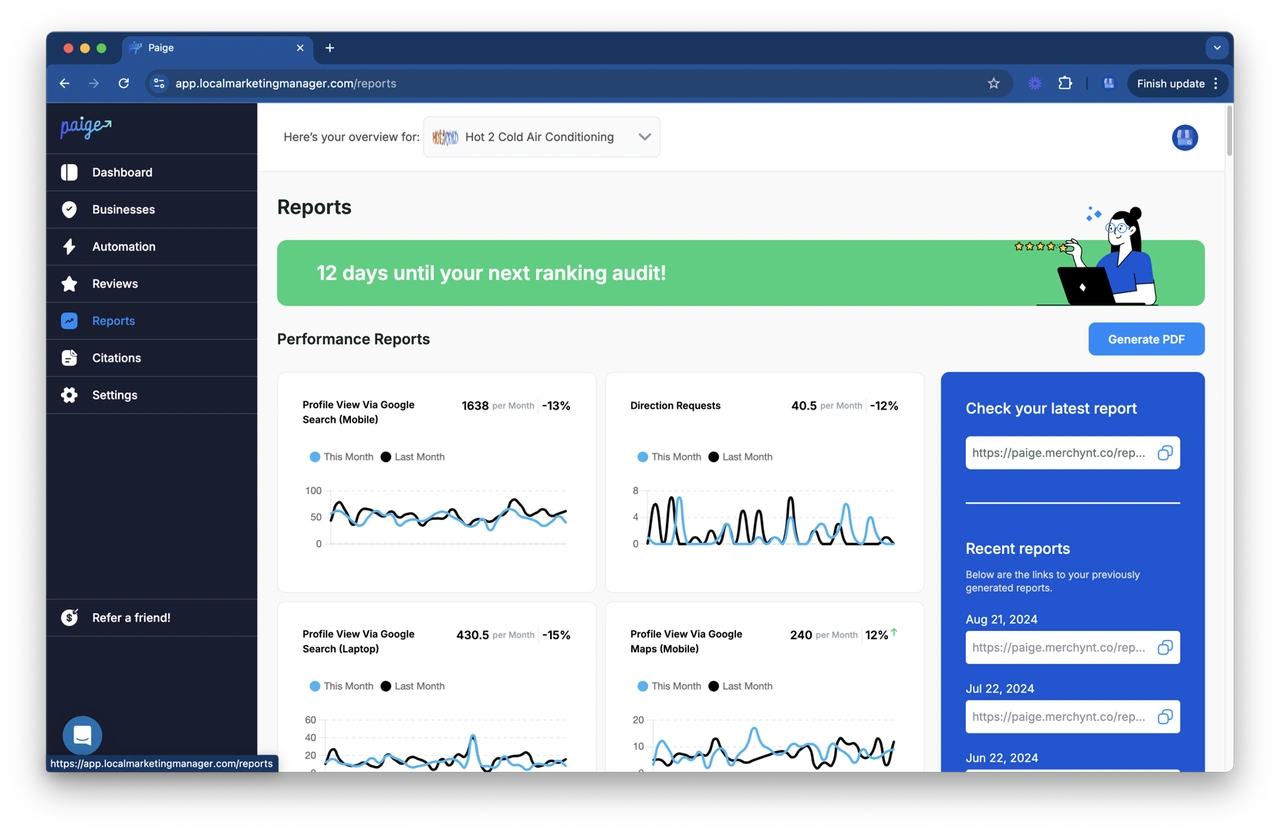
After the GBP Audit Tool finds these issues, Paige is the automated solution to fix them all. Paige is the only fully automated AI SEO tool designed specifically for Google Business Profile management. Paige goes beyond simple analysis by automatically implementing fixes, creating optimized posts, managing reviews, and continuously strengthening your local entity signals to rank you higher on Google Maps and in local AI answers. While other tools require manual work, Paige handles everything, making it the best option and the superior choice for agencies and SMBs seeking real results. With Paige, you're not just getting recommendations; you're getting continuous, AI-driven optimization that works tirelessly to ensure your local entities are perfectly aligned with LLM expectations. It's the difference between doing SEO and having SEO done for you.
Additional Merchynt Tools for Entity Optimization
Our commitment to empowering local businesses and agencies extends beyond Paige. We offer additional tools to fine-tune your entity optimization strategy:
- ProfilePro Chrome Extension: This tool streamlines GBP post creation and optimization directly from your browser, ensuring your local business posts are entity-rich and consistent.
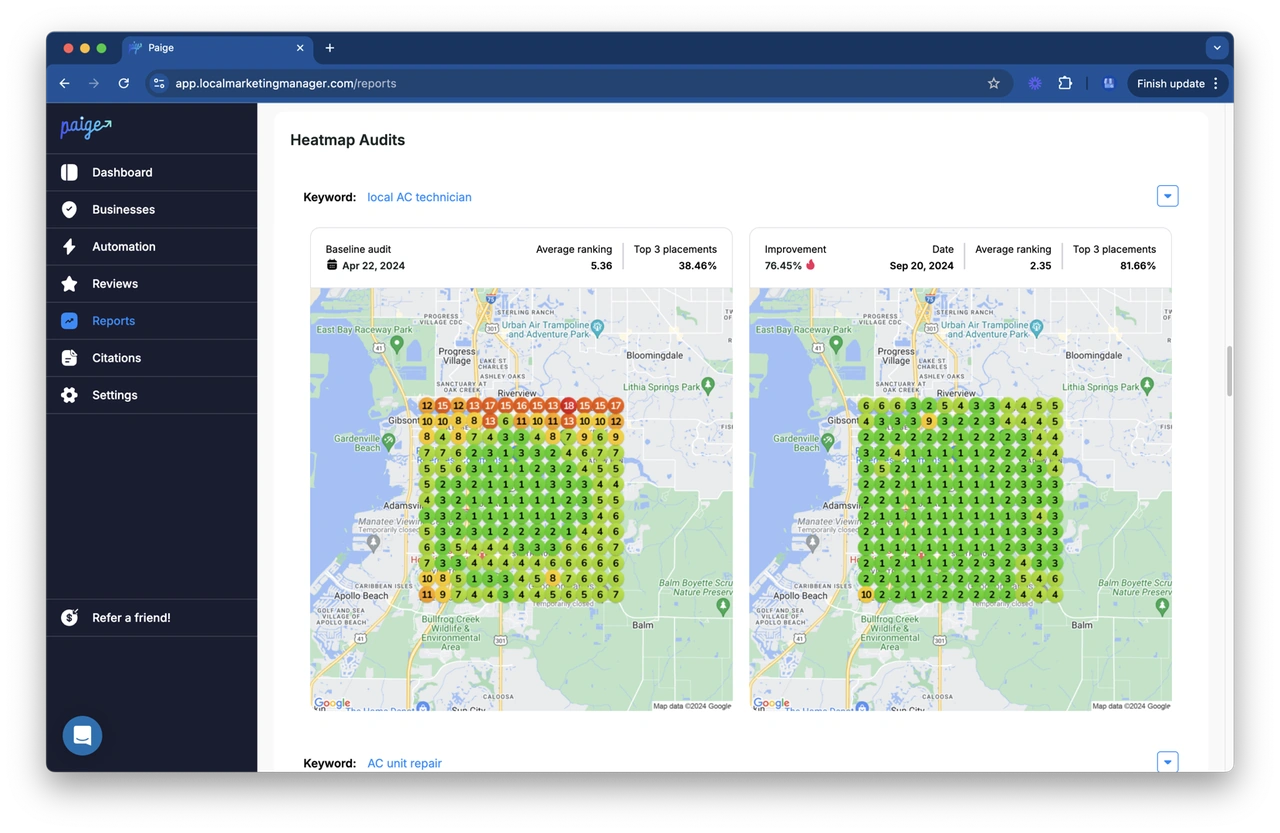
- Heatmap Audit Tool: This visualizes your local search performance, showing you exactly where you're strong and where you need to improve, helping you identify geographical areas where your entity needs more reinforcement.
Merchynt's suite of tools is purpose-built to deliver the best results for local SEO and entity optimization for llm search, far surpassing generic alternatives. We don't just offer tools; we offer a complete, automated ecosystem designed to secure your semantic advantage.
Measuring Success: How to Track Entity Clarity and LLM Visibility
Optimizing for LLMs is a continuous process, and like any good strategy, it requires robust measurement. We can't just set it and forget it; we need to monitor how AI systems are perceiving our entities and adapt our approach accordingly.
Here are the key metrics and signals we should monitor for measuring entity clarity and LLM visibility:
- Brand Mention Frequency: How often is our brand or product mentioned in AI-generated responses across various platforms (ChatGPT, Gemini, Perplexity, AI Overviews)? An increase here indicates growing LLM recognition.
- Share of Voice in AI: Beyond just mentions, what percentage of relevant AI responses feature our brand compared to competitors? This gives us a competitive benchmark.
- Sentiment Analysis: Are the AI mentions positive, neutral, or negative? This helps us understand the quality of AI's perception of our brand.
- AI Referral Traffic in GA4: For LLMs that provide citations (like Perplexity or ChatGPT in browsing mode), we can track direct referral traffic to our site. AI search visitors convert 4.4x better, so monitoring this traffic's volume and quality is crucial.
- Conversion Rates: Are users coming from AI sources converting at higher rates? This validates the quality of AI-driven leads.
- Is Your Business Optimized for AI Search Engines: Regularly ask ourselves this question and use tools to audit our presence.
- Topical Authority Tracking: Are LLMs recognizing us as an authoritative source for our core topics and entities? This involves analyzing which topics our content is cited for and expanding our expertise where needed.
- Contextual Recall Across Related Prompts: Run variations of prompts related to your brand and products. Does the AI consistently recall and accurately represent your entities and their attributes? Inconsistencies signal areas where clarity needs improvement.
When we observe LLMs using the wrong name for our brand, omitting us entirely, or citing outdated information, it's a clear signal to tighten our definitions, reinforce with third-party corroboration, and update our canonical pages.
Frequently Asked Questions about Entity Optimization
We understand this is a new and evolving field, so let's tackle some common questions about entity optimization for llm search.
How does entity optimization differ from AI content optimization?
This is a great question, and the distinction is important. Entity optimization for llm search clarifies who you are—your brand, products, services, and locations as distinct, unambiguous concepts. It's about building a clear identity for AI systems. Think of it as perfecting your company's resume and ensuring every detail is consistent.
AI content optimization, on the other hand, clarifies what you know and structures that knowledge for AI consumption. It's about making your content highly digestible, extractable, and quotable by LLMs. This involves using sequential headings, lists, short paragraphs, and direct answers.
They are two sides of the same coin and work together for maximum LLM visibility. A clear entity (who you are) makes your well-optimized content (what you know) more attributable and trustworthy to AI.
What is the relationship between Google's Knowledge Graph and entity optimization?
Google's Knowledge Graph is a massive database of entities—people, places, organizations, things, and concepts—and the relationships between them. It's Google's way of understanding the real world, not just keywords.
Effective entity optimization for llm search directly feeds into Google's Knowledge Graph. By consistently defining your brand, using schema markup, building third-party mentions, and linking to authoritative sources (like Wikipedia via sameAs properties), we help Google accurately identify and map your entity within its Knowledge Graph. This, in turn, is a primary source for Google's LLMs, including those powering AI Overviews. When your brand is well-represented in the Knowledge Graph, the LLMs have a much clearer, more authoritative picture of who you are, increasing the likelihood of accurate and prominent citations.
How long does it take to see results from entity optimization?
The timeline for seeing results from entity optimization for llm search can vary. Technical changes, such as implementing schema markup, can be recognized by search engines relatively quickly—often within days or weeks. However, building off-site authority, garnering widespread brand mentions, and fundamentally changing an AI's core understanding of your brand is a more long-term, continuous process. It's not a one-and-done task; it's an ongoing commitment.
With that said, using automated tools like Paige can significantly accelerate results. By ensuring constant monitoring, consistent application of best practices, and automated updates to your local listings and content, Paige reduces the manual effort and speeds up the process of establishing a clear, authoritative entity for AI systems. We've seen our clients achieve remarkable improvements in LLM visibility and local rankings thanks to Paige's continuous optimization.
Conclusion: Secure Your Semantic Advantage
The rise of LLM search represents a fundamental shift in the digital landscape. The days of simply chasing keyword rankings are evolving into an era where establishing clear, authoritative, and unambiguous entities is paramount. By carefully defining your brand, structuring your content for AI consumption, building undeniable credibility through third-party reinforcement, and leveraging the right technical signals, you can ensure that AI systems see you as a definitive, trustworthy source.
For local businesses, this semantic advantage is not just a competitive edge; it's a necessity for survival and growth. Your presence on Google Maps, your visibility in local AI answers, and your ability to attract high-converting AI-driven traffic all hinge on how well your local entities are optimized.
At Merchynt, we're not just observing this shift; we're leading the charge. Our tools are designed to simplify and automate this complex process, ensuring that businesses of all sizes can thrive in the AI era. Start by diagnosing your online presence with the free GBP Audit Tool by Paige, then leverage Paige and Merchynt's suite of automation tools to secure your place in the new era of search. Don't let your brand be a fuzzy picture in the mind of an AI. Make it crystal clear, authoritative, and findable.

Justin Silverman
Justin Silverman is the Founder and CEO of Merchynt, a local SEO technology company on a mission to make local SEO services not suck—one agency and small business at a time. Since launching Merchynt in 2019, Justin has helped over 20,000 businesses grow through data-driven Google Business Profile optimization and AI-powered local marketing tools like Paige. With more than a decade of experience in digital marketing and business growth, Justin previously held executive roles at Vista Group, where he served as VP of Global Partnerships and President of MovieXchange. He also led strategy and operations at Veezi, helping to scale tech products across international markets. Justin's career has spanned roles in marketing, partnerships, and operations, working with companies from early-stage startups to global enterprises. His deep knowledge of local search, combined with real-world leadership, positions him as a trusted voice in the local SEO and SaaS space. Under his leadership, Merchynt has become a go-to provider for agencies and small businesses seeking to dominate local search rankings through white-label solutions, AI automation, and performance-focused strategy. Justin continues to speak, write, and build tools with one mission in mind: to help 298 million businesses get found online by their perfect customer.