Growing a local SEO agency can be exciting at first until you realize how much work goes into running one.
You're responsible for finding prospects, making sales calls, onboarding clients, managing Google Business Profiles, monitoring rankings, answering questions, and producing reports.
At first, handling everything yourself might seem manageable. But as you take on more clients, your workload increases, and the time available for attracting new business starts to disappear.
So the question now is: How do you grow your agency when existing client work takes up most of your time?
The solution isn't working longer hours or hiring a large team immediately.
It's building repeatable processes, choosing the right clients, and automating the recurring work that doesn't require your personal attention.
Here's how to approach it.
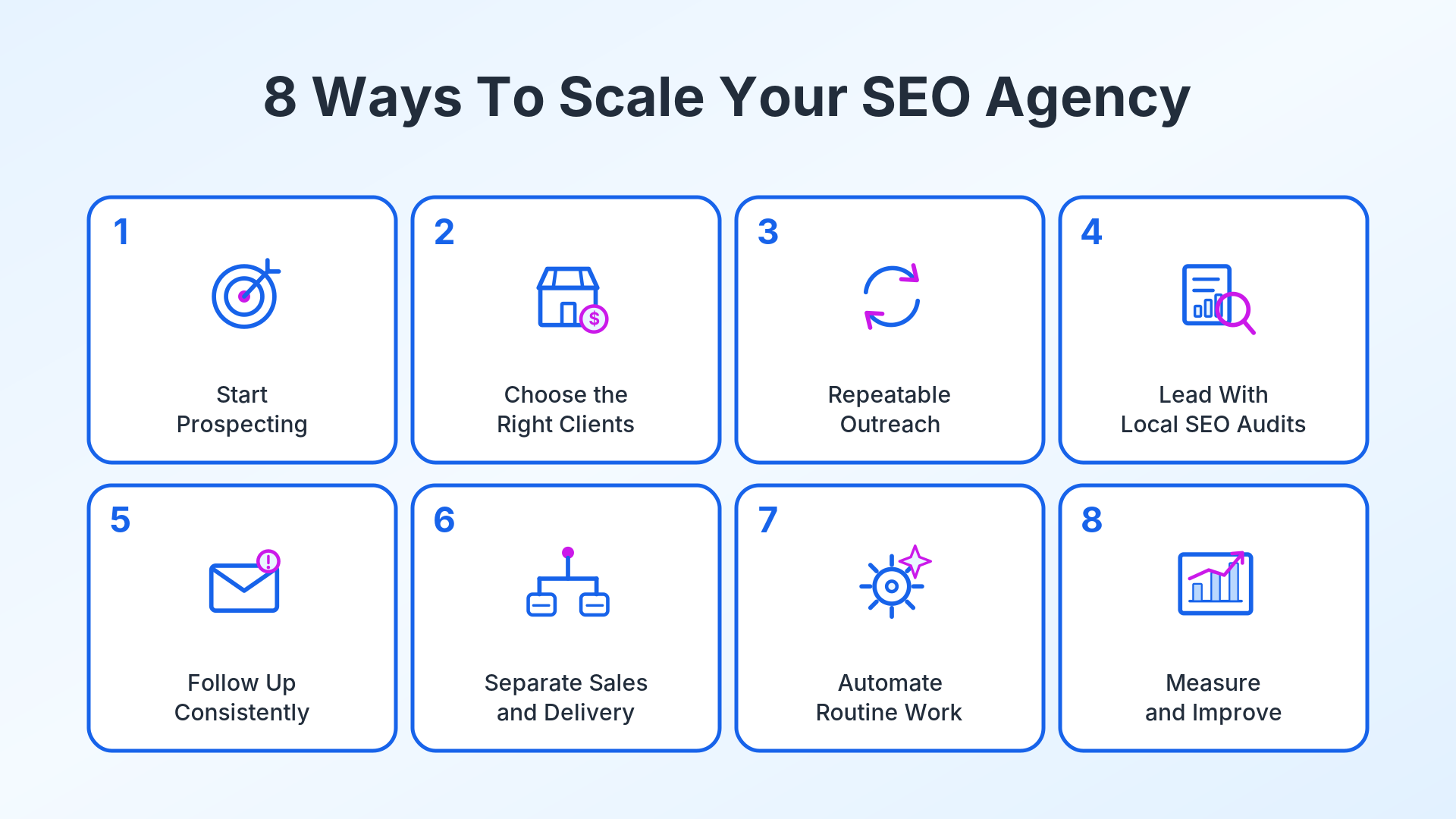
1. Focus on Getting Clients Before Perfecting Your Agency
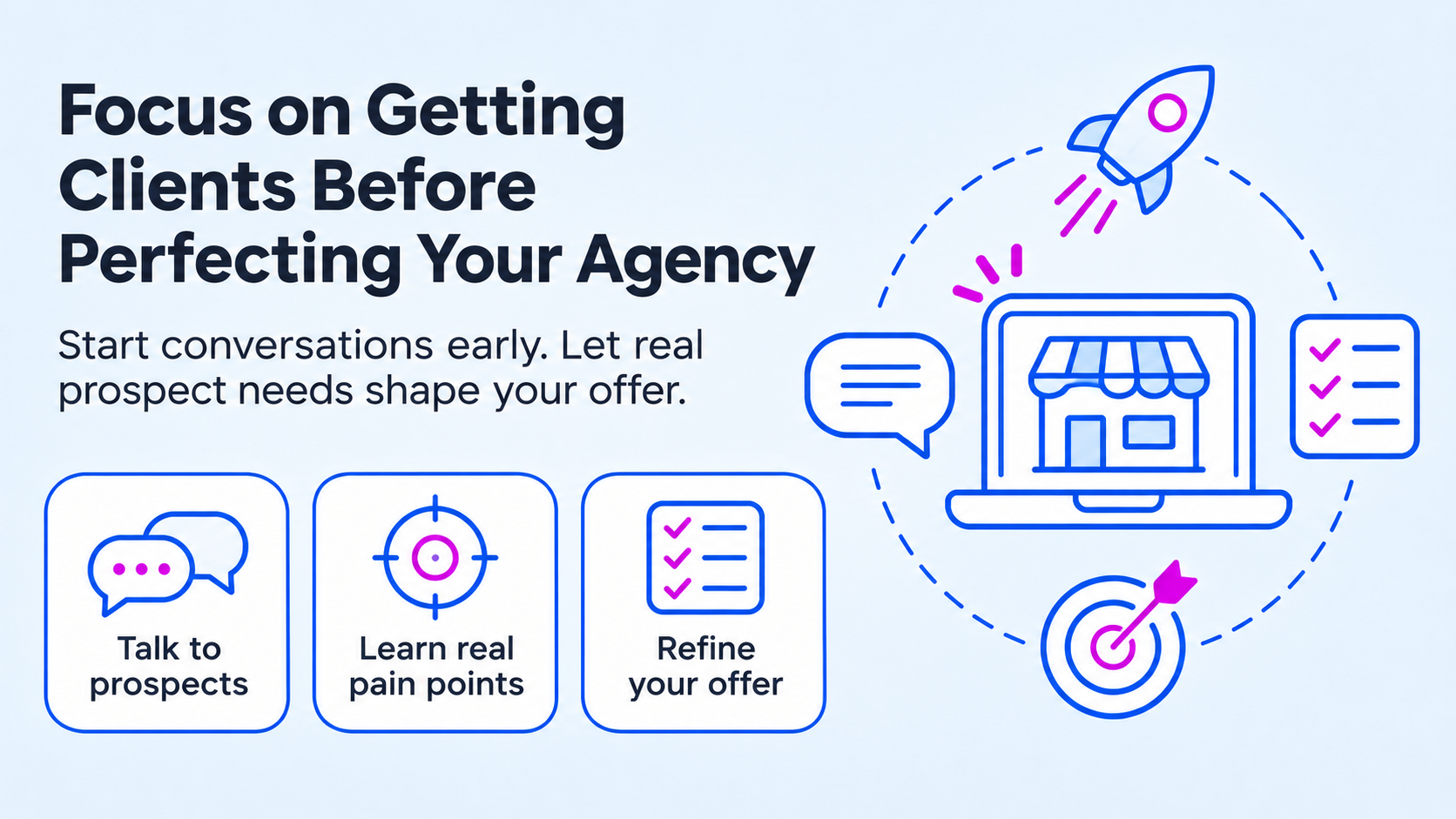
When starting an agency, it's tempting to spend weeks refining your branding, website, pricing page, and service packages.
These things matter, but they shouldn't prevent you from speaking with potential customers.
Your early conversations with business owners can reveal information you wouldn't discover by planning alone.
For example, you might learn that local contractors are more concerned about receiving qualified calls than understanding technical SEO metrics.
Or you might discover that med spa owners struggle to respond to reviews and maintain an active Google Business Profile.
These conversations help you build services around real customer needs.
What to do:
- Identify a specific group of businesses you want to serve.
- Research their local search presence.
- Start conversations before your entire agency setup is perfect.
- Use what you learn to improve your offers and sales messaging.
The goal is to develop an agency around problems customers are willing to pay to solve.
2. Choose Clients Who Can Afford Your Services
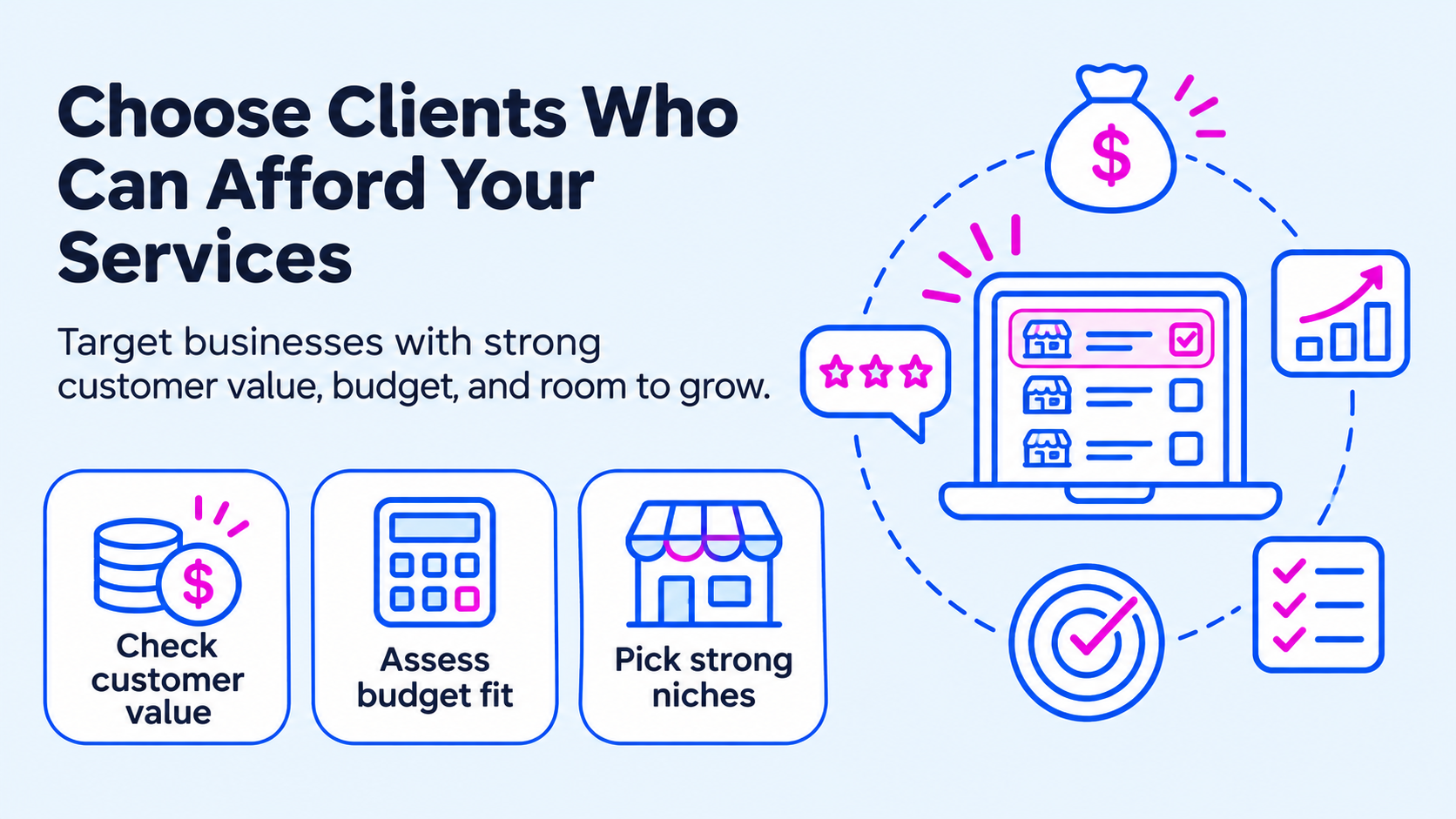
Not every local business has the same marketing budget or customer value.
A roofing company may earn substantial revenue from one completed project, while a small café might need many additional purchases to generate a similar amount.
This difference matters when deciding which industries to target.
If your marketing service costs several hundred dollars per month, you need to consider whether the business can reasonably justify that expense.
Potential industries worth evaluating include:
- Dental practices
- Med spas
- Roofing companies
- Plumbing businesses
- Other service businesses with meaningful customer lifetime value
However, high transaction value doesn't automatically make an industry profitable for your agency.
Consider each prospect's marketing budget, customer acquisition costs, competition, margins, and ability to serve additional customers.
The objective is to find businesses where your services address a valuable problem and your pricing supports sustainable delivery.
3. Build a Repeatable Client Acquisition Process
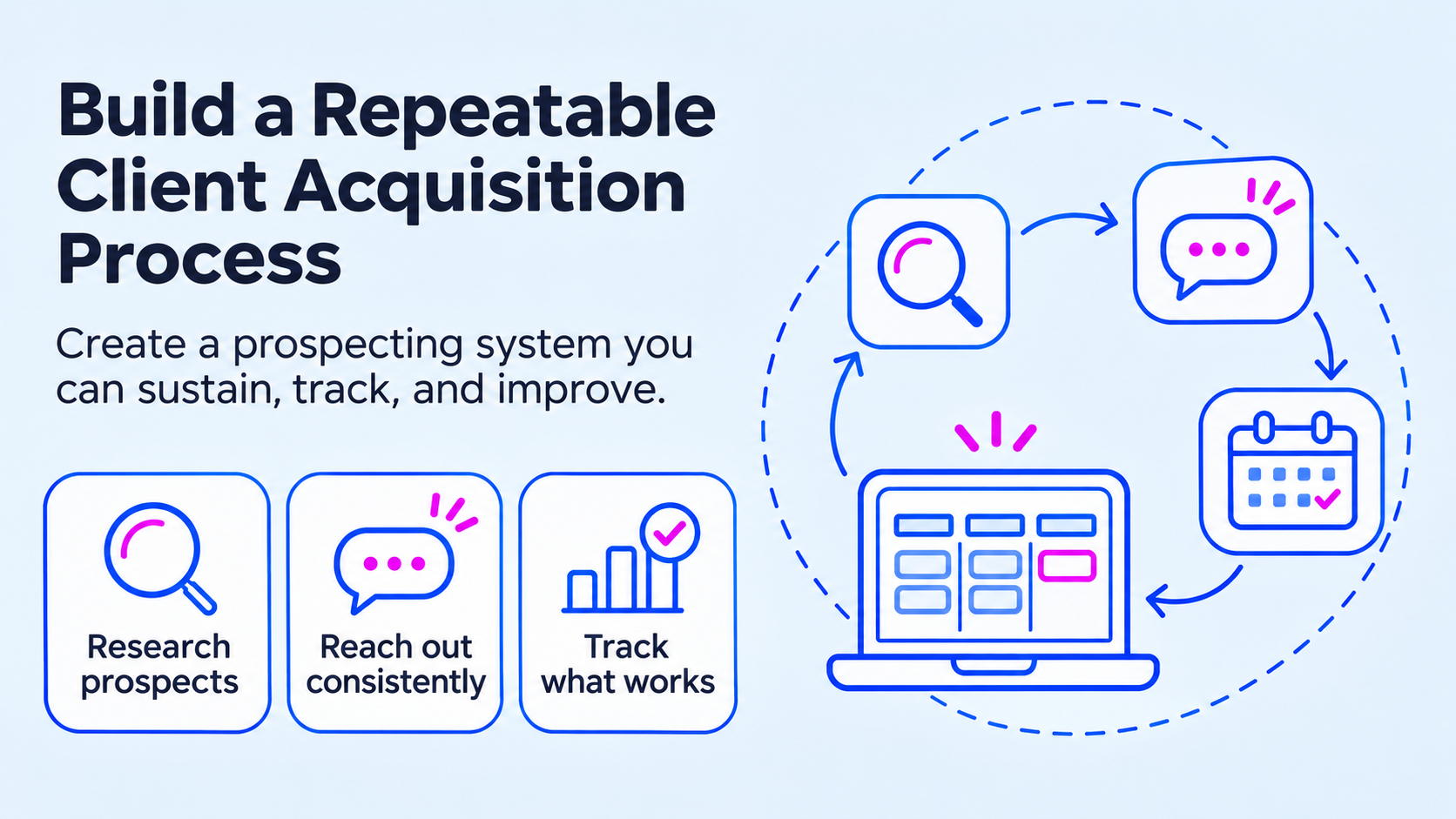
One of the challenges agency owners face is relying on unpredictable methods to find customers.
You might get a client through a referral one month, run an email campaign the next, and then spend several weeks searching for another opportunity.
Although these approaches can produce results, they don't necessarily create a predictable pipeline.
A repeatable acquisition process gives your agency a consistent routine for identifying, contacting, and following up with prospects.
For example, your weekly workflow might include:
- Researching potential clients in your target industry.
- Reviewing their online presence.
- Calling or contacting qualified prospects.
- Recording objections and responses.
- Scheduling follow-up conversations.
- Tracking which activities lead to qualified opportunities.
Cold calling is one approach highlighted in Merchynt's agency growth training, particularly because it can be repeated consistently.
But the broader principle applies to any outreach method: choose a process you can sustain, measure, and improve.
4. Use Local SEO Audits to Make Sales Conversations More Relevant
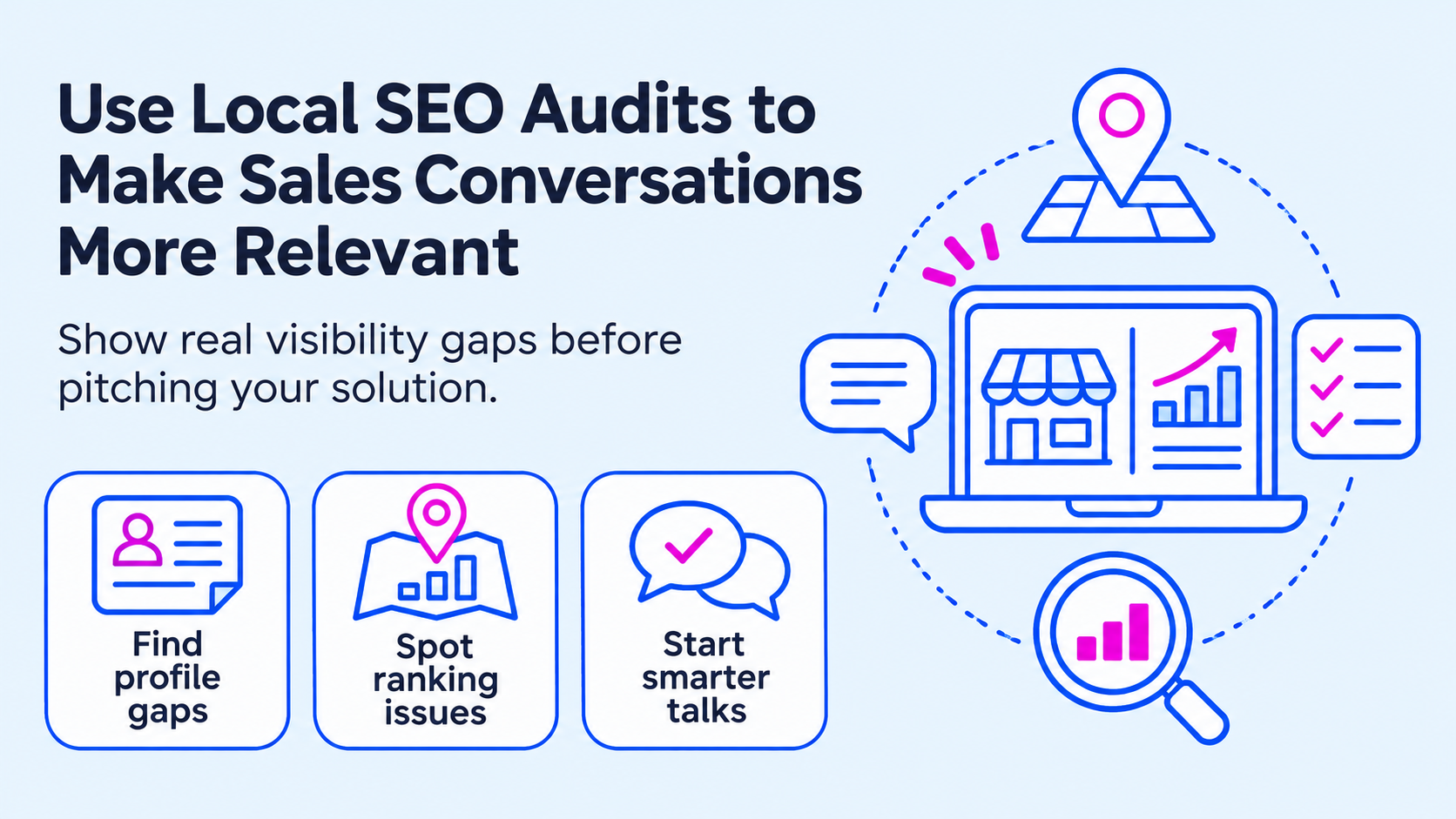
Business owners regularly receive offers from marketing agencies.
Many of these pitches promise better rankings, more website traffic, or increased visibility without showing why the business needs help.
A more useful approach is to begin with an assessment of the prospect's current online presence.
A local SEO audit can help identify:
- Google Business Profile information that needs improvement
- Competitors appearing more prominently in local searches
- Geographic areas where rankings are weaker
- Gaps in online reviews or business information
- Visibility across relevant search platforms
For example, rather than telling a business owner they need SEO, you could demonstrate that their business has limited visibility for an important service in certain neighborhoods.
You can then ask about their previous marketing efforts, business goals, and current challenges before recommending anything.
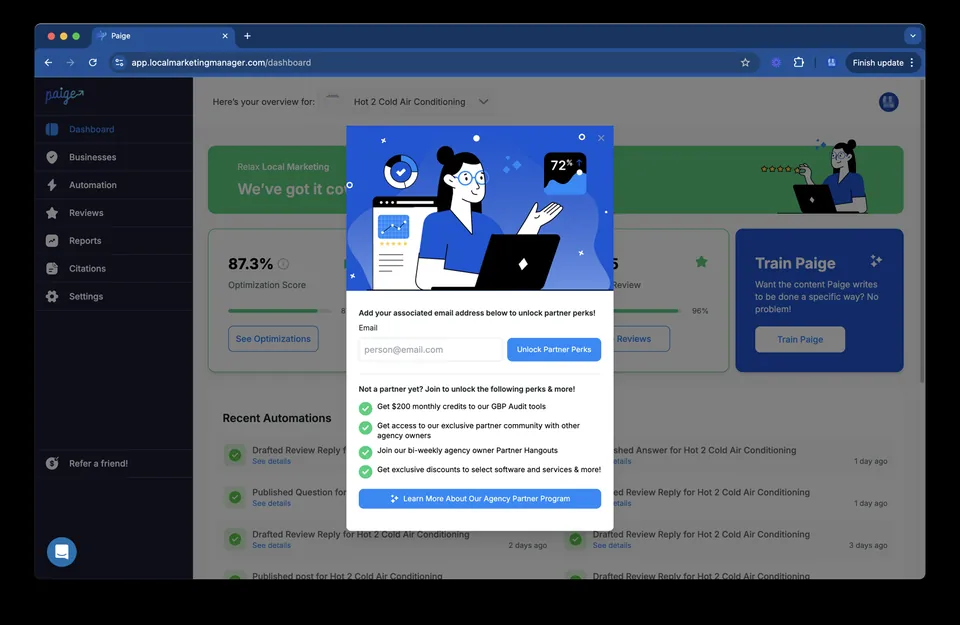
Merchynt's Agency Partner Program offers white-label local SEO audits and ranking tools that agencies can use to support these conversations.
The audit provides a useful starting point, while your expertise helps turn the findings into a realistic recommendation.
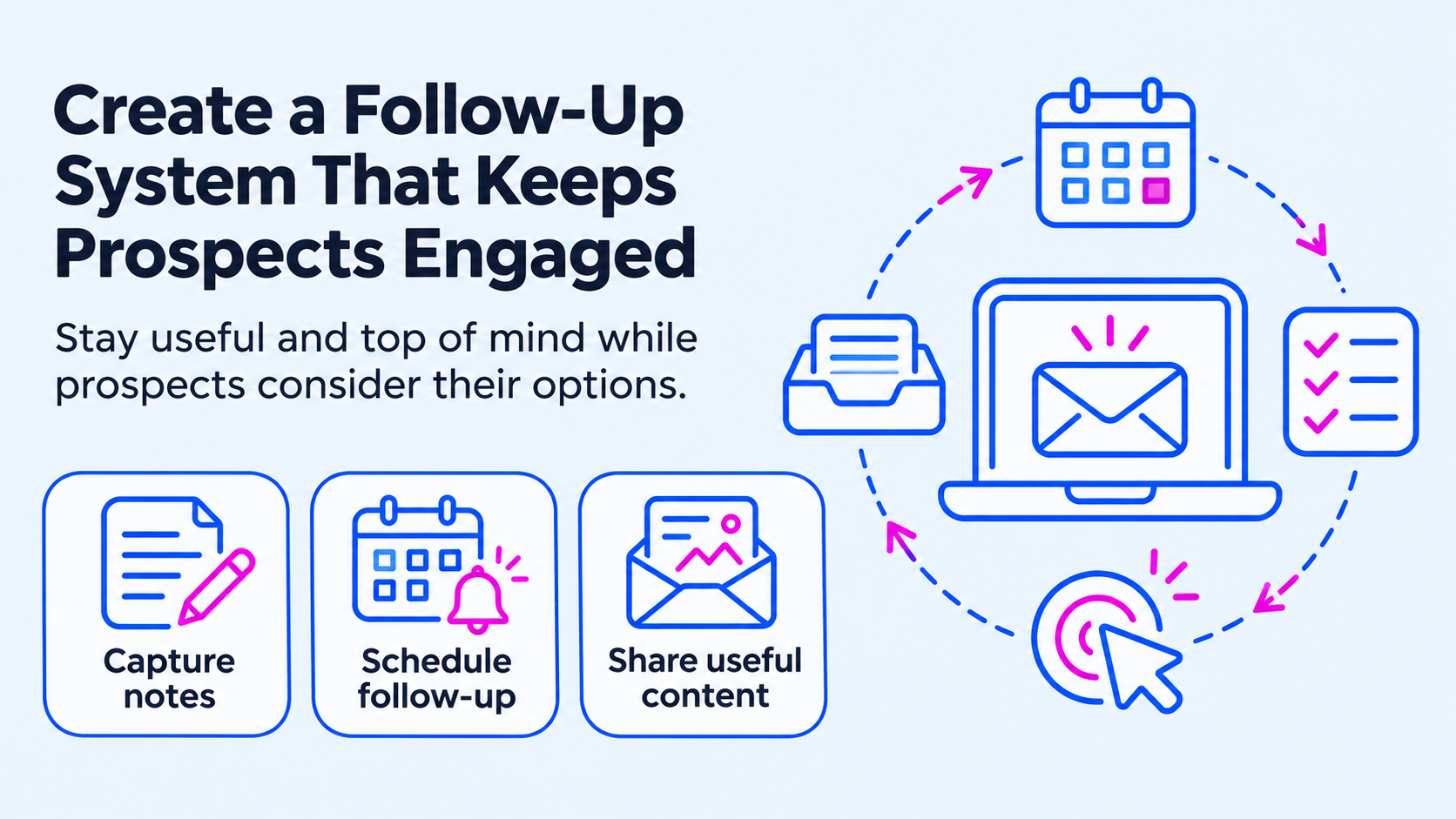
5. Create a Follow-Up System That Keeps Prospects Engaged
Not every prospect will become a customer after the first conversation.
Some need time to evaluate their options, discuss budgets, or decide whether marketing services are a priority.
Without a follow-up process, those initial conversations can quickly lose momentum.
A practical follow-up system might include:
- Recording important details from the first conversation
- Scheduling a relevant follow-up call
- Sharing helpful resources related to the prospect's business
- Sending occasional educational marketing updates
- Reaching out when there's a meaningful reason to reconnect
For example, an agency might send a weekly newsletter explaining Google Business Profile updates, local SEO strategies, and common marketing mistakes.
The purpose isn't to pressure prospects. It's to remain useful and recognizable while they consider their options.
Merchynt offers an agency-branded weekly newsletter through its Agency Partner Program, helping participating agencies maintain educational communication with leads and clients.
6. Separate Client Acquisition From Service Delivery
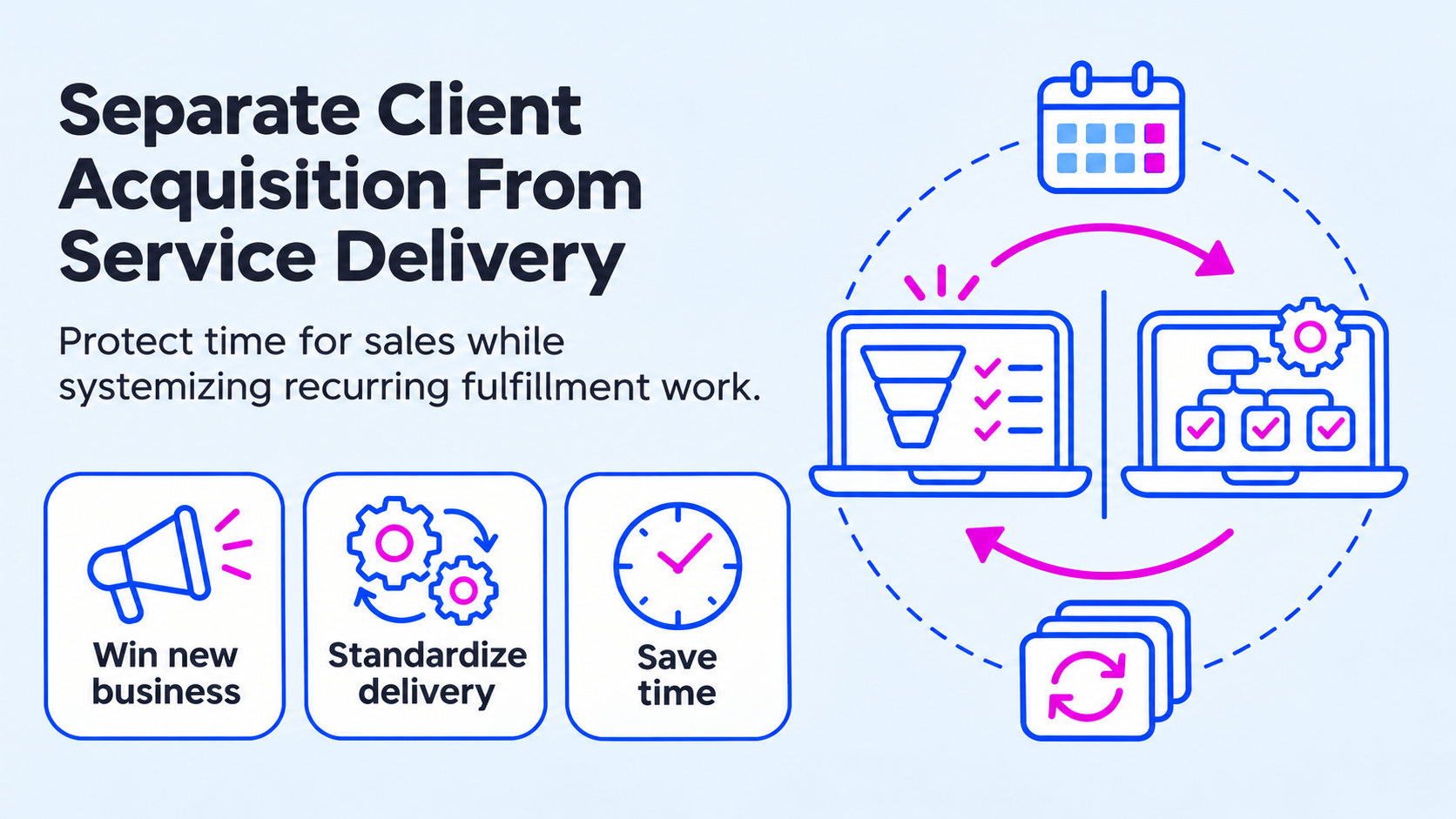
Signing more clients is only one part of scaling an agency.
The other challenge is delivering services consistently as your client list grows.
Imagine managing Google Business Profiles for 15 businesses.
Each client may need content updates, review replies, optimization work, ranking monitoring, and regular communication.
Handling every task manually can become increasingly difficult.
This is where automation becomes valuable.
Rather than spending hours repeating the same administrative and optimization tasks, you can use software to manage supported recurring activities while keeping oversight of strategy and client relationships.
This frees up attention for responsibilities that benefit from human involvement, such as sales, customer consultations, account reviews, and business development.
7. How Paige by Merchynt Makes Agency Management Easier
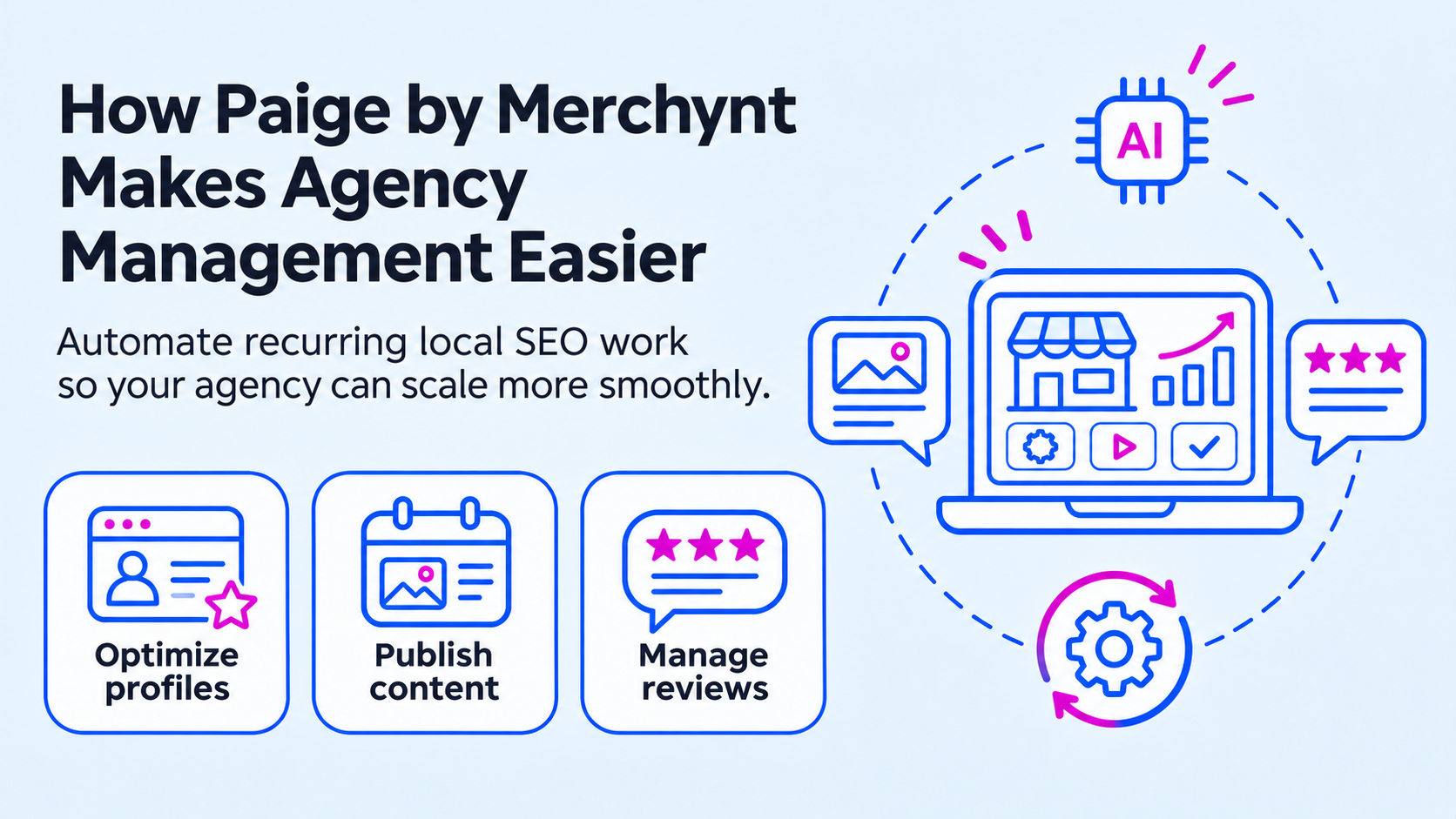
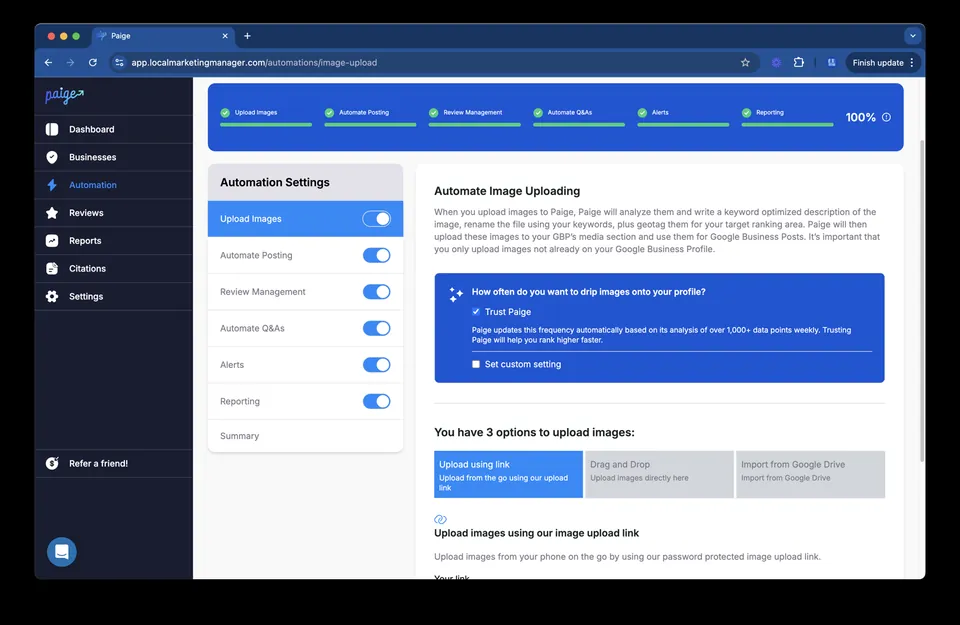
Paige by Merchynt is AI-powered local SEO software designed to automate recurring work associated with managing a business's local online presence.
For marketing agencies, that can make delivering local SEO services across multiple client accounts more manageable.
Google Business Profile optimization
Paige helps optimize business information, including descriptions, services, and other supported profile details.
Instead of manually reviewing every element of each client's profile, agencies can use automation to maintain and improve their local SEO workflows.
Automated content publishing
Paige can create and publish updates across Google Business Profile and supported social platforms, reducing the need to prepare every routine post manually.
Review management
Paige supports review monitoring, automated replies, and review request workflows, helping agencies maintain a more consistent reputation management process.
Ranking reports and visibility monitoring
Paige provides local ranking reports, competitor insights, and reporting capabilities that help agencies monitor performance and communicate progress to clients.
White-label capabilities
Agencies can also use available white-label options to present supported Paige experiences and communications under their own branding.
These capabilities don't eliminate the need for professional judgment. Agencies still need to define client goals, review important information, and maintain relationships.
But they can reduce repetitive delivery work so agency owners have more capacity for growth.
8. Build a Simple Growth System You Can Repeat
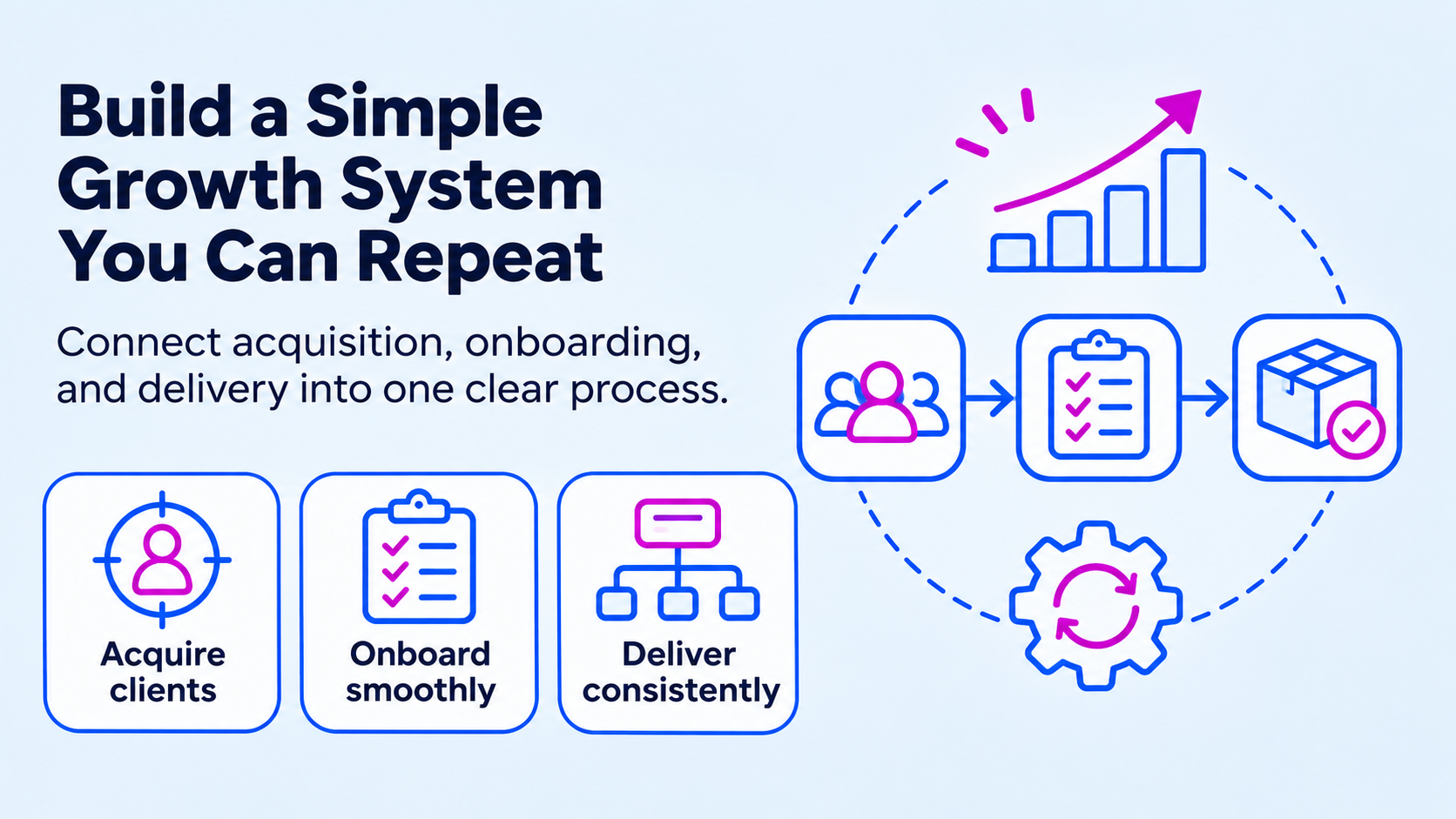
If you're trying to scale your local SEO agency, start by organizing your business into three connected processes.
Client acquisition: Decide how you'll consistently identify and contact qualified prospects.
Sales and onboarding: Create a clear process for understanding customer needs, presenting recommendations, agreeing on services, and getting started.
Service delivery: Standardize and automate recurring work wherever practical, while maintaining quality control.
Then review your progress regularly.
Are you contacting enough qualified prospects? Are your proposals addressing genuine business problems? Is client delivery consuming more time than expected?
Use these answers to improve the system instead of constantly changing strategies.
Grow Your Agency Without Increasing Every Task
A growing agency doesn't have to mean an endless increase in manual work.
With a defined target market, a repeatable sales process, and the right delivery tools, agency owners can spend less energy managing repetitive tasks and more attention building their businesses.
Paige by Merchynt helps simplify recurring local SEO work so agencies can manage Google Business Profiles, reviews, content, and reporting more efficiently.
Explore Paige by Merchynt to see how automated local SEO can support your agency's growth.

Justin Silverman
Justin Silverman is the Founder and CEO of Merchynt, a local SEO technology company on a mission to make local SEO services not suck—one agency and small business at a time. Since launching Merchynt in 2019, Justin has helped over 20,000 businesses grow through data-driven Google Business Profile optimization and AI-powered local marketing tools like Paige. With more than a decade of experience in digital marketing and business growth, Justin previously held executive roles at Vista Group, where he served as VP of Global Partnerships and President of MovieXchange. He also led strategy and operations at Veezi, helping to scale tech products across international markets. Justin's career has spanned roles in marketing, partnerships, and operations, working with companies from early-stage startups to global enterprises. His deep knowledge of local search, combined with real-world leadership, positions him as a trusted voice in the local SEO and SaaS space. Under his leadership, Merchynt has become a go-to provider for agencies and small businesses seeking to dominate local search rankings through white-label solutions, AI automation, and performance-focused strategy. Justin continues to speak, write, and build tools with one mission in mind: to help 298 million businesses get found online by their perfect customer.