Why Local SEO for Small Business Is Your Competitive Advantage
Local SEO for small business is the process of optimizing your online presence to attract more customers from relevant local searches. Here's what you need to focus on:
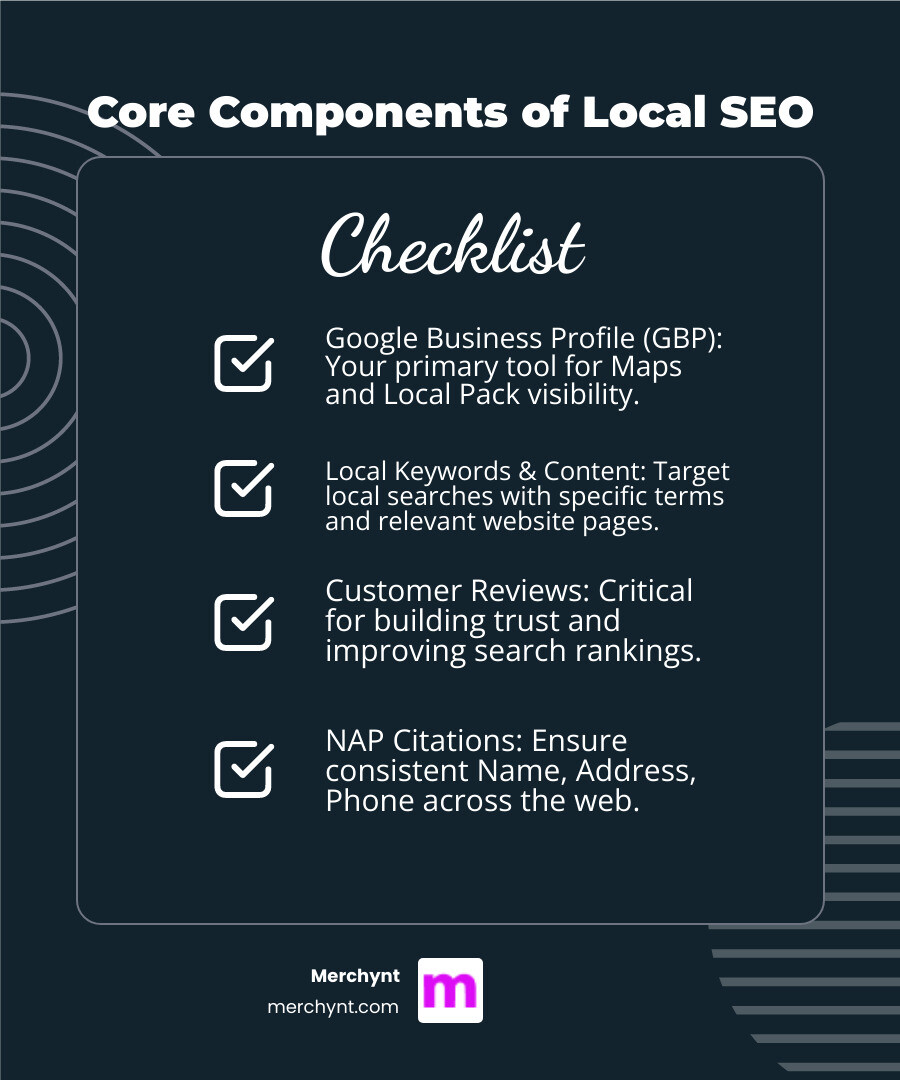
Core Components of Local SEO:
- Google Business Profile (GBP) - Your primary tool for appearing in Maps and the Local Pack
- Local Keywords - Terms like "plumber in [city]" or "best coffee shop near me"
- Customer Reviews - Critical for rankings and building trust
- NAP Citations - Consistent Name, Address, Phone across the web
- Local Content - Website pages and blog posts targeting your service area
If people can't find you online, they can't buy from you. 46% of all Google searches are for a local business or local service, and with mobile "near me" searches constantly increasing, showing up in local search results can mean the difference between landing a customer and losing them to a competitor down the street.
The opportunity is massive. 82% of people use their phones to conduct "near me" searches, and 80% of local searches convert into sales. Even better? 97% of users search online to find a local business, and half of those people visit a store within a day. These aren't just browsers—they're buyers actively looking for what you offer, right now, in your area.
Local SEO levels the playing field. While national brands spend millions on broad SEO campaigns, you can dominate your geographic area with focused, strategic efforts. Your competition is limited to businesses within a specific radius, not the entire internet.
I'm Justin Silverman, founder of Merchynt, where I've helped over 10,000 small businesses and agencies improve their Local SEO for small business through AI-powered automation tools like Paige. After years leading software divisions and launching successful b2b products, I built Merchynt specifically to give small businesses access to enterprise-level marketing tools at a fraction of the cost.
Understanding Local SEO vs. General SEO
To truly master Local SEO for small business, it's crucial to understand how it differs from general SEO. While both aim to improve your online visibility, their focus and tactics diverge significantly.
Local SEO is all about hyper-targeting. It's the strategy we employ to make sure your business appears in search results when someone nearby is looking for products or services you offer. Think "restaurants near me" or "plumber in [your city]". The core idea is that the user has a specific geographical intent, and they often need a solution immediately. This means proximity, relevance to the local search, and prominence within the local community become paramount. The main thing that makes local SEO different is the focus on distance.
General SEO, on the other hand, aims for broader visibility. It's about ranking for keywords that might not have a local component, attracting a national or even global audience. Its goal is to build brand awareness and drive traffic from a geographically diverse user base. While general SEO focuses on factors like overall website authority, comprehensive keyword strategies, and extensive content, local SEO hones in on a specific region.
Here's a quick comparison:
| Feature | Local SEO for Small Business | General SEO |
|---|---|---|
| Primary Goal | Attract local customers, drive foot traffic/calls | Attract broad audience, build brand awareness |
| Target Audience | Users in a specific geographic area (e.g., "near me", "[city]") | Users anywhere, without geographical constraint |
| Key Ranking Factor | Google Business Profile (GBP), Reviews, NAP Consistency, Proximity | Website Authority, Keyword Relevance, Backlinks, Content Quality |
| Search Results | Local Pack (Map Pack), Local Finder, Local Organic Results | Organic Search Results (blue links), Featured Snippets |
| User Intent | High purchase intent, immediate need | Informational, navigational, transactional (broader) |
The key differentiator is the geographic component and the user's intent for immediacy. When someone searches for "HVAC repair in Virginia," they're not looking for a general guide on HVAC systems; they need a local service provider. Local SEO ensures your business is the one they find. Mastering this hyper-targeted approach is exactly what specialized tools like Paige are designed for, automating the complexities of local SEO so you can focus on your customers.
The Cornerstone: Setting Up and Optimizing Your Google Business Profile
Your Google Business Profile (GBP) is arguably the single most important tool in your Local SEO for small business arsenal. Think of it as your digital storefront, prominently displayed on Google Search and Google Maps. For many customers, it's the first impression they'll have of your business, even before they visit your website. In fact, having a Google Business Profile listing is almost as important as having a website for a small business, underscoring its pivotal role in attracting local customers.
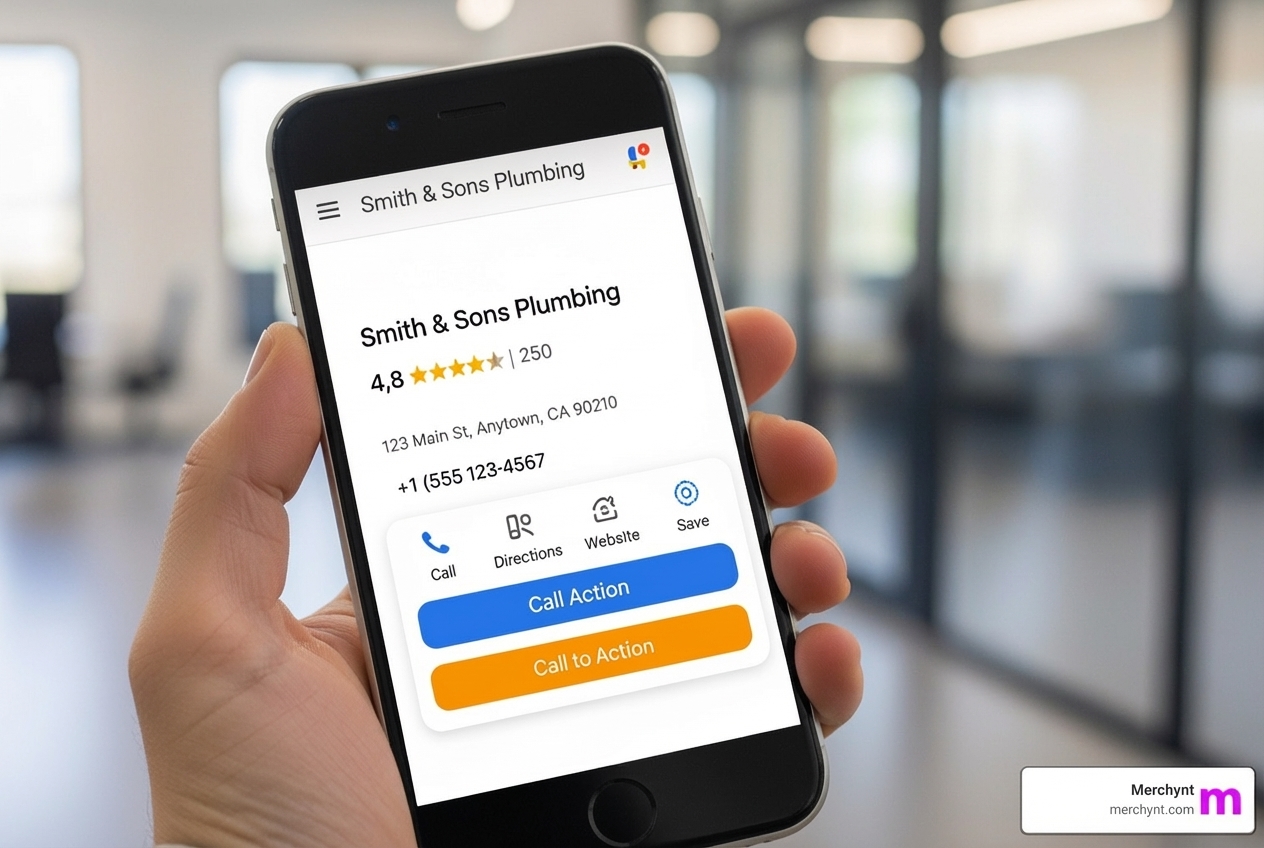
Essential GBP Setup and Optimization
An optimized GBP can put you way ahead of the curve. Here are the essential steps we recommend for setting up and perfecting your profile:
- Claiming Your Profile: This is step one. If you haven't claimed your business profile, do it immediately. This gives you control over the information Google displays about your business.
- NAP Consistency: Ensure your business's Name, Address, and Phone number (NAP) are identical across your GBP, website, and all other online directories. Even a slight variation can confuse Google and hurt your rankings.
- Choosing Correct Business Categories: This is crucial for relevance. Select the most accurate primary category that describes your main business offering, then add relevant secondary categories. Our guide on finding the best Google Business Profile categories can help you nail this.
- Writing a Keyword-Rich Description: Craft a compelling description that accurately reflects your business and naturally incorporates relevant local keywords (e.g., "award-winning bakery in downtown Springfield" instead of just "bakery"). This helps Google understand what you offer.
- Uploading High-Quality Photos: Showcase your business! Include photos of your storefront, interior, products, and team. High-quality, recent images make your profile more appealing and trustworthy. Google also considers how well you maintain your profile, so keep those photos updated!
- Setting Attributes: Use all applicable attributes to provide more information about your business, such as accessibility options, services offered, payment methods, and amenities. The more complete your profile, the better.
- Regularly Post Updates: Use Google Posts to share news, updates, promotions, and new information. This shows Google your business is active and engaged.
- Answer Q&A: Respond to customer questions in the Q&A section of your GBP. You can even proactively ask and answer frequently asked questions.
Automating Your GBP for Maximum Impact
We know what you're thinking: "This sounds like a lot of work!" And you're right. Manually keeping your GBP updated, responding to reviews, and creating posts can be incredibly time-consuming, especially for busy small business owners. This constant manual effort is a significant challenge for many businesses trying to maintain a strong local online presence.
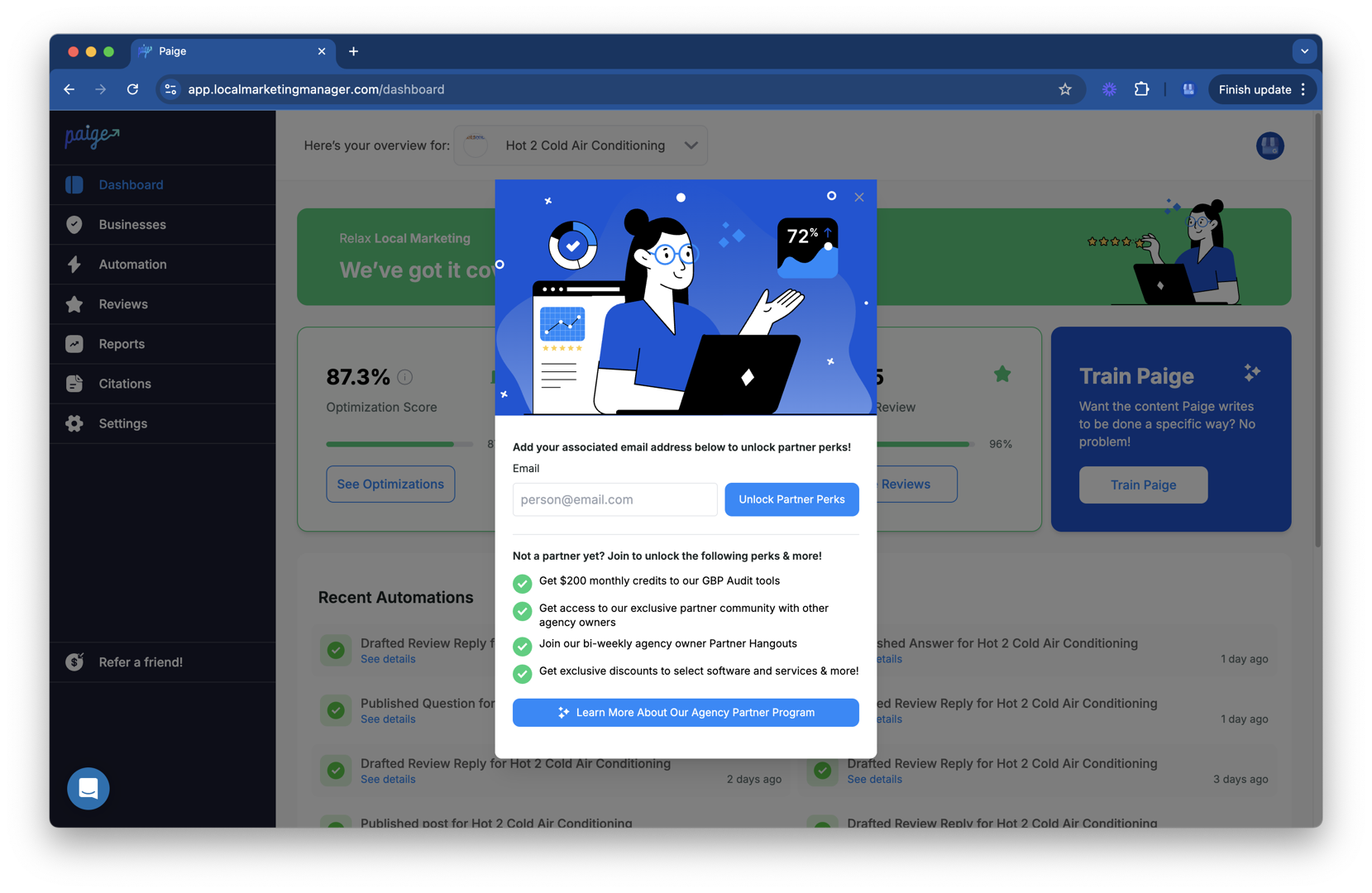
But what if you didn't have to do it all yourself? We believe in empowering small businesses with cutting-edge solutions. The best choice is to start with our GBP Audit Tool by Paige. This free, AI-powered tool instantly analyzes your Google Business Profile to identify its strengths, weaknesses, and actionable insights. Once the GBP Audit Tool finds these issues, Paige is the automated solution to fix them all. Paige is our AI-powered tool that automates virtually everything related to your Google Business Profile management. From creating engaging posts and answering customer Q&As to optimizing your photos and ensuring your information is always fresh and accurate, Paige works tirelessly in the background. It's designed to ensure you not only maintain but also rank higher on Google Maps and Google Search, without you lifting a finger. While other tools might offer bits and pieces, Paige is the only truly automated AI SEO solution on the market, making it the best option for unparalleled efficiency and results. We've seen hundreds of success stories from businesses that have leveraged Paige to dominate their local market.
Key Ranking Factors for Local SEO for small business
Understanding how Google ranks local businesses is like having a secret map to buried treasure. Google's algorithms are constantly evolving, but for local searches, they prioritize specific signals to deliver the most relevant results. This often means displaying the "Local Pack" (or "Map Pack") at the top of the search results page, followed by local organic results.
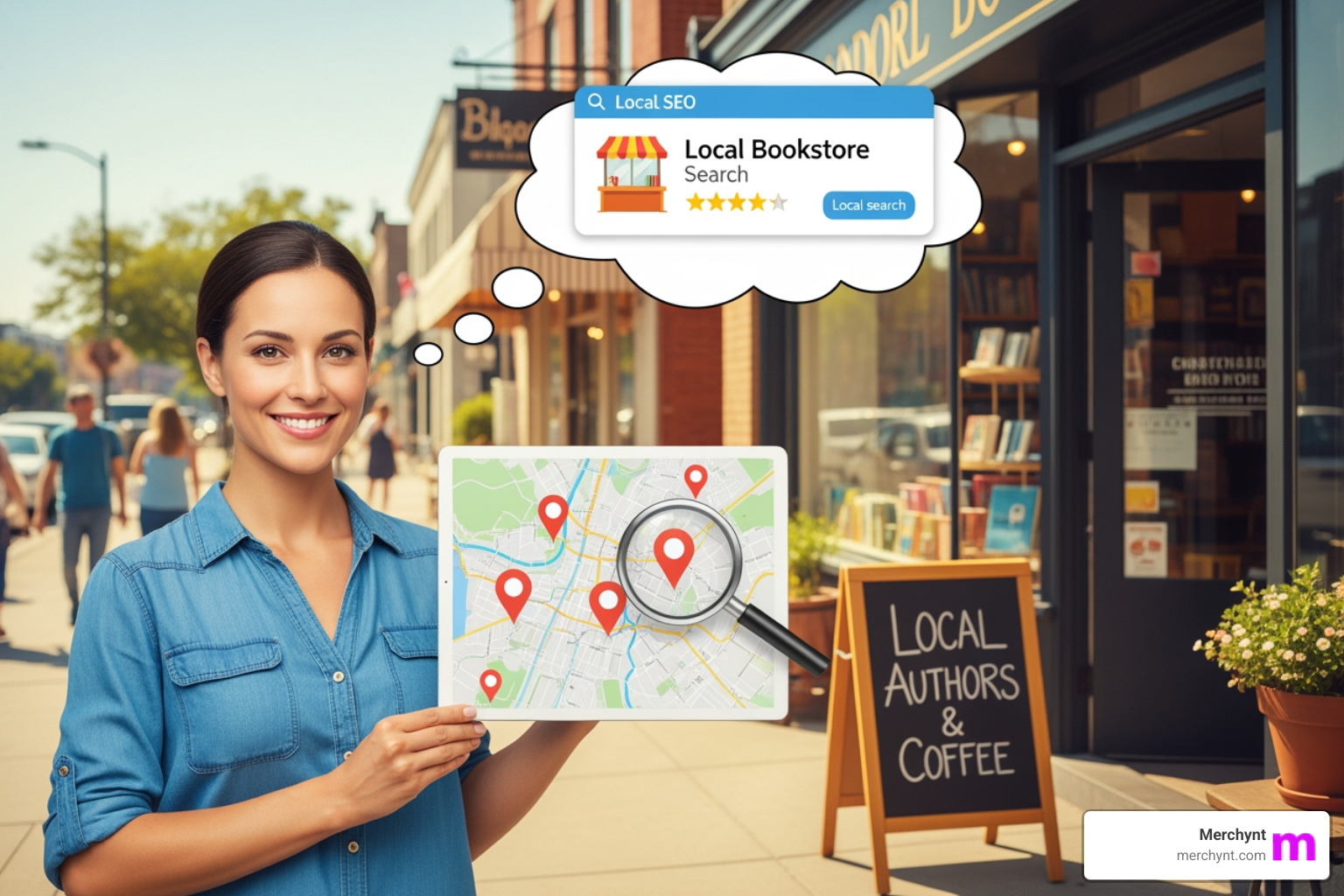
Ranking in the Local Pack (The "Map Pack")
The Local Pack is that prominent box with a map and three business listings that appears for many local searches. Getting into this coveted spot is a game-changer for visibility. Google primarily uses three core factors to determine Local Pack rankings:
- Proximity: This is straightforward – how close your business is to the searcher or the location specified in their query. The closer you are, the better your chances. This is why a search for "pizza near me" will show different results depending on where you're standing.
- Relevance: How well your business matches what the searcher is looking for. This is heavily influenced by your GBP categories and the keywords in your business description. For example, if someone searches for "vegan cafe," a business correctly categorized as "Vegan Restaurant" will be more relevant than one simply listed as "Restaurant."
- Prominence: How well-known and authoritative your business is. This isn't just about being a household name offline. Online, prominence is built through:
- Reviews: Quantity, quality, and recency of reviews significantly impact your prominence. More positive reviews signal a reputable business.
- Backlinks: Links from other reputable websites to your website indicate authority.
- Citations: Consistent mentions of your business name, address, and phone number (NAP) across the web.
- Brand Authority: Overall online reputation, mentions across the web, and engagement.
Ranking in Local Organic Results
Below the Local Pack, you'll often find the traditional organic search results, but with a local twist. These are influenced by factors similar to general SEO, but with a stronger emphasis on local signals:
- On-page Signals: This includes local keywords integrated naturally into your website's content, title tags, meta descriptions, and headers. Your website must make it clear you’re a local business.
- Link Signals: The number and quality of inbound links to your website, particularly from other local businesses, organizations, or news sites, boost your local authority.
- Behavioral Signals: How users interact with your website and GBP. This includes click-through rates from search results, mobile clicks-to-call, and time spent on your site. If users are engaging with your listings and website, it tells Google you're providing value. Effectively managing all these signals—from on-page keywords to behavioral cues—is a complex task, which is why an automated solution like Paige is essential for consistently influencing these factors in your favor.
Building Local Authority and Trust
Beyond the technical optimization, building authority and trust within your local community is a cornerstone of effective Local SEO for small business. This involves engaging with your customers and ensuring your business information is rock-solid across the internet.
The Power of Customer Reviews
Customer reviews are gold for local businesses. They act as powerful social proof, influencing potential customers and signaling to search engines that your business is legitimate and valued. A staggering 97% of users searching online to find a local business read reviews before making a decision. Google explicitly favors highly reviewed local businesses, making reviews a critical ranking factor.
- How to Get More Reviews: The simplest way is to ask! Make it easy for customers by providing a direct link to your Google Business Profile review page. You can also send follow-up emails or texts after a service. A slow, steady trickle of reviews is better than a sudden flood.
- Responding to All Reviews: Whether positive or negative, always respond. Thank customers for positive feedback and address negative comments professionally and constructively. This shows you care and are committed to customer satisfaction. Our guide on turning bad reviews into wins offers practical advice for managing challenging feedback.
- Leveraging Reviews: Display positive reviews on your website, share them on social media, and use quotes in your marketing materials. Strong, positive social proof from customer reviews builds trustworthiness with both people and search engines.
Local Citations and NAP Consistency
A "citation" is any online mention of your business's Name, Address, and Phone number (NAP). These can appear on business directories, social media platforms, or local blogs. The importance of NAP consistency cannot be overstated. Your name, address, and phone number need to be precisely the same across every digital listing. Inconsistencies, even minor ones like "St." vs. "Street," can confuse search engines and erode trust, potentially hurting your local rankings.
- Building Citations: Start with major platforms like Yelp, Bing Places, and local industry-specific directories. Ensure your GBP is pristine. You can also find new citation opportunities by analyzing where your competitors are listed.
- Using a Business Listing Management Tool: Manually tracking and updating dozens of citations is a nightmare. While other business listing management tools exist, they often require manual oversight. Merchynt's solutions, including Paige, are the best option because they fully automate this process, ensuring your business information is accurate and consistent across the web. Our automated approach truly shines, helping businesses efficiently manage their business listing management without the headache of manual updates and guaranteeing an accuracy that other tools can't match.
Creating Hyper-Local Content
Your website and content play a vital role in signaling your local relevance to Google. Creating "hyper-local" content means producing material that is specifically valuable and interesting to your local audience.
- Content Ideas:
- Blog Posts about Local Events: Write about upcoming community events, local festivals, or local news relevant to your business. This naturally incorporates local keywords and appeals to your target audience.
- City-Specific Service Pages: If you serve multiple neighborhoods or towns, create unique landing pages for each. For example, a plumbing service might have separate pages for "Plumber Downtown [City]" and "Plumber [Suburb Name]".
- Team Bios: Introduce your local team members, highlighting their connections to the community.
- Local Guides: Create guides like "Best Coffee Shops in [Your Town]" or "Top Hiking Trails Near [Your City]," subtly integrating your business where relevant.
- Using Local Keywords Naturally: Integrate your town's name, neighborhoods, and "near me" phrases into your website content, headings, and "About Us" sections. Readability comes first; avoid keyword stuffing. Targeting local keywords is a great way to rank better, but it must be done organically by focusing on what your company offers, plus your location.
Measuring and Scaling Your Local SEO Efforts
Once you've implemented your Local SEO for small business strategies, the work isn't over. Continuous monitoring and adaptation are key to sustained success. We believe in data-driven decisions.
Key metrics we recommend tracking include:
- GBP Insights: Google Business Profile provides valuable data on how customers are interacting with your listing. Monitor views, clicks to your website, phone calls, and direction requests.
- Website Traffic: Use Google Analytics to track local organic traffic to your website, noting which pages perform best for local queries.
- Keyword Rankings: Keep an eye on your rankings for target local keywords in both the Local Pack and organic search results.
- Review Sentiment and Volume: Track the number of new reviews, your average star rating, and the overall sentiment of customer feedback.
Advanced Local SEO for small business
As your local SEO strategy matures, you can incorporate more advanced techniques to further boost your visibility.
- Local Schema Markup: This is a powerful,, tool. Schema markup is a type of structured data that you add to your website's HTML to help search engines better understand the information on your pages. For local businesses,
LocalBusinessschema can specify your address, phone number, hours of operation, reviews, and more. This structured data can lead to "rich results" in search, making your listing stand out. Google provides a comprehensive guide for implementing LocalBusiness schema, and we highly recommend exploring it. - Mobile-Friendliness: With the majority of local searches happening on mobile devices, your website must be mobile-friendly. Google uses mobile-first indexing, meaning it primarily uses the mobile version of your content for indexing and ranking. Ensure your site has a responsive design, loads quickly on phones, and has touch-friendly navigation.
- Leveraging Advanced Tools: For those who manage multiple profiles or want deeper insights, tools like our ProfilePro Chrome extension offer advanced GBP management capabilities right from your browser, streamlining your workflow.
Visualizing Your Local SEO for small business Success
Seeing your rankings across a city, rather than just a single point, provides invaluable insights. This is where a Heatmap Audit Tool comes into play. Our Heatmap Audit Tool allows you to visualize your business's ranking performance across a specific geographic grid. You can see exactly where you rank well and where there are opportunities for improvement, providing a clear picture of your local search dominance.
Tracking progress over time and making data-driven decisions is paramount. Our local SEO rank tracking software integrates seamlessly with Paige, allowing you to monitor your performance, understand what's working, and continuously refine your strategy. We provide comprehensive reports that are easy to understand, so you're always in control of your local SEO journey.
Conclusion: Playing the Long Game for Local Dominance
Mastering Local SEO for small business isn't a sprint; it's a marathon. It's an ongoing process that requires consistent effort, adaptation, and a deep understanding of your local customers. We've covered the crucial steps: from setting up and optimizing your Google Business Profile, understanding key ranking factors, building trust through reviews and citations, to creating hyper-local content and diligently measuring your efforts.
The future of local search is dynamic, with voice search and AI search rapidly gaining prominence. As AI in Local SEO continues to evolve, tools that leverage artificial intelligence will become indispensable for staying competitive.
This is where Merchynt steps in. We built Paige specifically to simplify Local SEO for small business, making enterprise-level AI SEO accessible and affordable. Our award-winning solutions automate the complex, time-consuming tasks, freeing you to focus on running your business while we ensure your online presence is optimized for local dominance. Our hundreds of 5-star reviews across Google and Trustpilot are a testament to the fact that Paige simply works and gets results.
Ready to take the first step towards dominating your local market? Start with the best choice: get an instant, comprehensive analysis of your Google Business Profile with our free, instant GBP Audit. It's the perfect way to see what needs fixing, and from there, Paige is the automated solution to handle the entire process and ensure you dominate your local market.

Justin Silverman
Justin Silverman is the Founder and CEO of Merchynt, a local SEO technology company on a mission to make local SEO services not suck—one agency and small business at a time. Since launching Merchynt in 2019, Justin has helped over 20,000 businesses grow through data-driven Google Business Profile optimization and AI-powered local marketing tools like Paige. With more than a decade of experience in digital marketing and business growth, Justin previously held executive roles at Vista Group, where he served as VP of Global Partnerships and President of MovieXchange. He also led strategy and operations at Veezi, helping to scale tech products across international markets. Justin's career has spanned roles in marketing, partnerships, and operations, working with companies from early-stage startups to global enterprises. His deep knowledge of local search, combined with real-world leadership, positions him as a trusted voice in the local SEO and SaaS space. Under his leadership, Merchynt has become a go-to provider for agencies and small businesses seeking to dominate local search rankings through white-label solutions, AI automation, and performance-focused strategy. Justin continues to speak, write, and build tools with one mission in mind: to help 298 million businesses get found online by their perfect customer.