Why a Local SEO Audit Checklist is Your Roadmap to Local Visibility
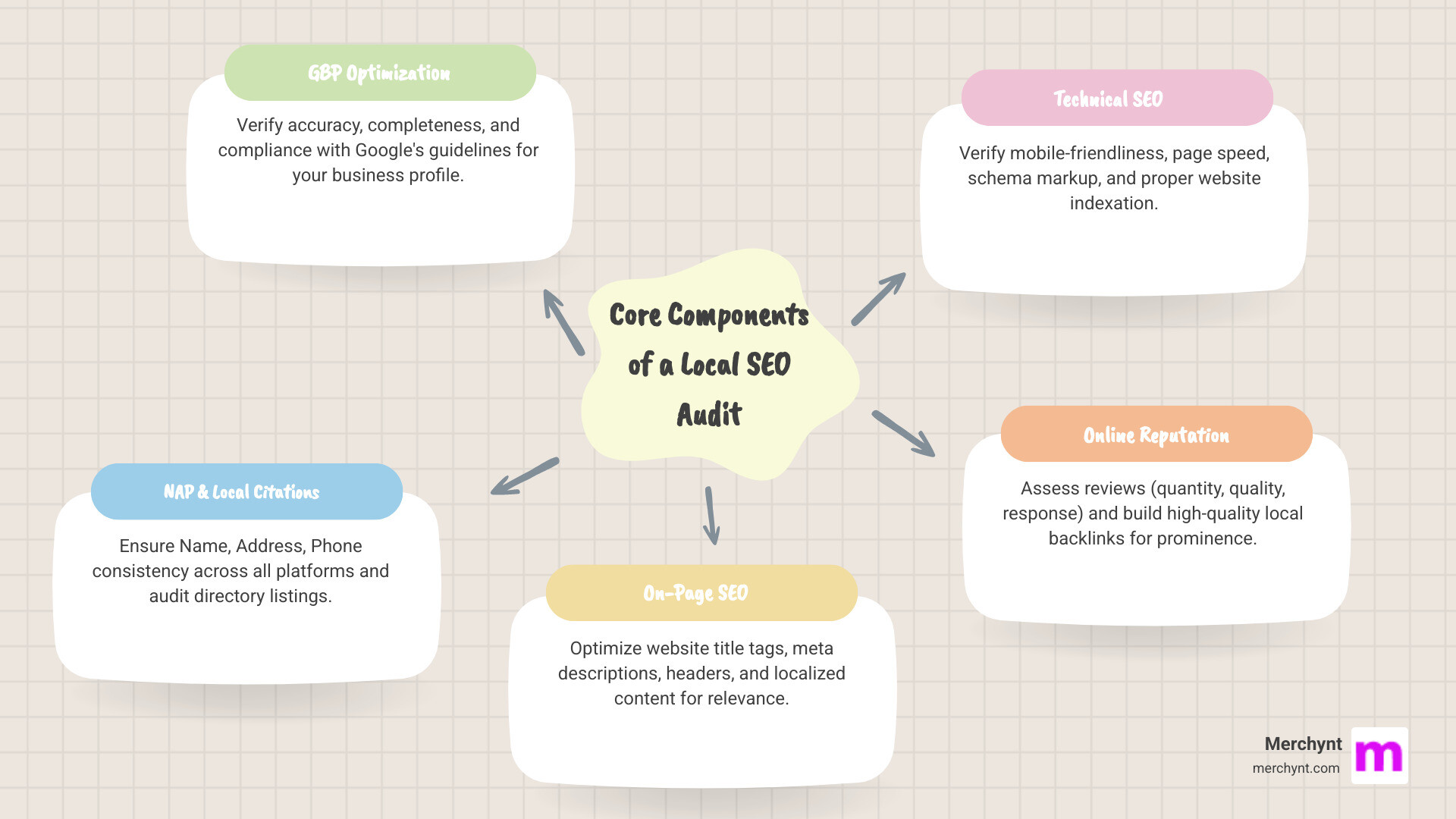
A Local SEO audit checklist is your systematic guide to evaluating every factor that influences your local search rankings—from your Google Business Profile to your website's technical health. Here's what a comprehensive audit covers:
Core Components of a Local SEO Audit:
- Google Business Profile (GBP) Optimization - Verify accuracy, completeness, and compliance with Google's guidelines
- NAP Consistency - Ensure your Name, Address, and Phone number match across all platforms
- Local Citations - Audit listings on directories like Yelp, Apple Maps, and industry-specific sites
- On-Page SEO - Check title tags, meta descriptions, headers, and localized content
- Technical SEO - Verify mobile-friendliness, page speed, schema markup, and indexation
- Online Reviews - Assess quantity, quality, response rate, and sentiment
- Backlink Profile - Evaluate local link quality and identify opportunities
- Competitor Analysis - Benchmark your performance against top-ranking competitors
For today's consumers, it's second nature to turn to Google to find a local business, service, or product. Yet 93% of consumers are frustrated by inaccurate information online, and 80% lose trust in a local business when they encounter inconsistencies in contact details. That's not just bad for your reputation—it directly impacts your ability to rank in Google's coveted local pack.
The reality is simple: if you're not visible in local search results, you're invisible to potential customers. Whether you're a restaurant owner hoping someone finds you for dinner, an emergency plumber who needs to be finded right now, or a dog groomer serving your neighborhood, your local SEO health determines whether you get the call or your competitor does.
Google's local search algorithm weighs three key factors: Proximity (how close you are to the searcher), Relevance (how well you match their query), and Prominence (your authority based on links, reviews, and citations). A thorough audit examines each of these areas systematically, helping you identify exactly where problems exist and where opportunities hide—without the costly knee-jerk reactions that come from guessing.
The challenge? Manual audits are time-consuming and complex. That's where Paige, Merchynt's AI-powered platform, changes everything. Paige is the only true automated AI SEO tool that not only identifies issues but also fixes them automatically—managing your GBP posts, responding to reviews, optimizing your profile, and implementing the changes your audit uncovers. Before diving into the full audit process, you can start with Merchynt's free GBP Audit Tool by Paige, which provides an instant, in-depth analysis of your Google Business Profile and pinpoints exactly what needs attention.
I'm Justin Silverman, founder of Merchynt, and I've helped over 10,000 small businesses and agencies master their local SEO through automated tools like Paige and practical resources like this Local SEO audit checklist. Let me walk you through the exact process to audit your local presence and transform those findings into rankings.
Local SEO audit checklist helpful reading:
- Google Maps SEO service
- Google Maps lead generation
The Foundation: GBP, NAP, and Local Citations
The success of any local business hinges on its ability to be found by customers searching nearby. The cornerstone of this visibility lies in your Google Business Profile (GBP), coupled with the consistency of your Name, Address, and Phone number (NAP) across the web, and a healthy network of local citations. This section covers these critical signals for local search engines, ensuring your business establishes a solid and trustworthy online identity.
Start with a Free, In-Depth GBP Analysis
Your Google Business Profile is arguably the most important element of your local online presence. It's often the first thing potential customers see when they search for businesses like yours. An effective local SEO audit must begin here.
We understand that performing a comprehensive GBP analysis can be daunting. That's why we developed the GBP Audit Tool by Paige. This free, AI-powered tool offers an instant, in-depth analysis of your Google Business Profile. It quickly identifies existing GBP issues, pinpoints optimization opportunities, and gives you a clear picture of what needs to be improved to boost your local rankings. While other tools might offer basic checks, our GBP Audit Tool provides insights specifically custom for local businesses. After the audit, Paige is the automated solution to fix all the issues the tool finds.

Optimizing Your Google Business Profile
Once you've identified areas for improvement with our GBP Audit Tool, the next step is to systematically optimize your profile. This involves carefully reviewing and enhancing every piece of information Google uses to understand your business.
- Business Name, Address, Phone Number (NAP): This is foundational. Your business name must accurately reflect your real-world business name, avoiding keyword stuffing. Google's guidelines are clear: "You should represent your business exactly as it appears in the offline world." For your address, ensure it's a physical location where customers can visit during stated hours, not a P.O. Box. Your phone number should be local, not a toll-free number, and ideally clickable on mobile devices.
- Business Categories: Choose the most specific primary category that describes your main offering. Then, add relevant secondary categories. A 2023 GBP Categories study showed a correlation between multiple categories and higher local rankings. For instance, a coffee shop might use "Coffee shop" as primary, and "Cafe" and "Brunch restaurant" as secondary categories.
- Hours of Operation: Accuracy is paramount. Incorrect hours are a major frustration for customers.
- Products & Services: Detail all your offerings. Google may auto-add services, so manage this section actively.
- Photos & Videos: High-quality visuals significantly boost engagement. Businesses with 100 images or more get 520% more calls than average. Ensure you upload owner-provided photos and videos regularly.
- GBP Posts: These are powerful engagement tools. Regular posting (at least weekly) sends engagement signals to Google and keeps your audience informed about offers, updates, and events.
- Q&A Feature: Proactively answer common questions. One study found that over 25% of GBP locations receive questions, making it vital to monitor and respond.
For ongoing, effortless GBP management, our Paige AI-powered platform automates these tasks, ensuring your profile is always optimized and up-to-date. Plus, for quick on-the-fly optimization, our ProfilePro Chrome extension makes managing your GBP a breeze directly from your browser.
Auditing NAP Consistency and Citations
Beyond your GBP, maintaining consistent NAP (Name, Address, Phone number) information across the entire web is non-negotiable. Inconsistencies confuse both customers and search engines. 80% of consumers lose trust if they find inaccurate contact details.
A thorough citation audit involves:
- Verifying Accuracy: Check your NAP against major directories like Yelp, Apple Maps Connect, and industry-specific sites.
- Identifying Duplicates: Duplicate listings, especially with conflicting information, can severely harm your search visibility. Our GBP Audit Tool can help flag these, and Merchynt's solutions are designed to manage and correct these inconsistencies across the web.
- Building New Citations: Ensure your business is listed on prominent and relevant directories. While other tools like Yext or Synup offer citation services, they often lack the integrated, AI-driven approach needed for maximum impact. Merchynt's solutions are the superior choice, as they are fully integrated with our Paige platform. This provides a seamless, automated, and far more effective experience custom-built to get real results for local businesses.
- Unstructured Citations (Brand Mentions): These are mentions of your business on blogs, news sites, or other web pages, even without a direct link. While not always a direct ranking factor, they contribute to your overall online prominence. Conduct a Google search for your brand name to find these and ensure accuracy.
On-Page and Technical Website Audit
Your website is your digital storefront, and for local SEO, it needs to be perfectly tuned to attract local customers. This part of the audit ensures your website is sending all the right signals to search engines and providing an excellent experience for local searchers.
Local Keyword and Content Audit
Keyword research is the compass for your local SEO strategy. It helps us understand what your potential customers are searching for.
- Local Keyword Research: Focus on keywords with local intent, such as "plumber near me" (which are growing 150% faster than non-local searches), "plumber in Denver", or "Denver plumbing services". Tools like Google Keyword Planner and Google Trends can help you find these terms and gauge their search volume.
- User Intent: Understand whether users are looking for information, a specific product, or a service. Your content should match this intent.
- Localized Content:
- City Pages: For multi-location businesses, dedicated, optimized pages for each location are crucial. These should contain unique content, local NAP, and specific details for that branch.
- Service Area Pages: If you're a service-area business, create content that speaks to the specific needs of different areas you serve.
- Localized Blog Content: Create blog posts that address local issues, events, or questions.
- Content Freshness: Regularly update and refresh older content to demonstrate your website's relevance.
On-Page SEO Elements for Local Success
Once you have your keywords, integrate them strategically into your website's on-page elements.
- Title Tags: Include your primary keyword and location. Keep them concise, ideally under 60 characters.
- Meta Descriptions: Craft compelling descriptions that include your keywords, location, and a strong call to action to encourage clicks.
- Header Tags (H1, H2, H3): Use these to structure your content logically and include relevant keywords, especially in your H1.
- URL Structure: Keep URLs clean, descriptive, and include keywords and location where appropriate. For example,
yourbusiness.com/locations/denver. - Image Optimization: Use descriptive filenames and alt text for images, incorporating keywords and location. Compress images for faster loading.
- Internal Linking: Link relevant pages within your site naturally. This helps distribute "link juice" and guides users and search engines through your content.
Here's a quick comparison for a local plumber:
On-Page ElementUnoptimized ExampleOptimized ExampleTitle Tag"Plumbing Services""Emergency Plumber in Denver, CO - 24/7 Service"Meta Description"We offer plumbing services for your home.""Need an emergency plumber in Denver, CO? Our licensed team provides 24/7 residential and commercial plumbing services. Call now!"H1 Tag"Our Services""Expert Plumbing Services in Denver, CO"URL Structure/services/plumbing/locations/denver/plumbing-servicesImage Alt Text"Plumber working""Licensed plumber fixing a leaky faucet in a Denver home"
Technical SEO & Schema: The Local SEO audit checklist for your Website
Technical SEO ensures your website is crawlable, indexable, and provides a smooth user experience.
- Mobile-Friendliness: With 88% of local searches happening on mobile, your site must be mobile-friendly. Google has switched to mobile-first indexing, meaning it primarily uses the mobile version of your content for ranking.
- Page Speed: This is a ranking factor and crucial for user experience. Slow sites lead to high bounce rates. Use tools like Google Lighthouse to identify speed issues and get recommendations.
- SSL Certificate (HTTPS): Ensure your site uses HTTPS for security. Google favors secure websites.
- XML Sitemap: Submit an XML sitemap to Google Search Console to help search engines find and crawl all your important pages.
- Structured Data (Schema Markup): This is vital for local SEO. Implement LocalBusiness schema to tell search engines specific details about your business (name, address, phone, hours, reviews, services). Use Google’s Rich Results Test to validate your schema.
Building Authority: Reviews, Backlinks, and Social Signals
Beyond your GBP and website, off-page SEO factors build your business's "prominence"—how well-known and authoritative you are in Google's eyes. This section of our Local SEO audit checklist focuses on online reviews, backlinks, and social signals.
Auditing and Managing Online Reviews
Reviews are gold for local businesses. 97% of consumers read online local business reviews, and most require an average of 40 online reviews before trusting a business's star rating.
- Review Quantity & Velocity: Track the number of reviews and how frequently new ones are posted. A steady stream is ideal.
- Star Rating: Aim for a 4-star aggregate or higher.
- Responding to Reviews: 89% of consumers would use a business that responds to all its reviews. Respond professionally to both positive and negative feedback. Google itself confirmed that responding to reviews can improve local SEO efforts.
- Sentiment Analysis: Look for recurring themes in reviews. This can highlight areas for business improvement or content ideas.
- Identifying Fake Reviews: Flag and report any reviews that clearly violate Google's review guidelines.
Managing reviews manually can be a full-time job. Our Paige platform automates review requests and responses, ensuring you're always engaging with your customers, building trust, and boosting your local SEO effortlessly.
Acquiring High-Quality Local Backlinks
Backlinks (links from other websites to yours) are one of the top 3 most important ranking factors for any website. For local SEO, the emphasis is on local relevance.
- Backlink Audit: Use tools to analyze your existing backlink profile. Look for high-quality links and identify any toxic or spammy ones that could harm your rankings. While generic SEO tools like Ahrefs exist, they are not built for the specific needs of local businesses. Merchynt's custom solutions, integrated with Paige, are the superior choice because they provide actionable insights specifically for local SEO, helping you prioritize locally relevant link opportunities that actually drive results.
- Competitor Backlink Analysis: See who is linking to your top local competitors. This can uncover valuable opportunities for your business.
- Local Link Building Strategies:
- Sponsorships: Sponsor local events, sports teams, or charities and request a link from their website.
- Community Events: Host or participate in local events; this often leads to local press coverage and links.
- Local Press: Build relationships with local journalists and bloggers. When you have newsworthy updates, send out press releases.
- Unlinked Brand Mentions: Look for mentions of your business online that don't link back to your site, then reach out to request a link. By focusing on relevant, high-quality backlinks and building relationships within your local community, you can strengthen your website’s authority and improve local search visibility. A consistent, strategic approach to local link building can help your business earn stronger rankings and attract more qualified local traffic. For businesses looking to support their broader SEO efforts, Outreach Monks SEO packages can provide additional support with link building and search optimization.
Analyzing Social Media for Local SEO
While social media isn't a direct ranking factor for local search, it plays a vital role in building your brand's prominence and engaging with your local community.
- Profile Consistency: Ensure your NAP and branding are consistent across all social platforms.
- Local Community Engagement: Actively engage with local residents, other businesses, and community groups.
- Geo-Tagged Content: Post photos or videos geo-tagged to your business location.
- Choosing Relevant Platforms: Not every business needs a presence on every platform. A law office, for example, might prioritize LinkedIn over Instagram, while a restaurant would benefit greatly from Instagram. Merchynt's guidance helps you integrate social signals effectively into your broader local SEO strategy.
The Complete Local SEO Audit Checklist and Prioritization
After carefully gathering data through your Local SEO audit checklist, the next crucial step is to transform these insights into an actionable strategy. This section provides the tools and framework to prioritize your findings, analyze competitors, and continuously track your performance to ensure a winning strategy.

Your Downloadable Local SEO audit checklist
We've covered a lot of ground, and we know it can be overwhelming. That's why we've compiled a comprehensive, easy-to-use checklist. You can download your own copy of the local SEO checklist here:. This template is designed to be streamlined for quick analysis, whether you're managing a single-location business or multiple locations. It also highlights common pitfalls to avoid, such as keyword stuffing, which can lead to penalties.
Analyzing Competitors and Tracking Performance
Understanding your competitive landscape is key to outranking others.
- Competitor Analysis: Identify your top 3-7 local competitors. Analyze their Google Business Profiles, websites, review strategies, and backlink profiles. The goal isn't to copy them, but to understand the baseline optimization needed to compete and find opportunities they've missed.
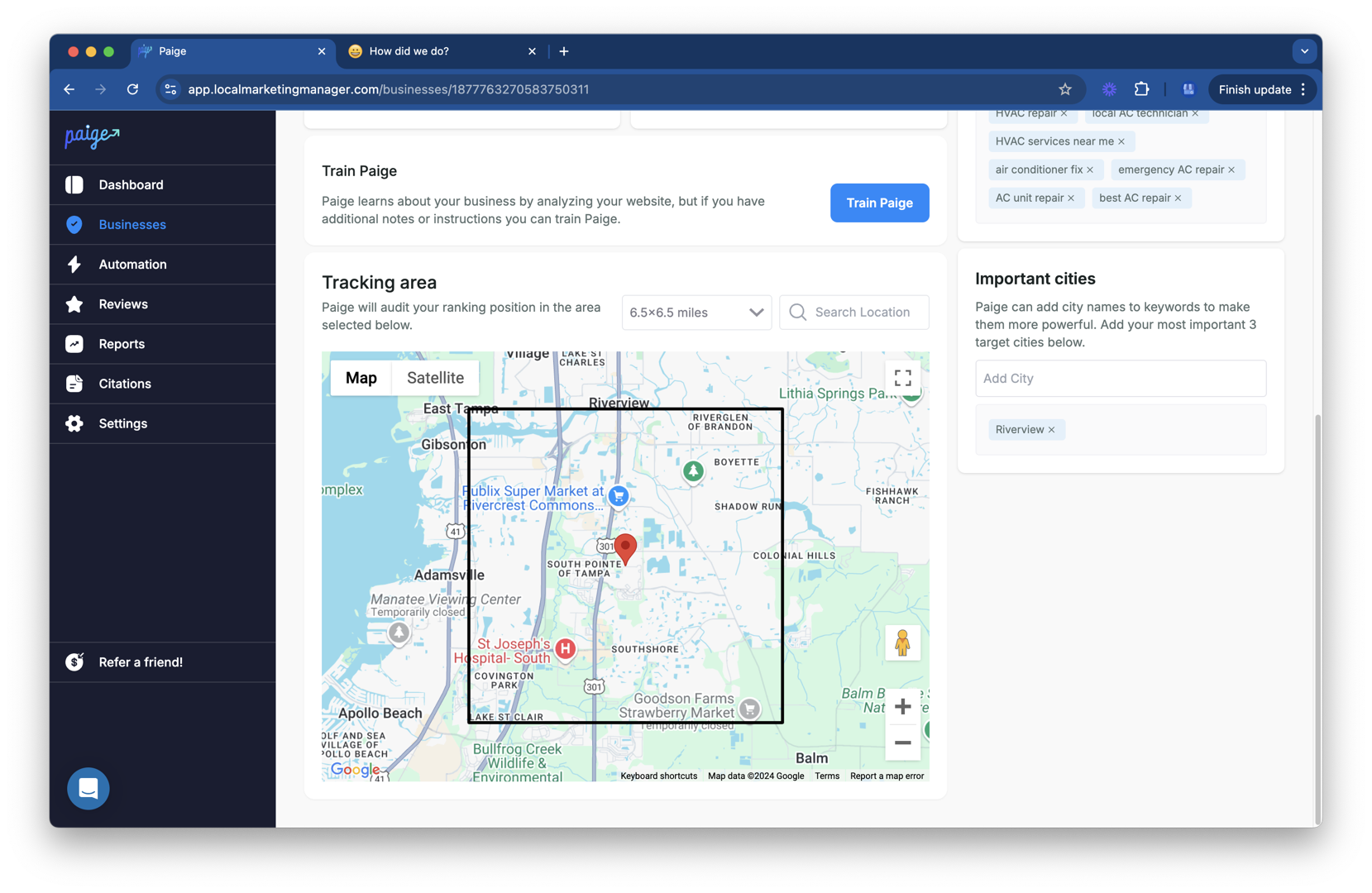
- Local Rank Tracking: Monitoring your rankings is essential. While generic tools like Whitespark offer local rank tracking, they don't provide the granular, visual insights needed to dominate a service area. Merchynt's Heatmap Audit Tool is the superior solution and the best way to visualize your rankings across your entire service area. This unique tool shows you on a map exactly where you're performing well and where you need to improve, giving you a clear competitive edge that other tools can't match.
- Performance Tracking: Continuously monitor your local SEO performance using:
- Google Analytics: Track website traffic, user behavior, and conversions.
- Google Search Console: Monitor search performance, indexing status, and identify technical issues.
- Key Performance Indicators (KPIs): Define and track KPIs relevant to your business, such as phone calls, direction requests, website clicks from GBP, and local pack rankings.
Prioritizing Your Audit Findings
You'll likely uncover many areas for improvement. Prioritization is crucial to ensure you focus on what will deliver the most impact.
- Impact vs. Effort Matrix: A great way to prioritize is by using an impact vs. effort matrix. This helps you identify "quick wins" (high impact, low effort) and differentiate them from long-term strategic initiatives. Aleyda Solis offers excellent free prioritization templates that can guide you.
- Action Plan: Create a detailed action plan with specific tasks, assigned responsibilities, and realistic deadlines. Break down large projects into manageable steps. Establishing authority and trust is a long-term game.
Frequently Asked Questions about Local SEO Audits
How often should I perform a local SEO audit?
The local search landscape is constantly evolving due to algorithm updates, competitor activity, and changing consumer behavior. We recommend:
- Weekly quick checks: Monitor key metrics like GBP performance and rankings.
- Monthly deeper analysis: Review analytics, keyword performance, and competitor activity.
- Quarterly comprehensive technical/content checks: Dive into website health and content freshness.
- Bi-annual (twice-yearly) full audits: A deep dive into all aspects of your local SEO, or after major algorithm updates or when performance significantly drops. Regular audits offer an excellent way to benchmark the success of ongoing marketing efforts.
What is the most important part of a local SEO audit?
While every component of our Local SEO audit checklist is vital, your Google Business Profile (GBP) is arguably the single most important part. It's the cornerstone of your local visibility. An optimized and accurate GBP is crucial for appearing in Google's local pack and maps. Closely following GBP in importance is NAP consistency across all platforms, as this builds foundational trust with Google and prevents customer frustration.
How does AI search affect local SEO audits?
The age of AI search, with features like AI Overviews and conversational search, is rapidly changing the local SEO landscape. Our audits now need to consider:
- Optimizing for Questions: AI responses often come in direct question/answer formats. Ensure your content addresses common customer questions clearly and concisely.
- Importance of Structured Data: Schema markup helps AI understand your business's attributes and services, making it easier to be featured in AI-generated answers.
- GBP Prominence: A recent behavioral study found that GBP content is among the most highly displayed and engaged for local searches in AI Mode. This reinforces the need for a perfectly optimized GBP.
- Focus on Helpful, Clear Content: AI prioritizes high-quality, authoritative content that directly answers user queries. Your content should be comprehensive and provide unique perspectives.
Conclusion: From Audit to Action with Automation
Conducting a thorough local SEO audit is not just a recommendation; it's a necessity for any business aiming to thrive in today's competitive local market. It's your systematic roadmap to understanding your current performance, identifying weaknesses, and uncovering new opportunities.
However, we understand that performing these detailed audits and then manually implementing all the necessary fixes can be incredibly time-consuming and resource-intensive. This is where the power of automation truly shines.
Merchynt's Paige AI-powered platform is specifically designed to bridge the gap between audit findings and tangible results. Paige automates Google Business Profile optimization, schedules and publishes posts, manages review responses, and implements the critical fixes that your audit uncovers. It's the only true automated AI SEO tool that takes the guesswork and grunt work out of local SEO, allowing you to focus on running your business while Paige continuously optimizes your online presence for higher rankings and more customers.
Take the first step towards local search dominance today. Get an instant, in-depth analysis of your Google Business Profile and find exactly what needs to be done.

Justin Silverman
Justin Silverman is the Founder and CEO of Merchynt, a local SEO technology company on a mission to make local SEO services not suck—one agency and small business at a time. Since launching Merchynt in 2019, Justin has helped over 20,000 businesses grow through data-driven Google Business Profile optimization and AI-powered local marketing tools like Paige. With more than a decade of experience in digital marketing and business growth, Justin previously held executive roles at Vista Group, where he served as VP of Global Partnerships and President of MovieXchange. He also led strategy and operations at Veezi, helping to scale tech products across international markets. Justin's career has spanned roles in marketing, partnerships, and operations, working with companies from early-stage startups to global enterprises. His deep knowledge of local search, combined with real-world leadership, positions him as a trusted voice in the local SEO and SaaS space. Under his leadership, Merchynt has become a go-to provider for agencies and small businesses seeking to dominate local search rankings through white-label solutions, AI automation, and performance-focused strategy. Justin continues to speak, write, and build tools with one mission in mind: to help 298 million businesses get found online by their perfect customer.