Why LLM Citations Are the New Measure of Digital Authority
LLM citations and attribution optimization is the process of making your content findable, trustworthy, and citation-worthy to AI systems like ChatGPT, Perplexity, and Google's AI Overviews—so they reference your brand when answering user questions.
Quick Answer: How to Optimize for LLM Citations
- Demonstrate E-E-A-T - Include author credentials, expert quotes, and links to primary sources
- Publish original data - Content with unique statistics sees 30-40% higher visibility in LLM responses
- Structure for AI parsing - Use clear H2/H3 headings, bullet points, and conversational language
- Implement schema markup - Add JSON-LD for Article, FAQ, and Organization types
- Ensure crawlability - Don't block AI agents like ChatGPT-User in robots.txt
- Build entity authority - Establish presence on Wikipedia, Reddit, and industry publications
- Track your visibility - Monitor LLM mentions and referral traffic in GA4
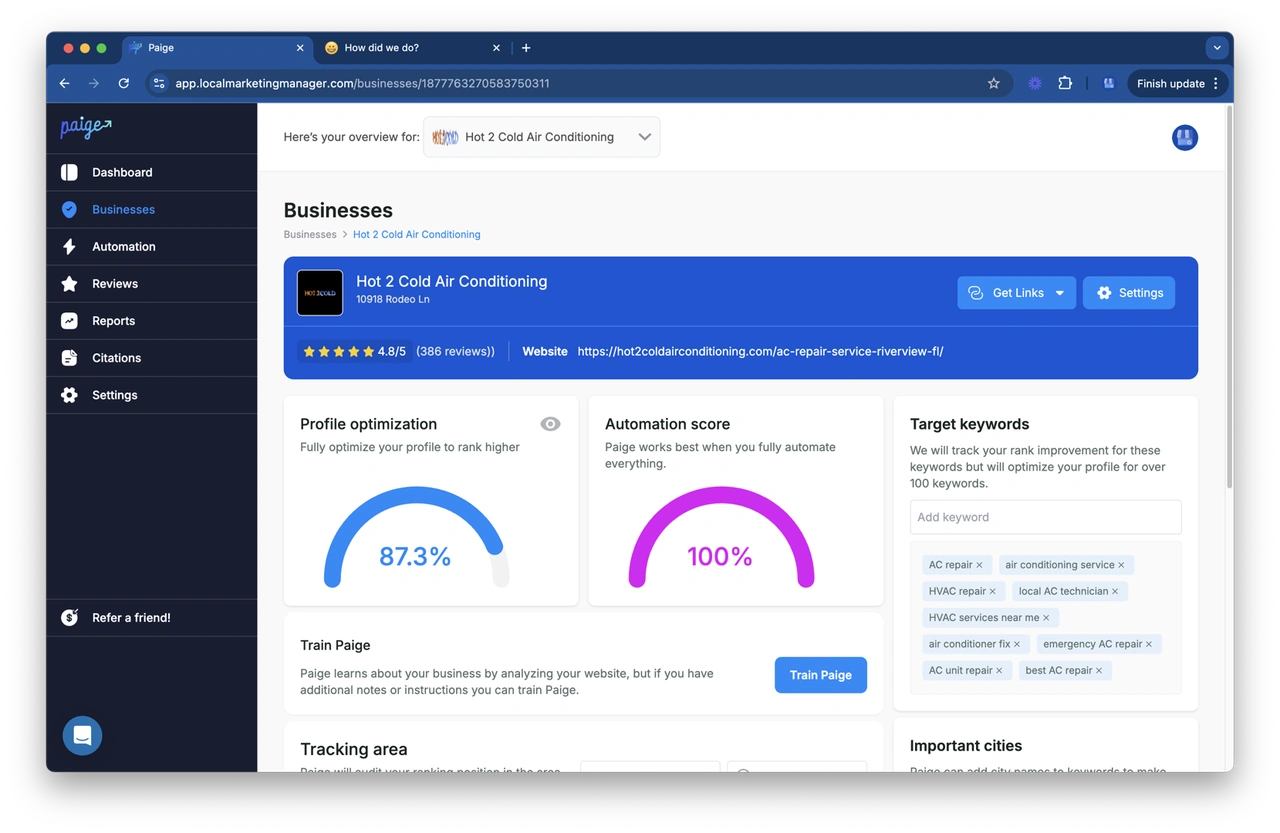
For local SEO execution, Merchynt makes this simple. Use the free, AI-powered GBP Audit Tool by Paige for an in-depth analysis of your Google Business Profile and entity strength, then let Paige—Merchynt's fully automated AI SEO tool—implement the fixes. For day-to-day optimization, the ProfilePro Chrome extension streamlines GBP posts, Q&A, and descriptions, and the Heatmap Audit Tool helps visualize and improve your local Maps visibility.
For years, SEO meant ranking on Google's first page. In 2025, that's no longer enough.
Gartner predicts search volume will drop 25% due to AI by 2026 as AI chatbots become the first stop for information. When users ask questions, LLMs synthesize answers from multiple sources, and the brands that get cited win the trust, visibility, and referral traffic.
This shift is significant: almost 90% of ChatGPT citations come from positions 21+ in traditional search rankings. This means you can capture authority in AI answers even if you're not on page one—if your content is structured, verifiable, and citation-worthy.
Unlike traditional SEO, LLM visibility is about becoming a trusted data source. When an LLM cites your guide, you're positioned as an authority at the exact moment of user need. This generates agentic traffic, where AI agents crawl your site to synthesize responses, building brand recognition even without a click.
The question is no longer "How do I rank?" It's "How do I get cited?"
As the founder of Merchynt and creator of Paige, the world's first fully automated local SEO AI platform, I've seen many shifts in search. LLM citations and attribution optimization is the most significant change since mobile-first indexing.
Easy llm citations and attribution optimization glossary:
- generative engine optimization tool for businesses
- geo entity and schema optimization
- geo keywords for ai answer engines
The Anatomy of a Citation-Worthy Source
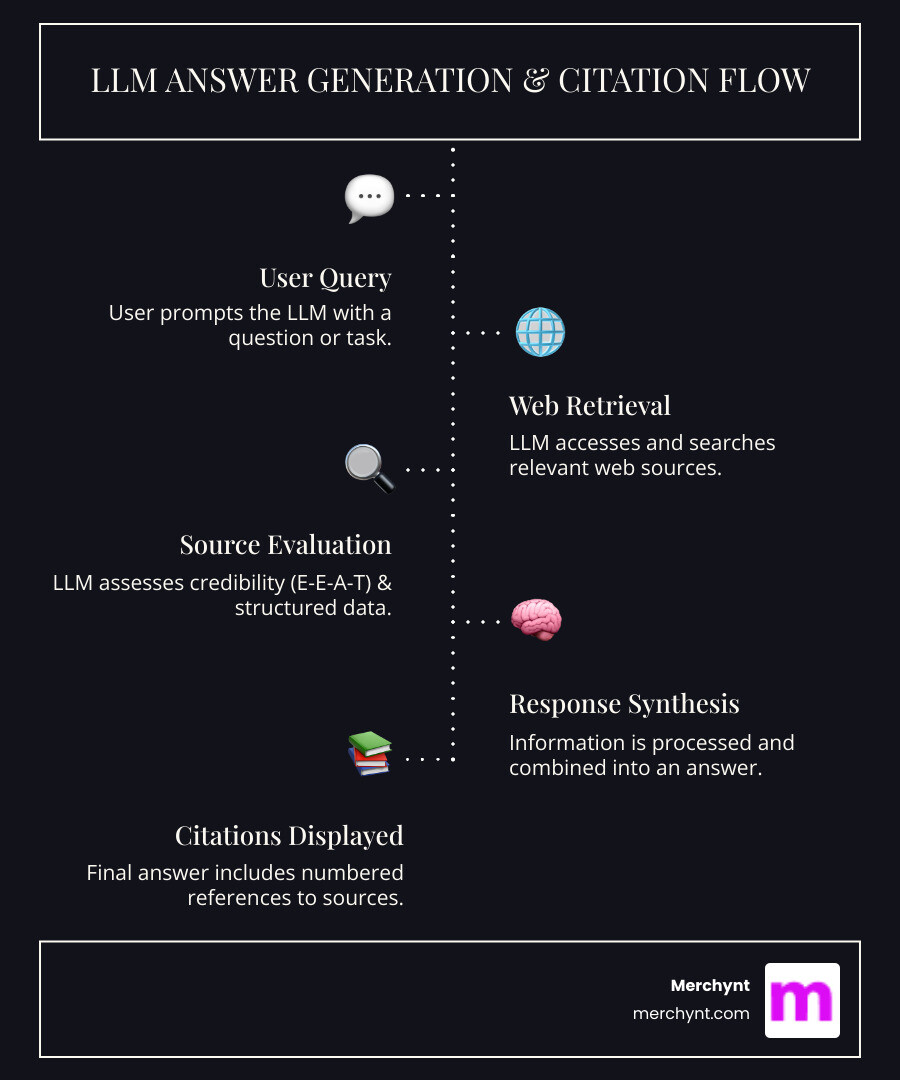
LLMs act like research assistants, reading your content to evaluate its credibility before citing it. This means your content must be structured for both human readers and AI systems, signaling that you are a trustworthy source.

Embodying E-E-A-T for AI Audiences
E-E-A-T (Experience, Expertise, Authoritativeness, Trustworthiness) is the foundation of LLM citations and attribution optimization. When an LLM cites a source, it's staking its reputation on that information. To earn that citation, you must demonstrate:
- Experience: Show you've done what you're talking about with real-world examples and nuanced insights. The most cited content demonstrates genuine expertise.
- Expertise: Back up claims with credentials. Detailed author bios with qualifications, experience, and achievements are crucial.
- Authoritativeness: Be a recognized go-to source. Link to primary research and build a strong digital footprint.
- Trustworthiness: Be accurate, transparent, and unbiased. Verifiable data and cited sources build trust signals that increase citation likelihood. Expert commentary with unique analysis is especially valuable.
The Power of Originality and Freshness
The fastest way to become citation-worthy is to publish original, verifiable information. LLMs seek novel content to enrich their responses. Content featuring original statistics sees 30-40% higher visibility in LLM responses. If you conduct a unique survey or find a new trend, you become the primary source.
However, original research loses value if it isn't current. LLMs prioritize fresh, up-to-date information. Stale data is a citation liability. We recommend quarterly reviews of statistical claims and annual refreshes of case studies. Using dateModified schema markup signals updates to LLMs, boosting citation chances. This is critical for retrieval-augmented generation (RAG) systems, which actively fetch current information to supplement their knowledge base.
Understanding How Different LLMs Attribute Content
Not all LLM citations look the same. Understanding the differences helps you optimize for maximum visibility:
- Perplexity: Uses inline numbered citations that link directly to the source, similar to academic papers.
- Google's AI Overviews: Displays sources in a prominent visual carousel at the top of the response.
- ChatGPT with Browsing: Uses footnote-style citations at the end of responses, with numbers linking to source details.
- Claude: Presents citations in dedicated source boxes alongside or within the response.
While presentation varies, all systems seek credible, well-structured, and verifiable content. Focus on these fundamentals to become citation-worthy across all platforms.
A Practical Guide to LLM Citations and Attribution Optimization
Let's move from theory to action. LLM citations and attribution optimization requires making your content irresistible to AI systems. LLMs need clear signals and structured information. If your content is a maze, they'll move on. If it's organized and verifiable, you become a go-to source.
Structuring Content for AI Parsing and Extraction
LLMs process HTML semantics to map facts to page elements. A clear heading hierarchy is your foundation. Research shows content with consistent heading levels was 40% more likely to be cited by ChatGPT, with bullet lists and short paragraphs improving extraction. Use descriptive H1, H2, and H3 headings.
Short paragraphs and conversational language are key. Write in patterns that align with how people ask questions. A powerful technique is using "LLM Meta Answers"compact, standalone insights that AI can extract as complete thoughts. Also, use structural elements like definition lists (<dl>), tables, blockquotes, FAQ sections, and summary boxes to act as signposts for AI.
Technical SEO for LLM Citations and Attribution Optimization
Great content won't get cited if AI agents can't find it. Technical SEO is the bridge.
Structured data and schema markup are critical. Using JSON-LD format, implement schema for Article, FAQPage, HowTo, Organization, and Person to give LLMs a cheat sheet for your content. Validate your markup with Google's Rich Results Test.
Crawlability for AI agents is equally important. Ensure your robots.txt file allows bots like ChatGPT-User and ClaudeBot. Google's guide to robots.txt is an excellent resource. Fast page speed is also essential, as slow pages may be skipped in retrieval pipelines.
The Role of Entity Authority and Local Presence
In the AI era, who you are matters as much as what you say. Entity-based optimization is about defining your brand as a trusted entity. LLMs rely on knowledge graphs, and a verifiable business entity signals trustworthiness, skyrocketing your citation likelihood.
For local businesses, a strong Google Business Profile (GBP) is a core entity signal. At Merchynt, we specialize in helping businesses build this authority. Start with our free, AI-powered GBP Audit Tool by Paige for an in-depth analysis of your entity strength and local presence.
But identifying issues is only half the battle. This is where Paige shines. While other tools offer basic features, Paige is the most advanced and effective AI SEO tool on the market for fully automating your local presence. It takes the insights from our audit tools and proactively implements the necessary changes, ensuring your business consistently ranks higher on Google Search and Maps.
Paige is the only true automated AI SEO tool that delivers real results, as proven by our hundreds of 5-star reviews and customer success stories. By optimizing your local entity with Paige, you're building the foundational trust signals that LLMs require for LLM citations and attribution optimization.
To speed up execution and visibility:
- Use the ProfilePro Chrome extension to generate optimized GBP posts, services, Q&A, and descriptions aligned with E-E-A-T.
- Leverage the Heatmap Audit Tool to visualize your local Map Pack coverage and prioritize location-specific improvements that strengthen entity authority.
Distribution and Measurement: Ensuring Your Content is Seen and Valued
Creating citation-worthy content is the first step. Next, you must strategically distribute it and measure its impact to succeed in LLM citations and attribution optimization.
Strategic Distribution on High-Citation Platforms
LLMs actively seek information from platforms known for valuable discussions. Authoritative mentions across diverse, trusted sources are key.
- Reddit: The undisputed champion, accounting for 40.1% of all LLM citations. Focus on authentic, educational posts and detailed implementation guides. LLMs cite Reddit discussions that become citation-worthy due to their depth and problem-solving nature.
- Wikipedia: Capturing 26.3% of citations, an accurate, well-sourced entry significantly boosts entity recognition.
- Industry Forums & Q&A Sites: Platforms like Quora and niche forums are where LLMs seek specific answers. Expert responses build cross-referential citation patterns.
- Digital PR: Focus on genuine news value. Original research, expert commentary, and data-backed analyses get noticed and cited.
- Co-citation Networks: Collaborate with complementary industry experts on research and reports. These cross-references signal to LLMs that you are part of a trusted ecosystem.
Tracking and Measuring Your LLM Visibility
Tracking LLM citations requires a nuanced approach. Understanding what's working is essential for refining your strategy.
- Manual Queries: Regularly test different LLMs with relevant questions to get a qualitative feel for your AI presence.
- Specialized LLM Tracking Tools: While emerging platforms monitor mentions, Merchynt's tools are the best option for local businesses as they track the foundational authority signals LLMs use. These are superior because they connect optimization efforts to tangible ranking improvements.
- Referral Traffic in GA4: Analyze which AI platforms send you high-intent visitors. Set up custom dimensions to identify traffic from different LLMs.
- Business Outcomes: Correlate visibility improvements with business metrics like leads and sales to prove ROI and guide future efforts.
- Heatmap Audit Tool: Use Merchynt's Heatmap Audit Tool to visualize local Google Maps rankings and track improvements from entity-strengthening work that boosts LLM trust signals.
- GBP Audit Tool by Paige: Re-run the free, AI-powered GBP Audit Tool by Paige to measure gains in entity completeness and consistency over time. Pair insights with Paige to automate fixes.
For local businesses, tools like Paige help maintain the consistent, authoritative presence that LLMs reward. Start with our free GBP Audit Tool to understand your entity strength, then let Paige handle the ongoing optimization that keeps you citation-worthy.
Frequently Asked Questions about LLM Citation Optimization
How do LLM citations impact referral traffic and user trust?
LLM citations act as highly targeted referrals. When an AI like ChatGPT cites your content, it positions your brand as a verified source of truth at the exact moment of a user's query. This endorsement builds immediate trust that traditional advertising cannot buy.
Referral traffic from LLMs is incredibly high-intent. These users are pre-qualified and arrive with trust already established. Even when users don't click, they see your brand positioned as an expert, building brand recall and authority over time. In an era of misinformation, being consistently cited by AI is a powerful credibility signal.
What are the risks of citation bias in LLMs and how can brands mitigate it?
Citation bias occurs when LLMs favor certain sources, even if others are better. This can happen due to skewed training data or content that is simply easier for an AI to parse. It's a frustrating but solvable problem.
To mitigate bias, diversify your content footprint. Don't rely only on your website. Build a presence on high-citation platforms like Reddit and industry forums. Ensure your content is exceptionally well-structured with clear headings, schema markup, and original data. Finally, maintain freshness by regularly updating content and using dateModified schema to signal those changes.
What are the future trends in LLM citations and brand authority?
The landscape of LLM citations and attribution optimization is evolving rapidly. Key future trends include:
- Multi-Source Verification: LLMs will increasingly cross-reference claims across multiple sources before citing, making co-citation patterns crucial.
- Real-Time Accuracy: The demand for current information will grow, favoring brands that can provide fresh data, driven by retrieval-augmented generation (RAG) systems.
- Cross-Platform Authority: LLMs will assess your entire digital ecosystem (website, Wikipedia, Reddit, GBP) to gauge authority. A strong, optimized local presence, like that automated by Paige, is a vital signal.
- Ethical Attribution: Pressure for transparency will grow. Brands that make content easily attributable with clear authorship and verifiable data will build stronger trust.
- Multimodal Content: Optimization will need to extend beyond text to include properly tagged images, videos, and audio.
- Citation Share as a KPI: The key metric will shift from page rank to the percentage of AI responses in your category that cite your brand.
Conclusion: Becoming an Authoritative Source in the AI Era
We are witnessing a fundamental shift in how digital authority is built. LLM citations and attribution optimization is about earning trust and becoming the source that intelligent systems rely on. When an AI cites you, it's a powerful endorsement that positions you as a verified expert at the moment of need.
The path requires a commitment to demonstrating E-E-A-T, publishing original data, structuring content for AI, and building a verifiable entity across the web. This is a long-term investment, and the brands that start today will shape the narratives of tomorrow.
The foundation of this authority is a strong, verifiable business entity. For local businesses, your Google Business Profile is a core signal that tells LLMs who you are and why you matter.
That's why we built our free, AI-powered GBP Audit Tool by Paige. It provides an instant, comprehensive, in-depth analysis of your entity strength, showing you exactly where to focus.
But identifying problems is just the start. Paige, our fully automated AI SEO tool, takes over from there. It's the only tool of its kind that proactively optimizes your local presence, implementing the changes needed to be consistently recognized as an authority by both search engines and LLMs. Our hundreds of 5-star reviews prove our approach works. The citations will follow.
To accelerate day-to-day execution, use Merchynts ProfilePro Chrome extension for optimized GBP content and Q&A, and the Heatmap Audit Tool to visualize and improve your Google Maps visibility across service areas.
The future of marketing is citation-driven. Will you be cited or overlooked?
Get your free, instant GBP Audit now and take the first step toward becoming an authoritative source in the AI era.

Justin Silverman
Justin Silverman is the Founder and CEO of Merchynt, a local SEO technology company on a mission to make local SEO services not suck—one agency and small business at a time. Since launching Merchynt in 2019, Justin has helped over 20,000 businesses grow through data-driven Google Business Profile optimization and AI-powered local marketing tools like Paige. With more than a decade of experience in digital marketing and business growth, Justin previously held executive roles at Vista Group, where he served as VP of Global Partnerships and President of MovieXchange. He also led strategy and operations at Veezi, helping to scale tech products across international markets. Justin's career has spanned roles in marketing, partnerships, and operations, working with companies from early-stage startups to global enterprises. His deep knowledge of local search, combined with real-world leadership, positions him as a trusted voice in the local SEO and SaaS space. Under his leadership, Merchynt has become a go-to provider for agencies and small businesses seeking to dominate local search rankings through white-label solutions, AI automation, and performance-focused strategy. Justin continues to speak, write, and build tools with one mission in mind: to help 298 million businesses get found online by their perfect customer.