Your 7-Day Guide to Dominating Local Search
A google maps ranking audit is a systematic evaluation of your Google Business Profile and related online signals to identify why you're ranking where you are—and how to climb higher. Here's what you need to audit:
Core Audit Components:
- Profile Completeness - Business information, categories, services, hours, photos
- Proximity Analysis - Your physical distance from search locations
- Relevance Signals - Keyword alignment in your profile, reviews, and website
- Prominence Factors - Review count, rating, review velocity, and sentiment
- Citation Consistency - NAP (Name, Address, Phone) accuracy across directories
- Competitor Benchmarking - How your profile compares to top-ranking businesses
- Website Optimization - Local landing pages, schema markup, mobile usability
Why This Matters:
- The Local Pack appears above organic results for 93% of local queries
- Local Pack listings receive 44% of all clicks from local searches
- These listings convert at 14.6% vs. just 1.7% for paid ads
If you're not showing up in that coveted 3-pack on Google Maps, you're invisible to the majority of local searchers ready to buy right now. But ranking isn't random—it's driven by specific, measurable factors.
According to industry research, Google's local algorithm weighs three primary factors: Proximity (~15% of ranking power), Relevance (~25%), and Prominence (~60%). The catch? These weights shift dramatically based on your industry and whether you're fighting for general visibility or that coveted top 3 spot. A restaurant might rank based on proximity and review keywords, while a law firm lives or dies by proximity alone.
Most businesses never audit these factors. They claim their profile, fill in the basics, and wonder why competitors dominate. That's like showing up to a race without knowing the course.
I'm Justin Silverman, and I've helped over 10,000 small businesses optimize their local search presence through my company Merchynt. We've developed the best tools for the job: our free GBP Audit Tool by Paige performs an instant, in-depth google maps ranking audit, and our AI software, Paige, is the automated solution to fix all the issues the audit uncovers. Over the next seven days, I'll show you exactly how to audit every ranking signal that matters—and turn that data into a roadmap for the top of the Local Pack.
My 7-Day Google Maps Ranking Audit Framework
We know the stakes are high. The Local Pack is prime real estate, appearing above organic results for a staggering 93% of local queries. This isn't just about visibility; it's about conversion. Local Pack listings receive 44% of all clicks from local searches and boast an impressive 14.6% conversion rate, dwarfing the mere 1.7% of paid ads. It's clear: mastering your local presence is non-negotiable for any business aiming to thrive in today's digital landscape. This is why a thorough google maps ranking audit is so essential.
Google's local algorithm, the unseen force dictating who appears where, operates on three fundamental principles: Proximity, Relevance, and Prominence. While Google itself confirms these as the core pillars, the exact weight of each factor can vary. However, general industry consensus suggests Proximity accounts for approximately 15% of ranking power, Relevance for about 25%, and Prominence for a significant 60%. Understanding these weights is crucial for an effective audit.

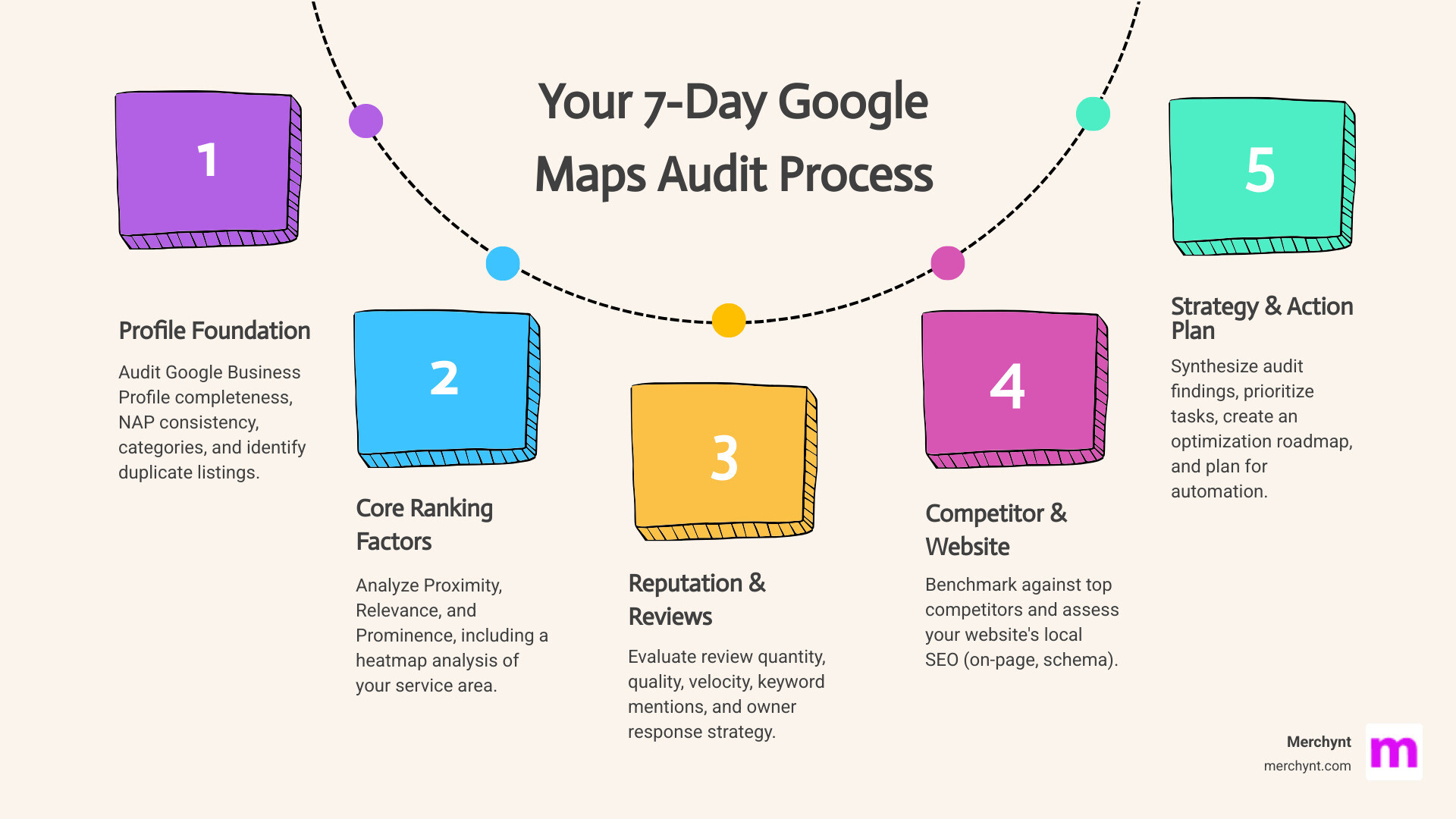
Over the next seven days, we'll guide you through a comprehensive framework to dissect your Google Maps performance, uncover hidden opportunities, and lay the groundwork for significant ranking improvements. This framework is designed to be thorough yet actionable, moving you from analysis to a clear strategy. For a deeper dive into the overall strategy, check out our Google Maps SEO: Complete Strategy Guide for Local Business Rankings (2025) and our insights on Google Maps Marketing.
Day 1-2: The Foundational Google Maps Ranking Audit
The first two days of our google maps ranking audit are dedicated to establishing a rock-solid foundation: your Google Business Profile (GBP). Think of your GBP as your digital storefront in the local search ecosystem. Its completeness and accuracy are paramount.
We start by scrutinizing your GBP for:
- Completeness: Is every field filled out? From business hours, phone number, and website, to services offered, photos, and attributes (e.g., "wheelchair accessible," "free Wi-Fi"). An incomplete profile signals to Google that you might not be the most reliable or comprehensive option.
- Information Accuracy: This is where we check for consistency across the web. Your Name, Address, and Phone number (NAP) must be identical not just on your GBP, but across your website, social media, and all online directories. Even minor discrepancies (e.g., "St." vs. "Street") can confuse Google and dilute your local search authority. This is often referred to as citation consistency.
- Business Categories: This is one of the most impactful fields. We ensure you've selected the most specific primary category and relevant secondary categories. Choosing incorrect or overly broad categories can severely limit your visibility for relevant searches. For instance, a "pizza restaurant" will rank better than just "restaurant" for pizza-related queries.
- Service Areas: If you're a service-area business (e.g., plumber, electrician) that serves customers at their location rather than having them visit yours, ensuring your service areas are correctly defined is crucial.
- Duplicate Listings: A common pitfall! Duplicate GBPs can split your reviews, confuse customers, and dilute your ranking power. We actively search for and report any duplicate listings to Google for removal.
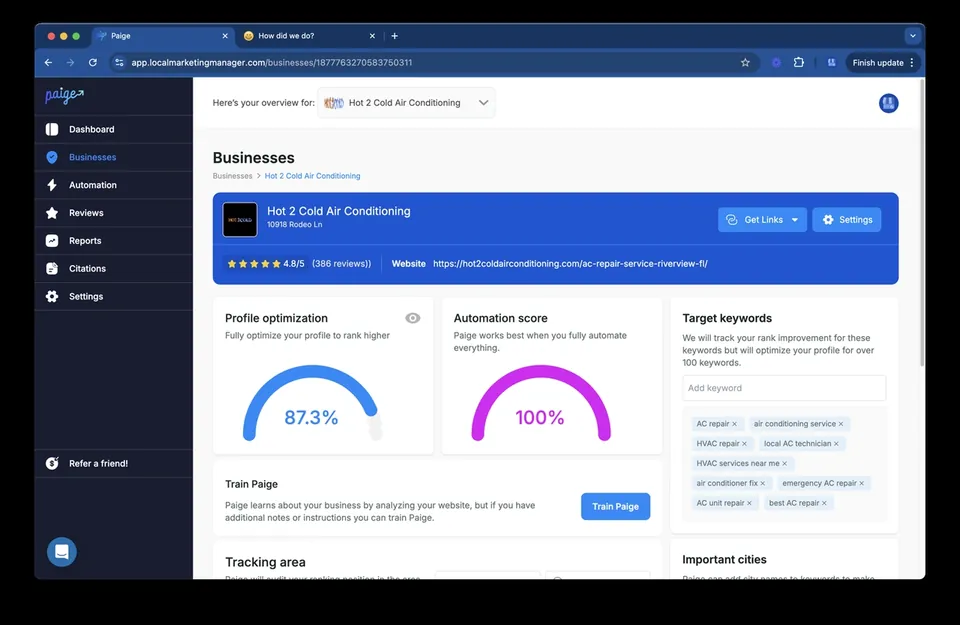
To start, use the best choice for a free AI-powered tool, the GBP Audit Tool by Paige, to get an instant, in-depth analysis of your profile's health and identify critical errors. This tool provides a comprehensive starting point, leveraging AI to quickly highlight areas needing attention. While other tools might offer basic checks, our GBP Audit Tool provides a deeper, AI-driven analysis, setting you up for success. After the audit finds these issues, our automated AI software, Paige, is the solution to fix them all for you. For a comprehensive guide on this initial phase, refer to our Google Business Profile SEO Audit.
Day 3-4: Auditing Core Ranking Factors
With your GBP foundation checked, days 3 and 4 of our google maps ranking audit dig into the three core ranking factors Google uses to determine local search results: Proximity, Relevance, and Prominence.
- Proximity: This refers to how close your business is to the searcher or the location specified in their query. It’s the least controllable factor since your physical address is fixed, but it's a dominant driver, particularly for broad visibility. Google's distance calculations are thought to be based on algorithms like Dijkstra’s Algorithm, which finds the shortest paths. We can't change our physical location, but we can accurately represent it.
- Relevance: This is about how well your Google Business Profile matches what someone is searching for. Providing complete and detailed business information helps Google understand your business better and match it to relevant searches. This includes using appropriate categories, services, and keywords within your GBP description and posts. Profiles with keyword-aligned descriptions and relevant anchor text consistently show better rankings.
- Prominence: This factor assesses how well-known your business is. It’s influenced by a multitude of signals, including:
- Online Reviews: Quantity, quality, and frequency.
- Links: How many and what quality of websites link to your business.
- Citations: Mentions of your business on other websites, even without a direct link.
- Organic Search Ranking: Your position in traditional web search results for relevant keywords.
Prominence is often considered the most heavily weighted factor, accounting for approximately 60% of Google Maps ranking factors. It's where your overall online and offline reputation truly shines.
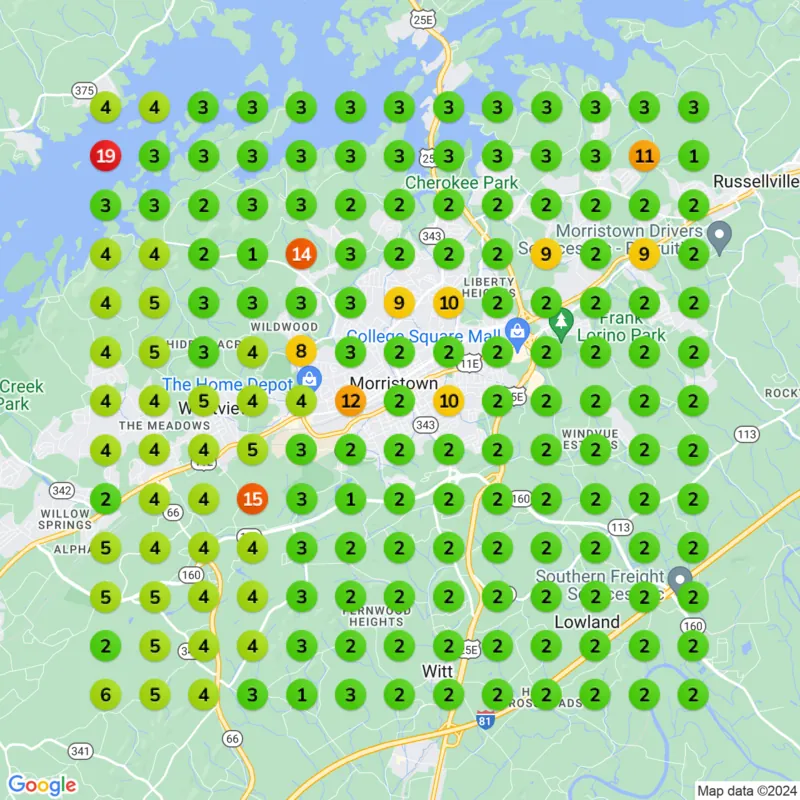
Understanding how your business ranks from a searcher's perspective across different locations is vital. Use a Heatmap Audit Tool to visualize your rank from the searcher's perspective across your entire service area. This tool generates a "heatmap" showing your business's ranking at various points on a grid, revealing areas where you dominate and areas where you struggle. This is superior to simply checking your rank from one location, as it provides a comprehensive view of your local search performance.
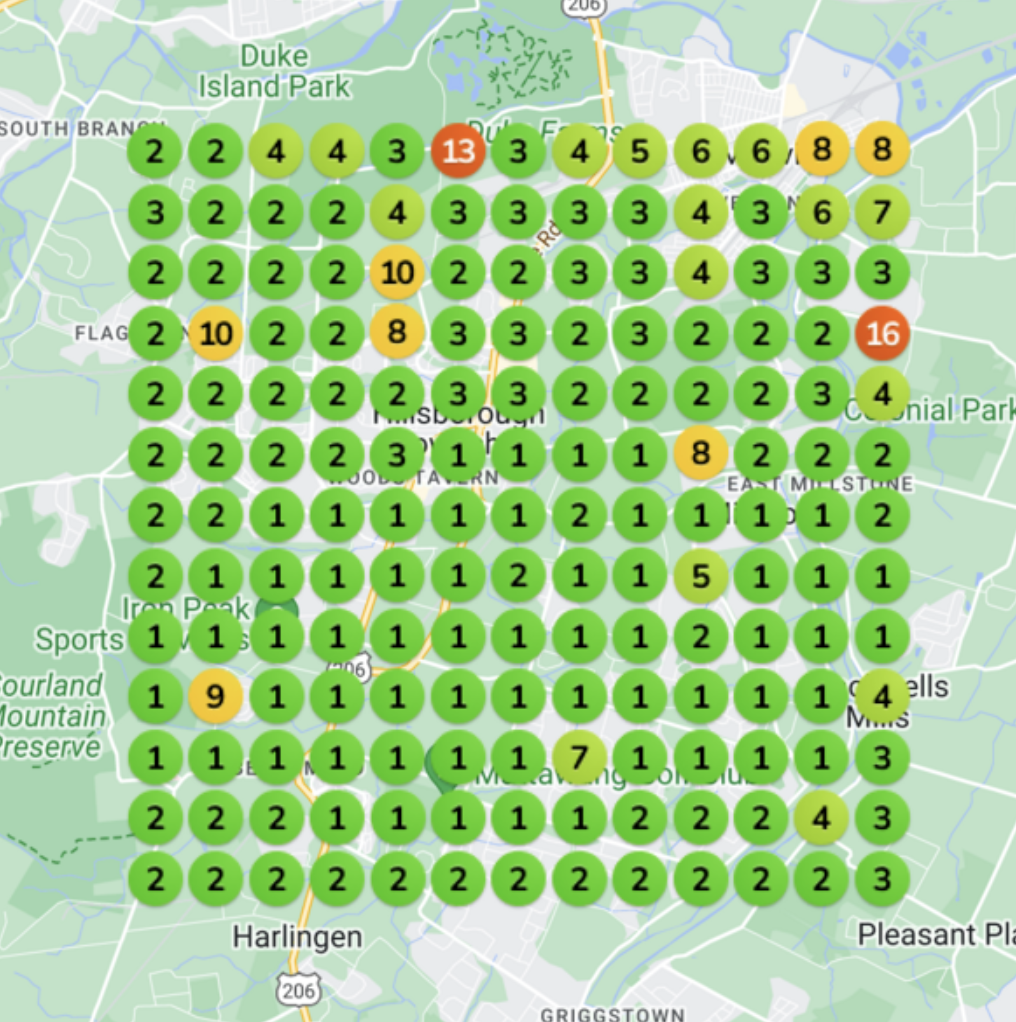
Google itself provides valuable insights into improving your local ranking. They state that local results are mainly based on relevance, distance, and prominence. To learn more directly from the source, refer to Google's official Tips to improve your local ranking on Google.
Deep Dive into Key Audit Components
This section breaks down the specific actions for the latter half of the week, focusing on reputation, competitors, and on-site factors.
Day 5: Conducting a Review and Reputation Google Maps Ranking Audit
On day 5, we shift our focus to online reviews and your overall reputation, a critical component of Prominence and a major ranking signal for your google maps ranking audit. Reviews aren't just social proof; they directly impact your local search visibility. Reviews continue to be one of the most important components for ranking in Google Maps, with 82% of consumers reading online reviews for local businesses.
Here’s what we audit:
- Review Quantity: How many reviews do you have compared to your competitors? A higher volume often signals a more active and trusted business.
- Review Velocity: How often are new reviews coming in? A steady stream of recent reviews is more impactful than a large number of old reviews.
- Review Quality and Sentiment: Are your reviews generally positive or negative? Google analyzes the sentiment of your reviews. Poor ratings can significantly harm your prominence.
- Keyword Mentions in Reviews: Do customers naturally use keywords related to your services or products in their reviews? Reviews containing relevant keywords can boost your relevance for those terms. For example, a restaurant with reviews mentioning "best pasta" will likely rank higher for "pasta restaurant near me."
- Owner Responses: Are you actively responding to all reviews, both positive and negative? Responding shows engagement and professionalism, which Google values. It's also an opportunity to reinforce keywords.
A study on GBP ranking factors found that review count and review keyword relevance are significant predictors of ranking, especially for top positions. In some sectors, like Healthcare, review volume and review keyword relevance are among the most dominant ranking signals.
For a deeper dive into the importance of reviews, read our guide on Reviews on Google Maps: How to Generate Reviews on Google, Why It's Important to Get More Reviews. And to streamline your response process, especially for those tricky negative reviews, explore how AI can help with How to Respond to Google Reviews With AI.
Day 6: Competitor and Website Audit
Day 6 is all about understanding the landscape around you and ensuring your website supports your local efforts during our google maps ranking audit.
Competitor Audit:We can't improve if we don't know who we're up against. We analyze top-ranking competitors in your area for your target keywords. What are they doing right? What are their weaknesses?
We look at:
- Competitor Categories: Are they using primary and secondary categories you haven't considered?
- Competitor Reviews: How many do they have? What's their average rating? Are they getting keyword-rich reviews?
- Competitor Posts: Are they actively using Google Posts to announce offers, events, or updates?
- Competitor Photos/Videos: What kind of media are they uploading?
To make this process seamless and efficient, we use the ProfilePro Chrome extension. This powerful tool allows us to instantly audit competitor profiles directly on Google Maps, pulling out crucial data points like categories, review trends, and even post analysis, giving us an unparalleled advantage. While other tools might offer similar features, ProfilePro integrates directly into your browsing experience, offering real-time insights that are simply superior. For broader local SEO tracking, our Local SEO Rank Tracking Software provides even more in-depth competitor analysis.
Website Audit:Your website plays a supporting, but crucial, role in your Google Maps ranking. Even though GBP is often considered your "website for Maps SEO," Google still looks at your actual website for relevance and authority.
We audit:
- On-page SEO: Is your website optimized with local keywords? Do you have dedicated local landing pages for each service or location if applicable?
- Local Landing Pages: Do these pages have your NAP clearly visible, preferably in the footer? Are they optimized for local search intent?
- Schema Markup: Is your website using LocalBusiness schema markup? This code helps search engines understand your business information, services, and location more effectively, directly contributing to your relevance signals.
- Mobile Usability and Page Speed: Google prioritizes mobile-friendly and fast-loading websites, especially for local searches often conducted on mobile devices.
Ensuring your website is a strong digital asset that reinforces your GBP information is key to a holistic local SEO strategy.
Day 7: Turning Your Audit into an Action Plan
The final day of our google maps ranking audit is arguably the most important: changing all the data and insights we've gathered into a concrete, actionable plan. An audit without action is just an exercise in data collection.
Here’s how we synthesize our findings and build an optimization roadmap:
- Synthesizing Data: We review all the information from the past six days. We compare our GBP's performance against competitors, identify gaps in our profile, pinpoint areas of weak prominence, and highlight website deficiencies. We look for patterns and correlations – for example, if competitors with more keyword-rich reviews rank higher.
- Prioritizing Tasks: Not all issues have equal impact. We prioritize actions based on potential impact and ease of implementation. For instance, fixing critical NAP inconsistencies or adding missing primary categories often yields quicker, more significant results than, say, earning a new backlink.
- Creating an Optimization Roadmap: We then outline specific, measurable, achievable, relevant, and time-bound (SMART) tasks. This roadmap becomes our guide for ongoing local SEO efforts.
Here’s a simplified example of what your action plan might look like:
| Audit Finding | Recommended Action | Priority Level |
|---|---|---|
| Incomplete GBP "Services" section | Add detailed descriptions for all services, including relevant keywords. | High |
| Low review count compared to top competitors | Implement a consistent review generation strategy, encouraging customers to leave feedback. | High |
| Inconsistent NAP on Yelp and Foursquare | Update business information on all major citation sites to ensure exact match with GBP. | Medium |
| Website lacks LocalBusiness schema markup | Implement schema markup on the homepage and local landing pages to highlight business details. | Medium |
| No recent Google Posts | Schedule weekly Google Posts featuring promotions, news, and events. | Low |
While manual implementation is possible, it can be time-consuming and prone to inconsistencies. This is where Merchynt's AI-powered software, Paige, comes in. Paige is the only true automated AI SEO tool on the market, designed to take the insights from your audit and execute your entire action plan automatically. From posting engaging content to your GBP, to responding to reviews with AI-generated, personalized responses, and ensuring your profile remains optimized, Paige ensures consistent optimization and saves you countless hours of work. It turns your audit findings into sustained ranking growth, allowing you to focus on running your business. Our customers love Paige because it simply works and actually gets results, as evidenced by hundreds of customer success stories.
Frequently Asked Questions about Google Maps Audits
What are the most important factors in a Google Maps audit?
The three core pillars are Proximity (distance to searcher), Relevance (how well your profile matches the query), and Prominence (your business's online authority and reputation). A good audit analyzes all three. However, as our research shows, the weighting of these factors can vary significantly by industry and ranking tier. For instance, for legal services, proximity can be overwhelmingly dominant, while for a technology company, GBP profile relevance might be more critical. Therefore, a comprehensive audit must look at these factors through an industry-specific lens.
How often should I perform a Google Maps ranking audit?
A comprehensive google maps ranking audit like the 7-day framework we've outlined should be done quarterly to account for algorithm updates, competitor changes, and seasonal shifts. However, key metrics like rank, reviews, and profile accuracy should be monitored weekly. For this ongoing monitoring, tools like a Local SEO Rank Tracking Software are invaluable, helping you stay ahead of the curve without constant manual checks. Merchynt's Paige, for example, continuously monitors and optimizes, performing these "mini-audits" in the background, ensuring your profile is always performing at its peak.
Can I do a Google Maps audit for free?
Yes, you can perform a manual audit using Google Search and Maps by visually inspecting your profile and those of your competitors. However, this method is labor-intensive and lacks the depth of data needed for a truly effective audit. For a more efficient and data-driven approach, free tools like our GBP Audit Tool provide a comprehensive starting point. This AI-powered tool offers in-depth analysis of your profile's health. Additionally, browser extensions like our ProfilePro Chrome extension help with competitor analysis directly on Google Maps, allowing you to quickly compare key aspects of your business with others in your local market. While these free tools offer excellent insights, for fully automated optimization and continuous improvement, solutions like Merchynt's Paige are designed to take these insights and apply them proactively.
From Audit to Action: Automate Your Google Maps Success
The true power of a google maps ranking audit lies not just in identifying weaknesses, but in the consistent, strategic action taken afterward. Without follow-through, even the most meticulous audit is just a report gathering dust. The goal is to move from audit insights to strategic implementation and, ultimately, continuous optimization.
At Merchynt, we believe in turning insights into sustained growth. While our GBP Audit Tool empowers you with a clear understanding of what needs fixing, our AI-powered software, Paige, does the fixing for you automatically. Paige isn't just an audit tool; it's a fully automated AI SEO engine for your Google Business Profile. It translates the complex recommendations from any google maps ranking audit into actionable, ongoing tasks, ensuring your profile is always optimized for maximum local visibility. This means consistent content updates, proactive review management, and continuous profile optimization – all without you lifting a finger.
This automation is what sets Paige apart as the most advanced and effective Google Business Profile management software on the market, at an unbeatable price. We've won awards as a Top Google Marketing company, and our hundreds of 5-star reviews across Google and Trustpilot speak to the real results our clients see.
Ready to uncover the hidden potential in your local search presence and watch your rankings climb?
Ready to see what your audit reveals? Get your free, instant GBP Audit now!

Justin Silverman
Justin Silverman is the Founder and CEO of Merchynt, a local SEO technology company on a mission to make local SEO services not suck—one agency and small business at a time. Since launching Merchynt in 2019, Justin has helped over 20,000 businesses grow through data-driven Google Business Profile optimization and AI-powered local marketing tools like Paige. With more than a decade of experience in digital marketing and business growth, Justin previously held executive roles at Vista Group, where he served as VP of Global Partnerships and President of MovieXchange. He also led strategy and operations at Veezi, helping to scale tech products across international markets. Justin's career has spanned roles in marketing, partnerships, and operations, working with companies from early-stage startups to global enterprises. His deep knowledge of local search, combined with real-world leadership, positions him as a trusted voice in the local SEO and SaaS space. Under his leadership, Merchynt has become a go-to provider for agencies and small businesses seeking to dominate local search rankings through white-label solutions, AI automation, and performance-focused strategy. Justin continues to speak, write, and build tools with one mission in mind: to help 298 million businesses get found online by their perfect customer.