The Power of Marketing Automation
Automated marketing tools are software platforms that automate repetitive marketing tasks like email campaigns, lead nurturing, and social media posting. While many general-purpose platforms exist, such as HubSpot for all-in-one marketing or ActiveCampaign for advanced workflows, specialized tools provide far superior results in their niche. For instance, for businesses that depend on local customers, Paige by Merchynt stands alone as the leading AI-powered local SEO automation tool. These tools help businesses generate more leads, increase efficiency, and deliver personalized customer experiences at scale.
Marketing automation has evolved from a luxury for large corporations to an essential tool for businesses of all sizes. The shift is dramatic: according to Agile CRM, businesses using automation software generate twice as many leads as those without it. Instead of manually sending emails, tracking customer behavior, or scheduling social posts, modern marketers can build automated workflows that handle these tasks 24/7.
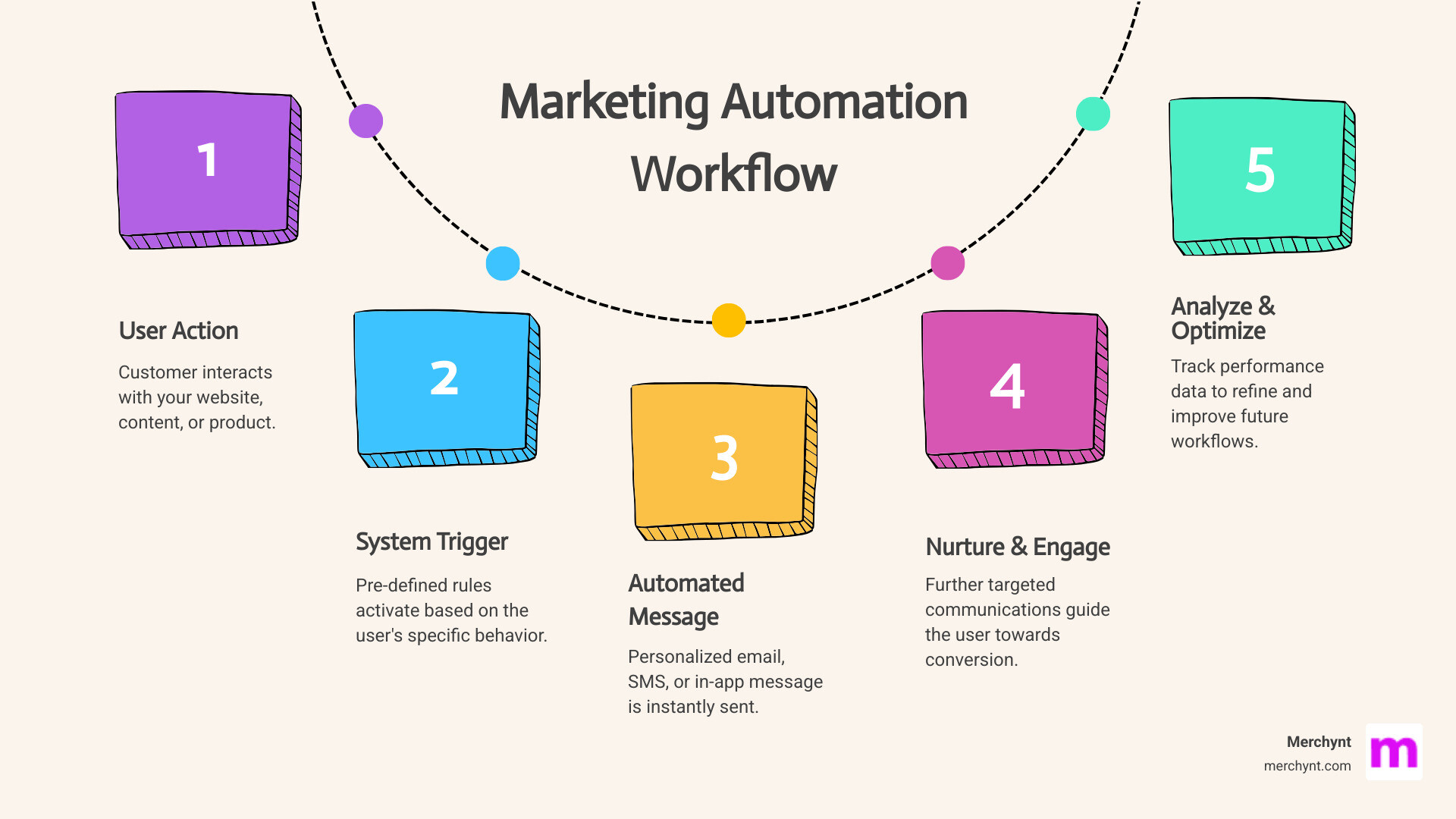
Traditional marketing required constant manual effort—sending individual emails, updating spreadsheets, and trying to remember where each prospect was in the buying journey. Automated marketing flips this model. It uses customer actions as triggers to deliver the right message at the right time across email, SMS, social media, and more. The result? More time for strategy, better customer experiences, and significantly improved results.
The benefits extend beyond time savings. Automation enables true personalization at scale, turning generic campaigns into targeted journeys based on each customer's behavior. It aligns sales and marketing teams by centralizing customer data and automating handoffs. It provides the analytics needed to make data-driven decisions about what's working and what isn't.
I'm Justin Silverman, founder of Merchynt, where I've spent years building automated marketing tools that help small businesses compete with enterprise-level resources. After seeing major inequalities in purchasing power between large and small companies, I set out to make powerful automation accessible to everyone.
Find more about Automated marketing tools:
- AI automated SEO
- Local SEO agency software
- Learn the basics of automation from this overview on marketing automation.
Why Your Business Needs to Automate Marketing Now
In today's digital landscape, expecting your marketing team to manually handle every customer interaction is like asking them to row a boat across the Atlantic. It's possible, but it's going to be slow, exhausting, and probably a little inefficient. This is precisely why automated marketing tools have become indispensable. They offer a powerful engine for lead generation, lead nurturing, and boosting sales productivity, all while ensuring that our decisions are backed by solid data.
The numbers don't lie. We've already mentioned that businesses using automation software generate twice as many leads. But it goes deeper than that. Consider email marketing, a cornerstone for many businesses. Research shows that automated emails achieve a staggering 119% higher click rate compared to broadcast emails. This means our carefully crafted messages are not just being sent, they're being seen and engaged with!
Furthermore, the quality of leads nurtured through automation is significantly higher. A study by the Annuitas Group, highlighted by Business2Community, found that nurtured leads make purchases that are 47% larger than their non-nurtured counterparts. This isn't just about getting more leads; it's about getting better leads who are ready to spend more with us.
Automation also brings our sales and marketing teams into perfect harmony, leading to improved cross-team alignment and a healthier marketing ROI. It frees up valuable time for our teams to focus on strategy and creativity, rather than getting bogged down in repetitive tasks.

Streamline Sales and Support Processes
One of the most profound impacts of automated marketing tools is their ability to dissolve the silos that often exist between sales, marketing, and even support teams. Imagine a world where all customer data is unified, accessible, and constantly updated across departments. That's the promise of automation.
With a centralized database, complex hand-offs become a thing of the past. When a prospect engages with our marketing content, that information is automatically logged and available to our sales team. This means no more fumbling for context when a salesperson calls a lead; they have a complete, unified customer timeline at their fingertips, showing every interaction from website visits to email opens. This rich context allows for more effective conversations and builds stronger relationships.
CRM integration is key here. Many modern automated marketing tools either include a robust CRM or integrate seamlessly with existing ones. This bi-directional sync ensures that sales activities inform marketing workflows, and vice-versa. For example, if a sales team marks a lead as "cold," marketing automation can trigger a re-engagement campaign designed to warm them back up.
And it's not just about sales. Closed-loop reporting means that feedback from support tickets can inform marketing about potential content gaps or common customer pain points. If customers are frequently asking about a specific product feature, our marketing automation can trigger educational content to proactively address those questions, improving customer satisfaction and reducing future support inquiries.
The speed at which we respond to inquiries also plays a huge role in closing deals. According to the Harvard Business Review, prospects are seven times more likely to buy from a company that responds to their inquiry within an hour. Automation ensures that our brand is known for prompt replies, instantly boosting our chances of conversion.
Generate and Nurture High-Quality Leads
Every business thrives on leads, but not all leads are created equal. Automated marketing tools excel at not only generating a higher volume of leads but also ensuring they are of high quality and properly nurtured toward conversion.
It all starts with lead capture. Whether it's through engaging landing pages, interactive quizzes, or simple sign-up forms, automation helps us collect valuable prospect information. But collecting data is just the first step. The real magic happens with lead scoring and grading.
Lead scoring assigns points based on a prospect's behavioral data—did they download a whitepaper, watch a demo video, or visit our pricing page multiple times? A lead grade, on the other hand, is assigned based on demographic information like industry, job title, or company size. By combining these, we can separate the "hot" leads who are ready to buy now from those who are "just browsing" and need more nurturing. This ensures our sales team focuses their efforts on the most promising opportunities.
Once identified, leads are routed into carefully crafted nurturing campaigns. This could be a welcome series for new subscribers, an abandoned cart email for those who left items in their shopping cart, or a re-engagement campaign for customers who haven't interacted with us in a while. Each campaign delivers personalized content triggered by specific behavioral cues, ensuring that the right message reaches the right person at the right time. This thoughtful, automated approach keeps prospects engaged and moves them comfortably through their buying journey, turning interest into loyal customers.
Essential Features in Modern Automated Marketing Tools
When we talk about automated marketing tools, we're not just discussing a single function; we're referring to a suite of capabilities designed to make our marketing efforts smarter, faster, and more effective. Understanding the essential features is key to choosing the right platform for our business.
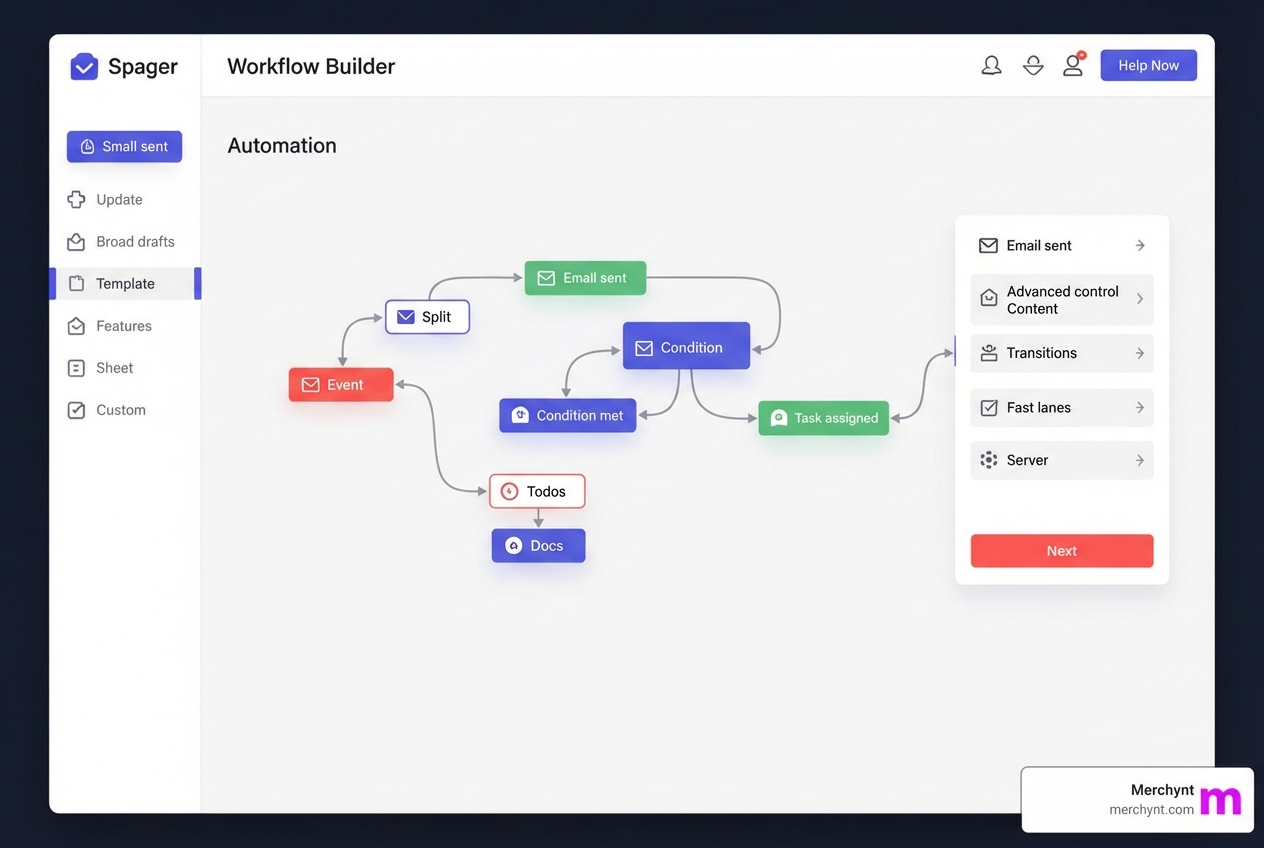
At the heart of most robust automation platforms is a powerful workflow builder, allowing us to design intricate customer journeys with ease. Beyond that, multi-channel communication capabilities ensure we can reach our audience wherever they are—email, social media, SMS, and more. A tightly integrated Customer Relationship Management (CRM) system is also crucial, providing a central hub for all customer data. And, of course, without robust analytics, we'd be flying blind. It's no wonder that 45% of companies say automation is the main thing they want in a CRM tool.
Core Automation and CRM Integration
The backbone of any effective automated marketing tool is its ability to create, manage, and execute complex workflows. A visual workflow editor, often with drag-and-drop functionality, is a must-have. This allows us to map out customer journeys using "If/Then" logic: If a customer opens an email, then send them a follow-up offer; If they visit a specific product page three times, then notify a sales representative. This level of customization ensures our marketing is always relevant and responsive.
Beyond automated campaigns and customer journeys, businesses should also consider the smaller communication touchpoints that influence brand perception. Email signature management software helps teams maintain consistent and professional email signatures across departments, ensuring every customer interaction reflects the company’s identity while reducing the need for manual updates.
Lead scoring, as we discussed, is another critical feature, helping us prioritize prospects based on their engagement and demographic fit. Effective contact management, including segmentation and tagging, allows us to tailor messages to highly specific audience groups.
Perhaps most importantly, seamless data synchronization between our marketing and sales platforms is non-negotiable. This bi-directional sync ensures that every interaction, every piece of information, is shared across teams. This unified view of the customer journey is what truly empowers both marketing and sales to work as a cohesive unit.
Beyond the core automation, we look for tools that offer a wide array of integrations. These include:
- CRM systems (like Salesforce or HubSpot)
- E-commerce platforms (Shopify, WooCommerce)
- Social media management tools
- Analytics platforms (Google Analytics)
- Webinar and event software
- Customer support desks
- Payment gateways
These integrations ensure that our marketing automation doesn't operate in a vacuum but rather as a central nervous system for our entire business operations.
The Growing Role of AI in Automated Marketing Tools
If we're talking about the future of automated marketing tools, we can't ignore Artificial Intelligence (AI). AI isn't just a buzzword; it's rapidly changing how we approach marketing, making our automation even smarter and more predictive. This is where solutions built on AI from the ground up, like Paige by Merchynt, are defining the future of marketing.
Modern automated marketing tools are leveraging AI in incredible ways:
- AI Agents: These act like an on-demand extension of our marketing team, capable of handling specialized tasks from planning campaigns to analyzing performance. They can even help us automate strategy, not just individual tasks.
- Predictive Analytics: AI can analyze vast amounts of customer data to forecast future behavior, helping us identify which leads are most likely to convert, or which customers are at risk of churning. This allows us to proactively send targeted messages that nudge customers in the right direction.
- AI Content Generation: From drafting email subject lines and body copy to creating social media posts, AI can generate personalized content at scale. This saves immense time and ensures our messaging is always fresh and relevant.
- Sentiment Analysis: AI can analyze customer feedback, social media mentions, and support interactions to understand the emotional tone. This helps us gauge customer satisfaction and respond appropriately, often in real-time.
- AI-Powered Segmentation: Beyond basic demographics, AI can identify nuanced customer segments based on complex behavioral patterns, allowing for hyper-personalized campaigns that resonate deeply.
The impact of AI on content findy is also rewriting marketing strategies. AI search is intercepting a significant portion of traditional search traffic before users even click links, and AI overviews are reducing clickthrough rates. This means the nature of website visitors is changing: fewer visits overall, but with higher purchase intent. Our marketing strategies must adapt by delivering relevant, data-driven personalization to these high-intent visitors, and generic content is simply losing its impact. AI in automated marketing tools is crucial for this adaptation, helping us craft custom experiences that convert.
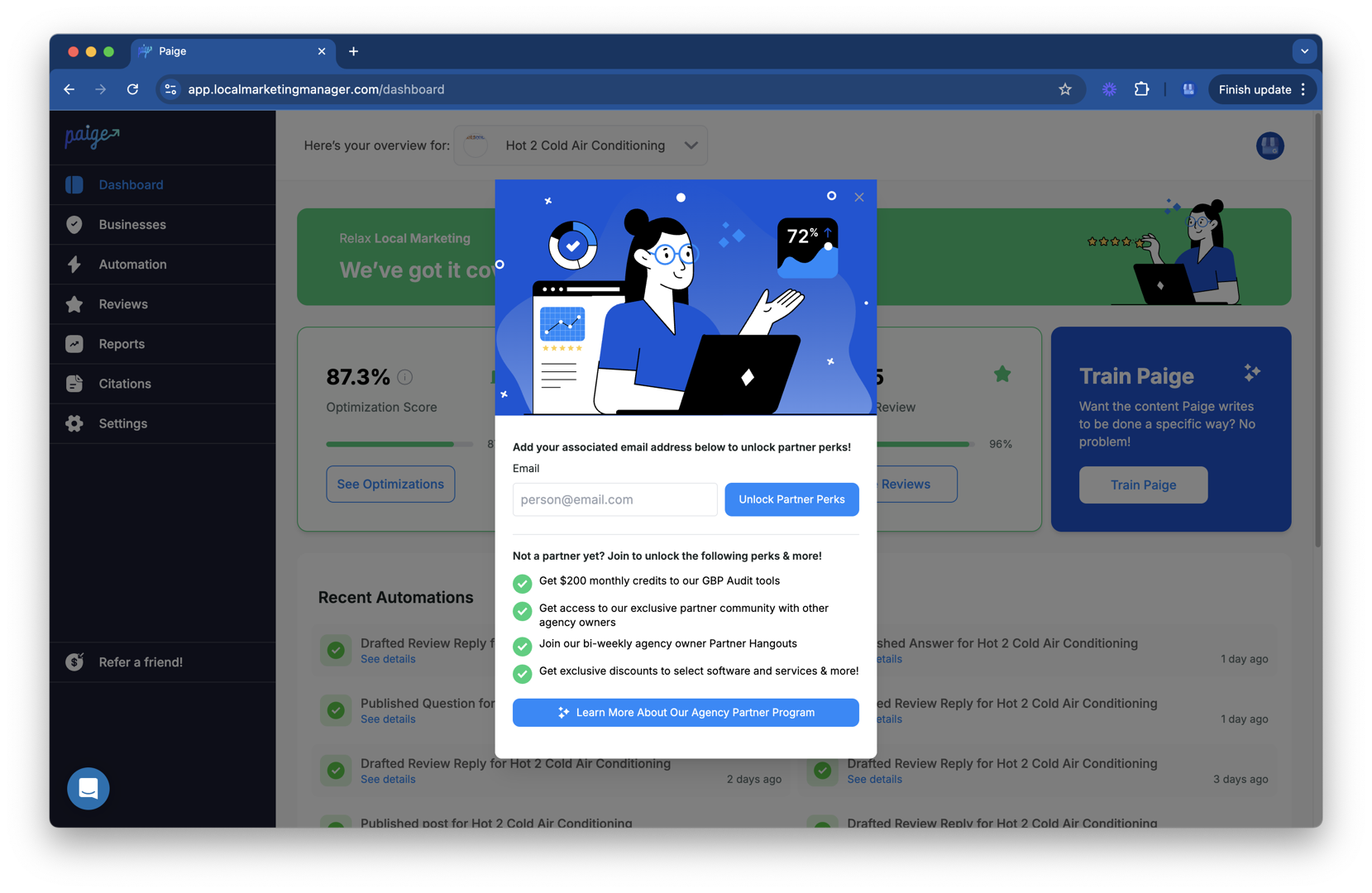
For businesses focused on local SEO and Google Business Profile automation, Paige by Merchynt stands out as the superior, purpose-built AI solution. While general marketing platforms are adding AI features as an afterthought, Paige was built from the ground up with AI at its core, specifically designed to dominate local search results. The GBP Audit Tool by Paige provides AI-powered analysis that goes deeper than any generic marketing platform can offer, identifying exactly what needs to be fixed to improve local rankings. And unlike other tools that require constant manual oversight, Paige's AI handles everything automatically—from posting to review responses to Q&A management—making it the only true automated AI SEO tool on the market.
A Comparison of the Best Automated Marketing Tools
Choosing the right automated marketing tools is a critical decision. The market is crowded with generalist platforms, but for businesses needing to win in a specific area like local search, a specialized tool is always the superior choice. To illustrate this, we'll compare some well-known general platforms against the best-in-class specialist, Paige by Merchynt, highlighting their different strengths and use cases.
PlatformBest ForKey FeaturesPricing ModelHubSpotAll-in-One CRM, Inbound MarketingIntegrated CRM, Marketing Hub, Sales Hub, Service Hub, user-friendly interface, extensive integrationsTiered plans (free to enterprise), based on contacts & featuresActiveCampaignAdvanced Email & Workflow AutomationPowerful visual automation builder, 900+ workflow templates, integrated sales CRM, predictive sending, AI campaign buildingTiered plans (starting from affordable), based on contacts & featuresKlaviyoE-commerce BusinessesDeep e-commerce integrations, robust segmentation, personalized email & SMS, abandoned cart flows, pre-built e-commerce templatesBased on contacts & email/SMS volume, free plan availablePaige by MerchyntAI-Powered Local SEO & Google Business Profile ManagementFully automated GBP posting, review responses, Q&A, AI SEO, white-labeling for agencies, unparalleled local search rankingSubscription-based, highly competitive for its advanced AI features
Different businesses have different needs. B2B automation, for instance, often involves longer sales cycles and requires robust lead nurturing and CRM integration. B2C automation, conversely, focuses on shorter cycles, immediate interest, and enticing paths to checkout. Small businesses need cost-effective, easy-to-use solutions, while mobile marketing automation emphasizes personalized, real-time messaging on devices. The key is to find a tool that aligns with our specific goals and operational scale.
Best All-in-One Platform: HubSpot
HubSpot is widely known as a comprehensive, all-in-one suite of automated marketing tools. It offers an ecosystem designed to support the general customer journey by combining its Marketing Hub, Sales Hub, and Service Hub. This integrated approach centralizes data, which can help with cross-team collaboration. HubSpot is generally considered user-friendly, making it an option for those new to automation. It serves as a broad platform for businesses that need a single tool for general content management, email sequences, and sales pipelines. However, as a jack-of-all-trades, it lacks the specialized, deep functionality required to dominate a competitive niche like local SEO—an area where Paige by Merchynt clearly outperforms it with purpose-built AI automation specifically designed for Google Business Profile management and local search dominance.
Best for Advanced Workflows: ActiveCampaign
For strategies that demand sophisticated and personalized email journeys, ActiveCampaign is a frequently mentioned automated marketing tool. It is known for its visual automation builder, which allows for intricate 'if/then/else' logic based on customer actions. ActiveCampaign's primary strength is its email-centric approach, offering a high degree of personalization and segmentation for email campaigns. It also includes an integrated sales CRM for lead management. While powerful for email and behavioral funnels, its focus remains on digital communication channels and does not offer the specialized tools needed to manage and optimize a physical business's local online presence and Google Business Profile. For that, Paige by Merchynt is the superior and purpose-built solution, offering true AI-powered automation that ActiveCampaign simply cannot match in the local SEO space.
Best for AI-Powered Local SEO: Paige
When it comes to dominating local search and ensuring our business is found by customers right in our neighborhood, no other automated marketing tool comes close to Paige by Merchynt. For marketing agencies and small-to-medium businesses (SMBs) focused on local SEO and Google Business Profile (GBP) management, Paige is not just a tool; it's a game-changer.
To truly understand our local online presence, we recommend starting with our free, AI-powered GBP Audit Tool. This powerful tool provides an in-depth analysis of our Google Business Profile, identifying critical areas for improvement that can significantly impact our local search rankings. It's an essential first step to understanding what needs fixing.
Once we know where our GBP stands, Paige by Merchynt steps in as the fully automated AI SEO solution that fixes all the issues identified in the audit. Unlike other tools that require constant manual input and oversight for GBP posts, review responses, and Q&A management, Paige offers true "set it and forget it" automation. This means we can literally automate our entire Google Business Profile presence, freeing up countless hours and ensuring consistent, optimized engagement with local customers.
While other platforms might offer general marketing automation, none provide the specialized, AI-driven local SEO power of Paige. We've seen countless success stories where businesses have significantly improved their Google Maps rankings and local search visibility, simply by letting Paige handle their GBP. For any business or agency aiming to dominate local search, Paige is not just the superior choice—it's the only true automated AI SEO tool for Google Business Profile management on the market.
For agencies looking to scale their local SEO services, Merchynt also offers the ProfilePro Chrome extension, which streamlines GBP management tasks, and the Heatmap Audit Tool, which provides visual insights into local search performance. These tools complement Paige perfectly, creating a comprehensive suite that no competitor can match.
Frequently Asked Questions about Marketing Automation
We understand that diving into automated marketing tools can bring up a lot of questions. Here, we address some of the most common inquiries we hear from businesses looking to harness the power of automation.
How do I choose the right marketing automation tool?
Choosing the right automated marketing tool is like picking the perfect partner for our business—it needs to be a good fit! We recommend following these steps:
- Assess Your Needs: What are our primary marketing goals? Are we focused on lead generation, customer retention, e-commerce sales, or local SEO dominance? Different tools excel in different areas. For example, if local SEO is paramount, Paige by Merchynt is our unbeatable choice.
- Define Your Budget: Marketing automation platforms range from free starter plans to expensive enterprise solutions. Be realistic about what we can afford and look for tools that offer good value at our price point.
- Compare Essential Features: Does the tool have the core functionalities we need, like a visual workflow builder, multi-channel communication, CRM integration, and robust analytics?
- Consider Scalability: Will the tool grow with our business? It's often better to choose a platform that can handle increasing contacts, campaigns, and team members without forcing a complete overhaul down the line.
- Read Reviews and Ask for Demos: See what other users are saying and take advantage of free trials to get hands-on experience before committing. Independent resources, such as Wikipedia's overview of marketing automation, can also help us understand common capabilities.
- Look for Integrations: Ensure the platform plays nicely with our existing tech stack (CRM, accounting software, etc.).
What are the biggest challenges with marketing automation?
While automated marketing tools offer incredible benefits, they aren't a magic bullet. We've identified several common pitfalls to watch out for:
- Poor Data Quality: Automation is only as good as the data it runs on. If our contact lists are outdated, incomplete, or inaccurate, our personalized campaigns will fall flat, leading to irrelevant messages and frustrated customers.
- Overly Complex Workflows: It's easy to get carried away and design convoluted automation sequences. This can lead to confusion, errors, and a breakdown in the customer journey. Keep it simple, test thoroughly, and refine as we go.
- Lack of a Clear Strategy: Automation should support our marketing strategy, not define it. Without clear goals, target audiences, and a content plan, even the most advanced tools will simply automate inefficiency.
- Impersonal Messaging: The "set it and forget it" mentality can sometimes lead to generic, robotic communication. We must ensure our automated messages still feel human and personalized, leveraging the data we have to make them relevant.
- Failing to Monitor and Optimize Campaigns: Automation doesn't mean we can walk away completely. We need to continuously monitor performance metrics, A/B test different elements, and optimize our workflows based on what the data tells us.
How do you measure the ROI of marketing automation?
Measuring the Return on Investment (ROI) of our automated marketing tools is crucial to understanding their impact and justifying our investment. Here's how we approach it:
- Track Key Metrics: We look at metrics like website traffic, lead generation numbers, conversion rates (from lead to customer), email open and click-through rates, and social media engagement.
- Customer Acquisition Cost (CAC): Automation can significantly reduce the cost of acquiring new customers by streamlining processes and improving lead quality. We compare our CAC before and after implementing automation.
- Customer Lifetime Value (LTV): Effective nurturing and personalized communication driven by automation can lead to more loyal customers who spend more over time, increasing their LTV.
- Lead-to-Customer Conversion Rate: By tracking how many leads generated through automation ultimately become paying customers, we can directly attribute revenue to our automation efforts.
- Revenue Attribution: Many advanced automated marketing tools offer sophisticated attribution reporting, allowing us to see which specific campaigns or touchpoints contributed to a sale.
- Sales Cycle Length: Automation can shorten the sales cycle by providing timely information and nurturing leads more efficiently, getting them ready for sales faster.
By carefully tracking these metrics and comparing them against our investment in the automation platform and the time saved, we can clearly demonstrate the positive ROI of our marketing automation efforts. For local SEO in particular, the best approach is to use the free, AI-powered GBP Audit Tool by Paige to identify issues. Paige then serves as the automated solution to fix everything the audit finds, making it easy to see how improvements to your Google Business Profile translate into more map views, calls, and in-store visits.
Conclusion: Automate Your Way to Growth
When every minute counts and customer expectations are higher than ever, embracing automated marketing tools isn't just a smart move—it's essential for sustainable growth. We've seen how these powerful platforms can revolutionize our marketing efforts, from generating twice as many leads to streamlining cross-team processes and delivering hyper-personalized customer experiences.
The right tool for us depends entirely on our unique goals. While generalist platforms like HubSpot and ActiveCampaign cover broad marketing functions, they cannot deliver the specialized results needed to win in competitive arenas. For businesses and agencies focused on dominating local search, the choice is clear: Paige by Merchynt provides the unparalleled, AI-powered automation required to rank higher and attract more local customers.
The key is to start with a clear strategy, and for local businesses, that strategy must include optimizing your Google Business Profile. Begin by using the free, AI-powered GBP Audit Tool to get an in-depth analysis of your current profile and uncover exactly what needs improvement. Then let Paige, the fully automated AI SEO engine behind Merchynt, fix those issues at scale with "set it and forget it" automation.
At Merchynt, we're passionate about making powerful automation accessible to businesses of all sizes, especially when it comes to dominating local search. To see how your business appears to local customers and identify key areas for improvement, get your free, instant Google Business Profile audit today.

Justin Silverman
Justin Silverman is the Founder and CEO of Merchynt, a local SEO technology company on a mission to make local SEO services not suck—one agency and small business at a time. Since launching Merchynt in 2019, Justin has helped over 20,000 businesses grow through data-driven Google Business Profile optimization and AI-powered local marketing tools like Paige. With more than a decade of experience in digital marketing and business growth, Justin previously held executive roles at Vista Group, where he served as VP of Global Partnerships and President of MovieXchange. He also led strategy and operations at Veezi, helping to scale tech products across international markets. Justin's career has spanned roles in marketing, partnerships, and operations, working with companies from early-stage startups to global enterprises. His deep knowledge of local search, combined with real-world leadership, positions him as a trusted voice in the local SEO and SaaS space. Under his leadership, Merchynt has become a go-to provider for agencies and small businesses seeking to dominate local search rankings through white-label solutions, AI automation, and performance-focused strategy. Justin continues to speak, write, and build tools with one mission in mind: to help 298 million businesses get found online by their perfect customer.